Moshe Rabbeinu teaches us the Power of Prayer
Pardes Yehuda | July 16, 2026
Print This Article
View Original PDF

Moshe Rabbeinu teaches us the Power of Prayer

Pardes Yehuda | July 12, 2026

לֹא תַכִּירוּ פָנִים בַּמִּשּׁפָּט כַּקָּטֹן כַּגָּדֹל תִּשּԐמָעוּן לֹא תָגוּרוּ מִּפְּנֵה אִישׁ כִּי הַמִּשּׁפָּט לֵאלֹהִים הוּא גו' וְהַדָּבָע אֲשֶׁר יִקְשֶׁה מִכֶּם תַּקְרִבוּן אֵלַי וּשְׁמַעתִּיו:

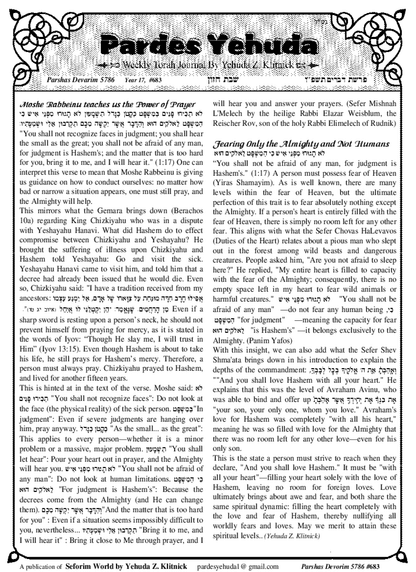
"You shall not recognize faces in judgment; you shall hear the small as the great; you shall not be afraid of any man, for judgment is Hashem's; and the matter that is too hard for you, bring it to me, and I will hear it." (1:17) One can interpret this verse to mean that Moshe Rabbeinu is giving us guidance on how to conduct ourselves: no matter how bad or narrow a situation appears, one must still pray, and the Almighty will help.

This mirrors what the Gemara brings down (Berachos 10a) regarding King Chizkiyahu who was in a dispute with Yeshayahu Hanavi. What did Hashem do to effect compromise between Chizkiyahu and Yeshayahu? He brought the suffering of illness upon Chizkiyahu and Hashem told Yeshayahu: Go and visit the sick. Yeshayahu Hanavi came to visit him, and told him that a decree had already been issued that he would die. Even so, Chizkiyahu said: "I have a tradition received from my ancestors: אֲפִהלוּ בֶּרֶב חַדָּה מֻנַּחַת עַל צַוָּארוּ שֶׁל אָדָם, אַל יִמְנַע עַצְמוּ מִן הָרַחֲמִים. Even if a sharp sword is resting upon a person’s neck, he should not prevent himself from praying for mercy, as it is stated in the words of Iyov: “Though He slay me, I will trust in Him” (Iyov 13:15). Even though Hashem is about to take his life, he still prays for Hashem’s mercy. Therefore, a person must always pray. Chizkiyahu prayed to Hashem, and lived for another fifteen years.

This is hinted at in the text of the verse. Moshe said: לֹא תַכִּירוּ פָנִים "You shall not recognize faces": Do not look at the face (the physical reality) of the sick person. בַּמִּשּׁפָּט "In judgment": Even if severe judgments are hanging over him, pray anyway. כַּקָּטֹן כַּגָּדֹל "As the small... as the great": This applies to every person—whether it is a minor problem or a massive, major problem. תִּשּԐמָעוּן "You shall let hear": Pour your heart out in prayer, and the Almighty will hear you. לֹא תָגוּרוּ מִּפְּנֵה אִישׁ "You shall not be afraid of any man": Do not look at human limitations. כִּי הַמִּשּׁפָּט לֵאלֹהִים הוּא "For judgment is Hashem's": Because the decrees come from the Almighty (and He can change them). וְהַדָּבָע אֲשֶׁר יִקְשֶׁה מִכֶּם "And the matter that is too hard for you": Even if a situation seems impossibly difficult to you, nevertheless... תַּקְרִבוּן אֵלַי וּשְׁמַעתִּיו "Bring it to me, and I will hear it": Bring it close to Me through prayer, and I will hear you and answer your prayers. (Sefer Mishnah L'Melech by the heilige Rabbi Elazar Weisblum, the Reischer Rov, son of the holy Rabbi Elimelech of Rudnik)
לֹא תַכִּירוּ פָנִים בַּמִּשּׁפָּט כַּקָּטֹן כַּגָּדֹל תִּשּԐמָעוּן לֹא תָגוּרוּ מִּפְּנֵה אִישׁ כִּי הַמִּשּׁפָּט לֵאלֹהִים הוּא גו' וְהַדָּבָע אֲשֶׁר יִקְשֶׁה מִכֶּם תַּקְרִבוּן אֵלַי וּשְׁמַעתִּיו:

"You shall not recognize faces in judgment; you shall hear the small as the great; you shall not be afraid of any man, for judgment is Hashem's; and the matter that is too hard for you, bring it to me, and I will hear it." (1:17) One can interpret this verse to mean that Moshe Rabbeinu is giving us guidance on how to conduct ourselves: no matter how bad or narrow a situation appears, one must still pray, and the Almighty will help.

This mirrors what the Gemara brings down (Berachos 10a) regarding King Chizkiyahu who was in a dispute with Yeshayahu Hanavi. What did Hashem do to effect compromise between Chizkiyahu and Yeshayahu? He brought the suffering of illness upon Chizkiyahu and Hashem told Yeshayahu: Go and visit the sick. Yeshayahu Hanavi came to visit him, and told him that a decree had already been issued that he would die. Even so, Chizkiyahu said: "I have a tradition received from my ancestors: אֲפִהלוּ בֶּרֶב חַדָּה מֻנַּחַת עַל צַוָּארוּ שֶׁל אָדָם, אַל יִמְנַע עַצְמוּ מִן הָרַחֲמִים. Even if a sharp sword is resting upon a person’s neck, he should not prevent himself from praying for mercy, as it is stated in the words of Iyov: “Though He slay me, I will trust in Him” (Iyov 13:15). Even though Hashem is about to take his life, he still prays for Hashem’s mercy. Therefore, a person must always pray. Chizkiyahu prayed to Hashem, and lived for another fifteen years.

This is hinted at in the text of the verse. Moshe said: לֹא תַכִּירוּ פָנִים "You shall not recognize faces": Do not look at the face (the physical reality) of the sick person. בַּמִּשּׁפָּט "In judgment": Even if severe judgments are hanging over him, pray anyway. כַּקָּטֹן כַּגָּדֹל "As the small... as the great": This applies to every person—whether it is a minor problem or a massive, major problem. תִּשּԐמָעוּן "You shall let hear": Pour your heart out in prayer, and the Almighty will hear you. לֹא תָגוּרוּ מִּפְּנֵה אִישׁ "You shall not be afraid of any man": Do not look at human limitations. כִּי הַמִּשּׁפָּט לֵאלֹהִים הוּא "For judgment is Hashem's": Because the decrees come from the Almighty (and He can change them). וְהַדָּבָע אֲשֶׁר יִקְשֶׁה מִכֶּם "And the matter that is too hard for you": Even if a situation seems impossibly difficult to you, nevertheless... תַּקְרִבוּן אֵלַי וּשְׁמַעתִּיו "Bring it to me, and I will hear it": Bring it close to Me through prayer, and I will hear you and answer your prayers. (Sefer Mishnah L'Melech by the heilige Rabbi Elazar Weisblum, the Reischer Rov, son of the holy Rabbi Elimelech of Rudnik)

PDF Preview