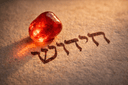
The 33rd Day of the Omer Counting; Rashbi's Day of Rejoicing
Hama'aseh Hu Haikar | May 08, 2025
Print This Article
View Original PDF

The 33rd Day of the Omer Counting; Rashbi's Day of Rejoicing

Hama'aseh Hu Haikar | June 27, 2025

Introduction

The 33rd day of the Omer is celebrated as the day when a plague that wiped out 24,000 students of Rabbi Akivah, one of the greatest sages of Talmudic times, suddenly ceased. The plague had its origins in a spiritual deficiency, our Sages tell us, for the students “did not show respect one to the other.” On their exalted level, they were considered lacking in the love of their fellow Jew.

Lag B’omer therefore reminds us to increase Jewish unity and brotherhood.

Of even greater significance, Lag B’omer is the anniversary of the passing of the great Sage, Rabbi Shimon bar Yochai, known by his acronym, Rashbi – author of the Zohar.

Just prior to his passing, he instructed all Jewry to celebrate the day of Lag B’omer as his Yom Hilula (“Day of Rejoicing”).

On the day of one’s passing, their lifetime’s sum of Torah, prayer and good deeds is elevated and revealed. Especially in the case of a Tzadik (and certainly an unparalleled Tzadik such as Rashbi), each anniversary “causes salvations” here on Earth.

In addition, on that day, he revealed more teachings from the Torah’s innermost mysteries (Kabalah – the “soul” of Torah) than he had done throughout his entire lifetime.

Joy for All Jewry

Lag B’omer, Rashbi’s Yom Hilula, is a Yom Tov and a day of rejoicing.

Rashbi personally introduced and announced this day as his Yom Hilula; and instructed the entire Jewish people to rejoice on this day.

Joy at Completing Our Refinement

[An additional insight into the significance of Lag B’omer: Each day of the Omer counting corresponds to another attribute or sefirah. It is on the 33rd day of the Omer that we reach the sefirah of hod shebehod (“splendor within splendor”). Now, the seven attributes are chesed, gevurah, teiferes, netzach, hod and yesod. Since Yesod facilitates bestowal from the preceding attributes into malchus, it is considered “external” to the preceding attributes. Thus, once we have reached the sefirah of hod shebehod, we have completed refining the “main body of the attributes.”]

It is also worth noting that the attributes are often counted not only from chesed through malchus, but also in reverse – from malchus through chesed. According to this second way, the 33rd day of the Omer corresponds to tiferes shebetiferes. Thus hod shebehod is related to tefires shebetiferes – famous as the birthday of the Rebbe Maharash (author of the approach of lechat’chila ariber).

Unparalleled in All History

Lag B’omer, the day of Rashbi’s passing, is his Yom Hilula (Day of Rejoicing). This is due to the immense greatness that he acquired at the time of his passing. Not only that, but Rashbi instructed us to rejoice on this day; which includes a granting of ability that enables us to rejoice on this day, not only as a decree from Above, but in a manner that makes rational sense that even our nefesh habehamis (animalistic soul) can appreciate.

Rashbi’s joy at that time influenced all those around him, and certainly his own students (the greater a student’s level of connection with Rashbi, the greater was the quality of his joy at the immense elevation that Rashbi attained), as well as all Jewry, for all generations. Moreover, it is an openly revealed joy. This is a phenomenon that has no equal, not even regarding the passing of Moshe Rabbeinu – and certainly not the other Tana’im and Amora’im [who lived in that era]. (Night and Motzei Lag B’omer 5748; Hisvaaduyos pp. 310-311, with fns. 43 and 45)

Feasting and Rejoicing

Some have the custom to eat a festive meal on the eve of Lag B’omer as well. (Lag B’omer 5751; Hisvaaduyos p. 215) This is in addition to the festive meal that is held during the actual day of Lag B’omer. (Parshas Emor 5750; Hisvaaduyos p. 176)

The Alter Rebbe states in his Shulchan Aruch (Orach Chayim 493:5), that “We have a custom to somewhat increase in joy on this day. In Igros Kodesh (p. 117), he states, “…on the 18th of Iyar, they rejoice and exult in Hashem with all heart and soul, and hold a day of feasting and rejoicing.” (Parshas Acharei-Kedoshim 5750, fn. 92; Hisvaaduyos p. 148)

No Sadness Permitted

Due to the rejoicing of Rashbi, we do not even permit the recital of nacheim [a prayer lamenting the destruction of the Beis HaMikdash and pleading for its restoration; normally reserved for Av 9]. Although nacheim is a prayer and request to terminate our exile [and therefore has a positive side], nevertheless, it emphasizes the opposite of happiness [by mentioning the destruction and consequent exile].

Indeed, there is a story of one [exceptional scholar] who [had the unique custom of reciting nacheim daily, throughout the year. However, when he] recited nacheim on Lag B’omer, he was penalized [from Heaven] with a most harsh punishment – the opposite of prolonged life... (Parshas Acharei-Kedoshim, Iyar 13 5748; Hisvaaduyos p. 297)

Despite the fact that it was this person’s custom to recite Nacheim every day of the year. (Parshas Emor, fn. 97; Hisvaaduyos p. 169) [Seemingly, his action should not have been perceived as “slighting” Rashbi’s Yom Hilula by dampening the joy with the sadness of exile; after all, this scholar even recited nacheim on Shabbos and Yom Tov, and was not punished for dampening even such Biblically mandated joy!]

Why Such a Harsh Punishment?

Two unique points [that beg explanation] emerge from the above story: 1) The actual punishment [i.e., the fact that Rashbi’s dissatisfaction should result in the scholar passing away] is something totally and utterly irregular for tzadikim … 2) The fact that the punishment not only occurred, but was even publicized – despite proceeding … mechayil el chayil, “going from strength to [even greater] strength.” (Parshas Behar-Bechukosai, Iyar 8, 11 and 15 5748; Hisvaaduyos pp. 269-270)

Twenty Four Hours of Celebration

The celebrations begin with the eve of Lag B’omer; the full twenty four hours are considered a time of rejoicing, with the joy being steadily increased from one hour to the next. This is the widespread custom, which continues to reach more and more communities – and it is also the Chabad custom.

Introduction

The 33rd day of the Omer is celebrated as the day when a plague that wiped out 24,000 students of Rabbi Akivah, one of the greatest sages of Talmudic times, suddenly ceased. The plague had its origins in a spiritual deficiency, our Sages tell us, for the students “did not show respect one to the other.” On their exalted level, they were considered lacking in the love of their fellow Jew.

Lag B’omer therefore reminds us to increase Jewish unity and brotherhood.

Of even greater significance, Lag B’omer is the anniversary of the passing of the great Sage, Rabbi Shimon bar Yochai, known by his acronym, Rashbi – author of the Zohar.

Just prior to his passing, he instructed all Jewry to celebrate the day of Lag B’omer as his Yom Hilula (“Day of Rejoicing”).

On the day of one’s passing, their lifetime’s sum of Torah, prayer and good deeds is elevated and revealed. Especially in the case of a Tzadik (and certainly an unparalleled Tzadik such as Rashbi), each anniversary “causes salvations” here on Earth.

In addition, on that day, he revealed more teachings from the Torah’s innermost mysteries (Kabalah – the “soul” of Torah) than he had done throughout his entire lifetime.

Joy for All Jewry

Lag B’omer, Rashbi’s Yom Hilula, is a Yom Tov and a day of rejoicing.

Rashbi personally introduced and announced this day as his Yom Hilula; and instructed the entire Jewish people to rejoice on this day.

Joy at Completing Our Refinement

[An additional insight into the significance of Lag B’omer: Each day of the Omer counting corresponds to another attribute or sefirah. It is on the 33rd day of the Omer that we reach the sefirah of hod shebehod (“splendor within splendor”). Now, the seven attributes are chesed, gevurah, teiferes, netzach, hod and yesod. Since Yesod facilitates bestowal from the preceding attributes into malchus, it is considered “external” to the preceding attributes. Thus, once we have reached the sefirah of hod shebehod, we have completed refining the “main body of the attributes.”]

It is also worth noting that the attributes are often counted not only from chesed through malchus, but also in reverse – from malchus through chesed. According to this second way, the 33rd day of the Omer corresponds to tiferes shebetiferes. Thus hod shebehod is related to tefires shebetiferes – famous as the birthday of the Rebbe Maharash (author of the approach of lechat’chila ariber).

Unparalleled in All History

Lag B’omer, the day of Rashbi’s passing, is his Yom Hilula (Day of Rejoicing). This is due to the immense greatness that he acquired at the time of his passing. Not only that, but Rashbi instructed us to rejoice on this day; which includes a granting of ability that enables us to rejoice on this day, not only as a decree from Above, but in a manner that makes rational sense that even our nefesh habehamis (animalistic soul) can appreciate.

Rashbi’s joy at that time influenced all those around him, and certainly his own students (the greater a student’s level of connection with Rashbi, the greater was the quality of his joy at the immense elevation that Rashbi attained), as well as all Jewry, for all generations. Moreover, it is an openly revealed joy. This is a phenomenon that has no equal, not even regarding the passing of Moshe Rabbeinu – and certainly not the other Tana’im and Amora’im [who lived in that era]. (Night and Motzei Lag B’omer 5748; Hisvaaduyos pp. 310-311, with fns. 43 and 45)

Feasting and Rejoicing

Some have the custom to eat a festive meal on the eve of Lag B’omer as well. (Lag B’omer 5751; Hisvaaduyos p. 215) This is in addition to the festive meal that is held during the actual day of Lag B’omer. (Parshas Emor 5750; Hisvaaduyos p. 176)

The Alter Rebbe states in his Shulchan Aruch (Orach Chayim 493:5), that “We have a custom to somewhat increase in joy on this day. In Igros Kodesh (p. 117), he states, “…on the 18th of Iyar, they rejoice and exult in Hashem with all heart and soul, and hold a day of feasting and rejoicing.” (Parshas Acharei-Kedoshim 5750, fn. 92; Hisvaaduyos p. 148)

No Sadness Permitted

Due to the rejoicing of Rashbi, we do not even permit the recital of nacheim [a prayer lamenting the destruction of the Beis HaMikdash and pleading for its restoration; normally reserved for Av 9]. Although nacheim is a prayer and request to terminate our exile [and therefore has a positive side], nevertheless, it emphasizes the opposite of happiness [by mentioning the destruction and consequent exile].

Indeed, there is a story of one [exceptional scholar] who [had the unique custom of reciting nacheim daily, throughout the year. However, when he] recited nacheim on Lag B’omer, he was penalized [from Heaven] with a most harsh punishment – the opposite of prolonged life... (Parshas Acharei-Kedoshim, Iyar 13 5748; Hisvaaduyos p. 297)

Despite the fact that it was this person’s custom to recite Nacheim every day of the year. (Parshas Emor, fn. 97; Hisvaaduyos p. 169) [Seemingly, his action should not have been perceived as “slighting” Rashbi’s Yom Hilula by dampening the joy with the sadness of exile; after all, this scholar even recited nacheim on Shabbos and Yom Tov, and was not punished for dampening even such Biblically mandated joy!]

Why Such a Harsh Punishment?

Two unique points [that beg explanation] emerge from the above story: 1) The actual punishment [i.e., the fact that Rashbi’s dissatisfaction should result in the scholar passing away] is something totally and utterly irregular for tzadikim … 2) The fact that the punishment not only occurred, but was even publicized – despite proceeding … mechayil el chayil, “going from strength to [even greater] strength.” (Parshas Behar-Bechukosai, Iyar 8, 11 and 15 5748; Hisvaaduyos pp. 269-270)

Twenty Four Hours of Celebration

The celebrations begin with the eve of Lag B’omer; the full twenty four hours are considered a time of rejoicing, with the joy being steadily increased from one hour to the next. This is the widespread custom, which continues to reach more and more communities – and it is also the Chabad custom.

PDF Preview