If One Bedieved Made Kiddush on Uncovered Wine May He Recite Kiddush a Second Time
למודי משה | July 10, 2025
Print This Article
View Original PDF

If One Bedieved Made Kiddush on Uncovered Wine May He Recite Kiddush a Second Time

למודי משה | December 10, 2025

The Gemara in Menachos (64a) teaches that if one shechted a korban tamid on Shabbos and after shechting it he realized it was a very lean animal, and subsequently he finds a fattier animal, he may shecht the fattier animal even though it’s Shabbos, due to hiddur mitzvah (the fattier the korban, the better the korban). Although retroactively it will turn the first shechitah into chillul Shabbos it doesn’t matter, since the second one is more mehudar. Based on this Gemara, the Bikuray Yosef (272:1) writes: If one recited kiddush on uncovered wine, he may recite kiddush a second time on the more mehudar uncovered wine, and we aren’t worried about the first berachah of kiddush being in vain.

However, the Ohr Yashor (Menachos) argues and says there is a big difference between these two cases. By korbanos there is a special pasuk requiring one to bring a mehudar korban (מן המובחר), there is no such pasuk by kiddush. Moreover, the Gemara in Menachos is talking about a case when the sprinkling of the blood hasn’t yet been done, if, however, the korban tamid would be complete, there would be no room to repeat the korban. Additionally, when shechting a korban tzibbur [communal korban] the kohen is acting as a shliach [messenger] on behalf of the tzibbur, and if he changes from what the tzibbur wants the shlichus is invalid. The tzibbur wants the best korban possible, therefore, the lean korban is invalid. However, by kiddush there is no shelichus. Based on all these arguments, it’s extremely difficult to say that one may recite kiddush a second time without worrying about the first kiddush being a berachah levatolah.
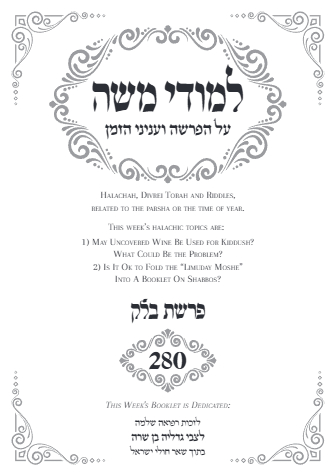
The Gemara in Menachos (64a) teaches that if one shechted a korban tamid on Shabbos and after shechting it he realized it was a very lean animal, and subsequently he finds a fattier animal, he may shecht the fattier animal even though it’s Shabbos, due to hiddur mitzvah (the fattier the korban, the better the korban). Although retroactively it will turn the first shechitah into chillul Shabbos it doesn’t matter, since the second one is more mehudar. Based on this Gemara, the Bikuray Yosef (272:1) writes: If one recited kiddush on uncovered wine, he may recite kiddush a second time on the more mehudar uncovered wine, and we aren’t worried about the first berachah of kiddush being in vain.

However, the Ohr Yashor (Menachos) argues and says there is a big difference between these two cases. By korbanos there is a special pasuk requiring one to bring a mehudar korban (מן המובחר), there is no such pasuk by kiddush. Moreover, the Gemara in Menachos is talking about a case when the sprinkling of the blood hasn’t yet been done, if, however, the korban tamid would be complete, there would be no room to repeat the korban. Additionally, when shechting a korban tzibbur [communal korban] the kohen is acting as a shliach [messenger] on behalf of the tzibbur, and if he changes from what the tzibbur wants the shlichus is invalid. The tzibbur wants the best korban possible, therefore, the lean korban is invalid. However, by kiddush there is no shelichus. Based on all these arguments, it’s extremely difficult to say that one may recite kiddush a second time without worrying about the first kiddush being a berachah levatolah.

PDF Preview