Mayim Besasson from the Springs of Yeshuah
In honor of the yahrtzeit of the Ohr Hachaim HaKadosh, this coming Sunday, 15 Tammuz, we present this wondrous story that took place in his time, which indicates the importance of saying Birchos Hanehenin.
This story was written in the introduction to sefer Otzar Michtavim, Vol. II, by the writer Rav Yosef Mashash, the Rav of Haifa, as he heard it “with great emotion” from Harav Raphael Elnekaveh, the Rav of Morocco and a native of the city of Sali, where the Ohr Hachaim was born “as it was passed down from his holy fathers.”
Yeshuah Sasportas was a resident of the city of Sali at the time when the Ohr Hachaim lived there. Yeshuah was fabulously wealthy, and he had numerous estates throughout the region. His fields and vineyards yielded an abundance of crops, which filled his treasuries with a fortune. At the same time, as wealthy as he was, he was also rather ignorant. He tried to keep the mitzvos he knew about, but they were few and far between.
But his emunas chachamim was very strong. He didn’t do anything without consulting the tzaddik in his city, the Ohr Hachaim. Whenever he was about to close a big deal, or he needed a yeshuah, he would head for the modest little house at the edge of the city, where Rav Chaim Ben Attar sat day and night, learning and serving Hashem.
At the time, Yeshuah was about to close one of his biggest deals ever. He was preparing to purchase a well-known orchard in the heart of Sali. The large trees yielded beautiful fruits, and they were known throughout Morocco. The demand for this orchard’s fruits was very strong, and whoever owned the orchard would be very rich from the profits.
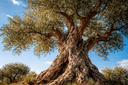
The secret of the orchard’s special fruits were two sweet springs that bubbled between the trees of the flowering fruit trees. The clear water flowed between the trees and watered them generously.
Over time, the orchard became a rare gem, and the clear air, the green trees and juicy fruit, as well as the bubbling water, made it into a preferred vacation spot for residents of the area, Jews and non-Jews alike.
There were vacation homes scattered on the outskirts of the orchard, and they were rented out to whoever sought to flee a bit form the hustle and bustle of the city. There were visitors there almost every day of the year.
Purchasing the orchard from the Arab owner was not an easy task for Yeshuah. He had dedicated most of his fortune to it. But he was also a seasoned businessman, and if he had chosen to invest most of his fortune in this deal, it was because he expected that within a few years, the profits would cover his investment, and then he’d double and triple his fortune, endlessly.
Before he closed the deal, Yehsuah went to the home of the Ohr Hachaim, and shared the details of the deal. He received a warm brachah from the sage, and proceeded to sign the contract.
Two months passed, and one morning Yeshuah walked through the gates of the orchard, as he did every day. But he realized right away that something wasn’t right. He looked around and recoiled, the irrigation canals that watered the orchard were dry.
He hurried to the water sources; perhaps something was blocking the water from passing. But there he also discovered that the springs were dry, and were no longer giving water. The best experts were summoned; they dug, they calculated, and they gave their assumptions, but nothing helped. Yeshuah’s world went dark.
Dried up springs was a death blow for the orchard, and for the vacation village that nestled there, but most importantly, it meant that his money had been invested into a failed enterprise and he would be left with almost nothing.
In desperation, he hurried back to the home of the Ohr Hachaim, sat down at the table and burst into uncontrollable sobs. A few minutes passed until he was able to speak, but not before he sipped from the cup of cold water that the tzaddik served him.
With great patience, the Ohr Hachaim listened to the dismal story. His compassionate eyes studied the man with pain and sympathy, and when he finished the Ohr Hachaim said in a low voice, measuring each word:
I watched you when you drank the cup of water and I was shocked to see that you did not make a brachah before it or after it! Know that the lack of these two brachos – brachah rishonah and acharonah - is why the wells have dried up!
The Ohr Hachaim added: I am sure of this, and it is alluded to in the Navi, as the passuk says (Yeshayah 12:3): “Ushe’avtem mayim besasson mima’ayanei hayeshuah” – בששון is בברכות שתים שהכל ובורא an acronym for נפשות because only one who is careful with these brachos will merit to drink mayim chaim from the wellsprings of yeshuah, and someone who is not careful risks losing the brachah. If you take upon yourself from this day on to be strict about brachos, I promise you that the springs will return to give their water!”
The words that emerged from the tzaddik’s pure soul found a path into Yeshuah’s heart. He took upon himself to strength his recital of brachos, and even promised to urge others to do the same. The Ohr Hachaim warmly blessed him, and Yeshuah left the house with a calm heart.
Wondrously enough, a day later, the wellsprings began to bubble as before. Yeshuah was extremely scrupulous about his commitment. Form that day on, all visitors to the orchard were welcomed with a big sign bearing the words of the brachos of Shehakol and Borei Nefashos in large letters, with a reminder: “It is an obligation to make a brachah before and after drinking the water!”
From that point on the place was named Ma’ayanot Chaim, in the name of the tzaddik, and for many years, those springs were known as a segulah for healing and yeshuos, in the merit of the Ohr Hachaim hakadosh, zt”l.