Becoming Transformed Through the Spirit of the Mitzvos
Havineini | June 19, 2024
Print This Article
View Original PDF

Becoming Transformed Through the Spirit of the Mitzvos

Havineini | June 27, 2025

Becoming Transformed Through the Spirit of the Mitzvos

Fulfilling the Spirit of the Mitzvos

There is an incredible Ramban in Parashas Kedoshim in which he explains the concept of לך במותר עצמך קדש, sanctifying ourselves through things that are permissible to us.

The Ramban explains that HaKadosh Baruch Hu says to Klal Yisrael, “After I have outlined what is permitted and what is prohibited, I now tell you that sometimes you should refrain even from what is permitted.” These are the famous words of the Ramban on this pasuk—but there are very strong words with which he continues:

In everything that the Torah commands us, it behooves us to go beyond what is said; to find the hashkafah, the worldview, that is revealed to us through that mitzvah.

For example, there are the laws of tumah and taharah...but then there are levels of kedushah that a person can take upon himself, such as Nazir and others which are enumerated in Maseches Chagigah—because HaKadosh Baruch Hu wants us to grow in our kedushah beyond simply what is permitted or prohibited. “And one should also guard his mouth and his tongue from excessive eating and from repulsive speech,” the Ramban continues:

Slowly but surely, a person internalizes the mehalech, the idea behind the mitzvos that are designed to perfect his character. The same applies to interpersonal relationships and the middos of honesty and kindness, going above and beyond in these areas.

HaKadosh Baruch Hu implores us to use wisdom in grasping these ideas—to become a different kind of person, a person who is good and honest and removed from the lowly elements of This World, to fulfill the spirit of all these mitzvos.

The Torah’s Wisdom Is Greater Than All Others

The concept of looking beyond the letter of the law and understanding the spirit of what is expected of us—to transform ourselves through those ideas—applies in all areas of life.

Suppose that a person wants to become a psychologist, but he is not really cut out for it. Now he wants to treat patients. This person will refer constantly to the books and manuals for how to conduct himself in his practice, but he will never be successful. Why? Because he hasn’t mastered and internalized the “soul of the matter,” the ideas behind them. The entire point of the handbook is to arouse within the doctor the innate wisdom and knowledge within him.

The same is true for general physicians, and in so many other areas of life and business success.

If this is true of worldly wisdom, how much more so is it true for Torah wisdom. We must go beyond the “letter of the law” of the Torah. It’s not sufficient to say, “I asked a rav and he said it is permitted....” One must utilize the instincts that have been honed through the commands of the Torah to know how to behave like a more elevated person.

Beyond the Letter

It is extremely painful to observe that this concept is lacking in our generation. Some would ask, with all the Torah and chessed in this generation, how is it that Mashiach hasn’t come yet? But what about the concept of תהיו קדושים in so many areas... kedushah in monetary matters, kedushah in areas of taharah...?

The Ramban discusses this in regard to Shabbos, in experiencing true kedushas Shabbos. The Torah exhorts us not to do melachah on Shabbos. And so, how would a Yid look if he carried out these instructions to the letter only! “But I didn’t do anything that is assur,” he will say... “It is permitted to think about mundane matters—it’s right there in Ma Yedidus...and so forth.” Such a person hasn’t grasped the idea of kedushas Shabbos.

Says HaKadosh Baruch Hu, “Didn’t I write directly into the Torah what Shabbos is all about?! Didn’t I write that Shabbos is an ביני אות וביניכם, a sign between Myself and Klal Yisrael? Didn’t I write clearly in the Torah, אותו ויקדש השביעי יום את אלוקים ויברך, Hashem sanctified the Seventh Day? How did you translate vayekadesh?”

If One Doesn’t Get It...

If a person doesn’t “get it” through these instructions of kedushah, he won’t understand even if Hashem wrote into the Torah to express specific emotions and to sing zemiros.... He will continue to follow only the letter of what was written and nothing more. HaKadosh Baruch Hu wants us to “get the idea.” Every nefesh has its own pathway of drawing chiyus from Shabbos, but everyone must use their wisdom to go beyond the letter, and truly “live” kedushas Shabbos.

Concludes the Ramban:

The Chachomim have aided us by making certain takanos, such as prohibiting giving verbal instructions to a non-Jew, and others like it, to enable us to grasp and internalize the kedushah of Shabbos even further on our own.

Torah and Mitzvos Performed Humbly

A Heilige Yid Is Repulsed by Hubris

When a Yid begins to grasp that the essence of Yiddishkeit is dependent upon תהיו קדושים—thereby becoming a true Yid—he becomes repulsed by avodas Hashem that lacks bittul and anavah. When a person engages in a ruchniyus avodah out of ga’avah, he loses everything he would have gained from the experience. This is very painful to say, but if we were
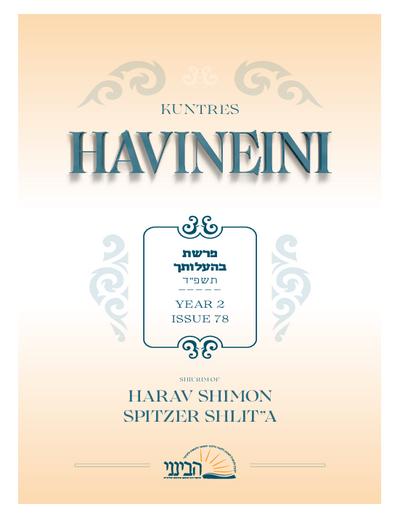

Becoming Transformed Through the Spirit of the Mitzvos

Fulfilling the Spirit of the Mitzvos

There is an incredible Ramban in Parashas Kedoshim in which he explains the concept of לך במותר עצמך קדש, sanctifying ourselves through things that are permissible to us.

The Ramban explains that HaKadosh Baruch Hu says to Klal Yisrael, “After I have outlined what is permitted and what is prohibited, I now tell you that sometimes you should refrain even from what is permitted.” These are the famous words of the Ramban on this pasuk—but there are very strong words with which he continues:

In everything that the Torah commands us, it behooves us to go beyond what is said; to find the hashkafah, the worldview, that is revealed to us through that mitzvah.

For example, there are the laws of tumah and taharah...but then there are levels of kedushah that a person can take upon himself, such as Nazir and others which are enumerated in Maseches Chagigah—because HaKadosh Baruch Hu wants us to grow in our kedushah beyond simply what is permitted or prohibited. “And one should also guard his mouth and his tongue from excessive eating and from repulsive speech,” the Ramban continues:

Slowly but surely, a person internalizes the mehalech, the idea behind the mitzvos that are designed to perfect his character. The same applies to interpersonal relationships and the middos of honesty and kindness, going above and beyond in these areas.

HaKadosh Baruch Hu implores us to use wisdom in grasping these ideas—to become a different kind of person, a person who is good and honest and removed from the lowly elements of This World, to fulfill the spirit of all these mitzvos.

The Torah’s Wisdom Is Greater Than All Others

The concept of looking beyond the letter of the law and understanding the spirit of what is expected of us—to transform ourselves through those ideas—applies in all areas of life.

Suppose that a person wants to become a psychologist, but he is not really cut out for it. Now he wants to treat patients. This person will refer constantly to the books and manuals for how to conduct himself in his practice, but he will never be successful. Why? Because he hasn’t mastered and internalized the “soul of the matter,” the ideas behind them. The entire point of the handbook is to arouse within the doctor the innate wisdom and knowledge within him.

The same is true for general physicians, and in so many other areas of life and business success.

If this is true of worldly wisdom, how much more so is it true for Torah wisdom. We must go beyond the “letter of the law” of the Torah. It’s not sufficient to say, “I asked a rav and he said it is permitted....” One must utilize the instincts that have been honed through the commands of the Torah to know how to behave like a more elevated person.

Beyond the Letter

It is extremely painful to observe that this concept is lacking in our generation. Some would ask, with all the Torah and chessed in this generation, how is it that Mashiach hasn’t come yet? But what about the concept of תהיו קדושים in so many areas... kedushah in monetary matters, kedushah in areas of taharah...?

The Ramban discusses this in regard to Shabbos, in experiencing true kedushas Shabbos. The Torah exhorts us not to do melachah on Shabbos. And so, how would a Yid look if he carried out these instructions to the letter only! “But I didn’t do anything that is assur,” he will say... “It is permitted to think about mundane matters—it’s right there in Ma Yedidus...and so forth.” Such a person hasn’t grasped the idea of kedushas Shabbos.

Says HaKadosh Baruch Hu, “Didn’t I write directly into the Torah what Shabbos is all about?! Didn’t I write that Shabbos is an ביני אות וביניכם, a sign between Myself and Klal Yisrael? Didn’t I write clearly in the Torah, אותו ויקדש השביעי יום את אלוקים ויברך, Hashem sanctified the Seventh Day? How did you translate vayekadesh?”

If One Doesn’t Get It...

If a person doesn’t “get it” through these instructions of kedushah, he won’t understand even if Hashem wrote into the Torah to express specific emotions and to sing zemiros.... He will continue to follow only the letter of what was written and nothing more. HaKadosh Baruch Hu wants us to “get the idea.” Every nefesh has its own pathway of drawing chiyus from Shabbos, but everyone must use their wisdom to go beyond the letter, and truly “live” kedushas Shabbos.

Concludes the Ramban:

The Chachomim have aided us by making certain takanos, such as prohibiting giving verbal instructions to a non-Jew, and others like it, to enable us to grasp and internalize the kedushah of Shabbos even further on our own.

Torah and Mitzvos Performed Humbly

A Heilige Yid Is Repulsed by Hubris

When a Yid begins to grasp that the essence of Yiddishkeit is dependent upon תהיו קדושים—thereby becoming a true Yid—he becomes repulsed by avodas Hashem that lacks bittul and anavah. When a person engages in a ruchniyus avodah out of ga’avah, he loses everything he would have gained from the experience. This is very painful to say, but if we were

PDF Preview