Then you will be vindicated from Hashem and from Israel
Print This Article
View Original PDF

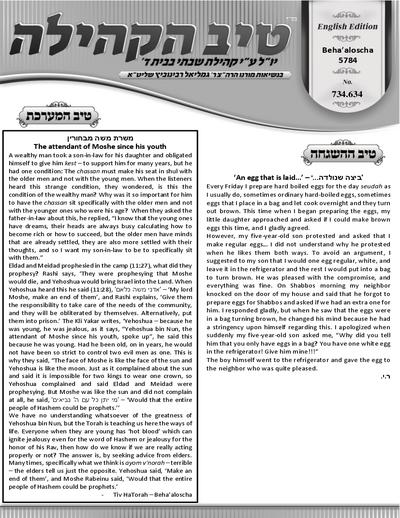
Then you will be vindicated from Hashem and from Israel

טיב הקהילה English | June 27, 2025

והייתם נקיים מה' ומישראל

Then you will be vindicated from Hashem and from Israel

וַיֹּאמֶר אֵלָיו לֹּא אֵלֵךְ כִּי אִּם אֶל אַרְ צִּי וְאֶל מוֹלַדְ תִּי אֵלֵךְ: וַיֹּאמֶר אַל נָא תַעֲזֹּב אֹּתָנוּ כִּי עַל כֵן יָדַעְתָ חֲנֹּתֵנוּ בַמִּדְ בָר וְהָיִּיתָ לָנוּ לְעֵינָיִּם: (י:ל-לא)

He said to him, “I shall not go, but rather to my land and to my family shall I go.” He said, “Please do not forsake us, inasmuch as you know our encampments in the wilderness, and you have been as eyes for us. (10:30-31)

Rashi explains: The word נא means nothing but a request. People should not say that Yisro did not convert out of love of Hashem, rather, he was under the impression that converts have a portion in the Land. Now that he saw that they do not have a portion, he left Bnei Yisrael and went on his way.

In order to understand the depth of Rashi’s intent, it would be fitting to bring several teachings of Chazal which talk about the nature of Yisro, and from this we will also understand the esteem the world had towards him and mainly in the midst of the Jewish nation.

It is brought down in Chazal that Yisro recognized from the outset that all his actions were for the sake of Heaven. Chazal tell us (Sotah 11a) that when Pharoah saw Israel was multiplying, he took counsel from his three advisers: Balaam, Iyov, and Yisro. Balaam advised to destroy Israel, and he was punished with his own advice that in time he was killed by them. Iyov did not advise bad against them chalilah, however, he did not protest against Balaam’s advice, and so, he had to be punished with challenges. But Yisro did not agree with Balaam’s conspiracy, and his reward for this was that I time his descendants sat in the Lishkas HaGaziz – Chamber of Hewn Stone.

The Midrash of Chazal state that additionally even Pharoah warned that the G-d of the Jews in the future would take retribution from him just as He had from their fathers and grandfathers who bullied them. That is, his disapproval was rooted in a firm 'belief' [emunah], until he was ready to give his life over it, and speak harshly before Pharaoh, and by doing so he put himself in grave danger, for his words aroused the wrath of Pharoah who wanted to kill him, and for this reason he was forced to flee from Egypt and go to Midian.

We see from this Gemara that even when Israel was living a land not their own, Yisro was ready to give up his life for them, and he was prepared to forgo his exalted stature in the kingdom of Egypt and flee to Midian which was a strange land to him.

Even the Midianites ultimately recognized the unique attributes of Yisro and appointed him as an ‘officer’ over them as Rashi explains (Shemos 2:16) 'ולכהן מדין' – ‘the minister of Midian’: ‘He had been the foremost among them’, but even there even the greatness did not let him veer from the truth. True, at first he fattened calves for idolatry (see Sotah 43a and Rashi to 25:11), but after he investigated all the religions and their gods he understand that there was nothing there, and he separated himself from them. The result was he lost his standing even there, and he was an embarrassment to the people of his place. Even his servants who were already low, since they had to go out into the street to supply the needs of their masters, so even more than being shamed by being servants, they were even more shamed by being Yisro’s servants. He was forced to have his daughters supply his needs. They herded his sheep, and they had to draw water to water them.

After the ‘devotion’ of Yisro for the truth he was famous amid Bais Yisrael. We must understand, no doubt if he returned to his land, to his birthplace, he would have been honored, would anyone suspect that he converted just to inherit a portion in Eretz Yisrael? And what's more, his return to his country involved a lot of suffering on the part of the townspeople who ostracized him as mentioned, so surely he would have allowed him to be a 'resident in the country' rather than being trusted in Midian as an 'ostracized resident', if so, it is not possible at all to hinge his return to his land in consideration of convenience.

Still, we see here that Moshe wanted his father-in-law to be counted with Israel in their journeys, so that they would not say that he converted out of affection. We learn from this that the person should distance himself as much as possible from any suspicion, as it says (further 32:22) 'והייתם נקיים מה' ומישראל ' – ‘then you will be vindicated from Hashem and Israel’, not just when there is a reason to be suspicious.

It is brought in the Yerushalmi (Shekalim 3:2), ‘In the Torah, and in the Prophets [nevi’im], and in the Writings [kesuvim] we find that a person must conduct himself with people just as he does with the Omipresent. In the Torah – (Bamidbar 32:22) as mentioned. In the Prophets – (Yehoshua 22:22) 'ק ל אלקים ה' הוא יודע וישראל הוא ידע' – ‘Almighty, G-d, Hashem; He knows and Israel shall know’. And in the Writings – (Mishlei 3:4), 'ומצא חן ושכל טוב בעיני אלקים ואדם' – ‘And you will find favor and goodly wisdom in the eyes of G-d and man’. We must understand that since Chazal went to the trouble to support their words even from the Prophets and the Writings it shows that there was an extra necessity.

We see in various situations that to remove ‘suspicion’ there is a need for ‘an apology’ or ‘a clarification of the matter’, but here the ‘yetzer of arrogance’ is aroused and it does not let the person do it. It twists things to show him that an apology would be to his detriment, and it improves its view with the words of the Ramah in the beginning of the ‘Shulchan Aruch’ (Orach Chaim 1:1) ‘He should not be not ashamed from those who mock him.’ The yetzer lets him understand that the Ramah had hi in mind, after all, 'mockery' is reproaching the virtue of those who walk in the ways of Hashem, and if he is the honest man they suspect, it is his duty to ignore the claim of those mocking him without addressing their words.

However, the person is forbidden to be tempted by this. The person must be with good people who know how to differentiate between one action and another. True, the Ramah speaks of those who mock the tzaddik, but he did not intend them where there is chilul Hashem, only where this just mocking. But if this causes ‘suspicion’, then one must any trace of suspicion, perhaps they will take his silence as admission, even if he is a chacham or a tzaddik, he should be concerned for the mockery.

We find many regulations that Chazal instituted to avoid suspicion, for example (Yoma 38a), ‘The Garmu family were expert in making the lechem hapanim, yet white bread was never found with their children, so that they cannot say that it came from the lechem hapanim.’ Also, ‘the Avtinas family were expert in compounding the Ketores, and yet no kallah left the house with perfume, and when they married a woman from another place, they stipulated that they cannot wear perfume, so that they could not say they took it from the Ketores.’ They were concerned for suspicion.

Hashem Yisbarach should help us that His Name be sanctified through us, and we fulfill ‘And you will find favor and goodly wisdom in the eyes of G-d and man’.

והייתם נקיים מה' ומישראל

Then you will be vindicated from Hashem and from Israel

וַיֹּאמֶר אֵלָיו לֹּא אֵלֵךְ כִּי אִּם אֶל אַרְ צִּי וְאֶל מוֹלַדְ תִּי אֵלֵךְ: וַיֹּאמֶר אַל נָא תַעֲזֹּב אֹּתָנוּ כִּי עַל כֵן יָדַעְתָ חֲנֹּתֵנוּ בַמִּדְ בָר וְהָיִּיתָ לָנוּ לְעֵינָיִּם: (י:ל-לא)

He said to him, “I shall not go, but rather to my land and to my family shall I go.” He said, “Please do not forsake us, inasmuch as you know our encampments in the wilderness, and you have been as eyes for us. (10:30-31)

Rashi explains: The word נא means nothing but a request. People should not say that Yisro did not convert out of love of Hashem, rather, he was under the impression that converts have a portion in the Land. Now that he saw that they do not have a portion, he left Bnei Yisrael and went on his way.

In order to understand the depth of Rashi’s intent, it would be fitting to bring several teachings of Chazal which talk about the nature of Yisro, and from this we will also understand the esteem the world had towards him and mainly in the midst of the Jewish nation.

It is brought down in Chazal that Yisro recognized from the outset that all his actions were for the sake of Heaven. Chazal tell us (Sotah 11a) that when Pharoah saw Israel was multiplying, he took counsel from his three advisers: Balaam, Iyov, and Yisro. Balaam advised to destroy Israel, and he was punished with his own advice that in time he was killed by them. Iyov did not advise bad against them chalilah, however, he did not protest against Balaam’s advice, and so, he had to be punished with challenges. But Yisro did not agree with Balaam’s conspiracy, and his reward for this was that I time his descendants sat in the Lishkas HaGaziz – Chamber of Hewn Stone.

The Midrash of Chazal state that additionally even Pharoah warned that the G-d of the Jews in the future would take retribution from him just as He had from their fathers and grandfathers who bullied them. That is, his disapproval was rooted in a firm 'belief' [emunah], until he was ready to give his life over it, and speak harshly before Pharaoh, and by doing so he put himself in grave danger, for his words aroused the wrath of Pharoah who wanted to kill him, and for this reason he was forced to flee from Egypt and go to Midian.

We see from this Gemara that even when Israel was living a land not their own, Yisro was ready to give up his life for them, and he was prepared to forgo his exalted stature in the kingdom of Egypt and flee to Midian which was a strange land to him.

Even the Midianites ultimately recognized the unique attributes of Yisro and appointed him as an ‘officer’ over them as Rashi explains (Shemos 2:16) 'ולכהן מדין' – ‘the minister of Midian’: ‘He had been the foremost among them’, but even there even the greatness did not let him veer from the truth. True, at first he fattened calves for idolatry (see Sotah 43a and Rashi to 25:11), but after he investigated all the religions and their gods he understand that there was nothing there, and he separated himself from them. The result was he lost his standing even there, and he was an embarrassment to the people of his place. Even his servants who were already low, since they had to go out into the street to supply the needs of their masters, so even more than being shamed by being servants, they were even more shamed by being Yisro’s servants. He was forced to have his daughters supply his needs. They herded his sheep, and they had to draw water to water them.

After the ‘devotion’ of Yisro for the truth he was famous amid Bais Yisrael. We must understand, no doubt if he returned to his land, to his birthplace, he would have been honored, would anyone suspect that he converted just to inherit a portion in Eretz Yisrael? And what's more, his return to his country involved a lot of suffering on the part of the townspeople who ostracized him as mentioned, so surely he would have allowed him to be a 'resident in the country' rather than being trusted in Midian as an 'ostracized resident', if so, it is not possible at all to hinge his return to his land in consideration of convenience.

Still, we see here that Moshe wanted his father-in-law to be counted with Israel in their journeys, so that they would not say that he converted out of affection. We learn from this that the person should distance himself as much as possible from any suspicion, as it says (further 32:22) 'והייתם נקיים מה' ומישראל ' – ‘then you will be vindicated from Hashem and Israel’, not just when there is a reason to be suspicious.

It is brought in the Yerushalmi (Shekalim 3:2), ‘In the Torah, and in the Prophets [nevi’im], and in the Writings [kesuvim] we find that a person must conduct himself with people just as he does with the Omipresent. In the Torah – (Bamidbar 32:22) as mentioned. In the Prophets – (Yehoshua 22:22) 'ק ל אלקים ה' הוא יודע וישראל הוא ידע' – ‘Almighty, G-d, Hashem; He knows and Israel shall know’. And in the Writings – (Mishlei 3:4), 'ומצא חן ושכל טוב בעיני אלקים ואדם' – ‘And you will find favor and goodly wisdom in the eyes of G-d and man’. We must understand that since Chazal went to the trouble to support their words even from the Prophets and the Writings it shows that there was an extra necessity.

We see in various situations that to remove ‘suspicion’ there is a need for ‘an apology’ or ‘a clarification of the matter’, but here the ‘yetzer of arrogance’ is aroused and it does not let the person do it. It twists things to show him that an apology would be to his detriment, and it improves its view with the words of the Ramah in the beginning of the ‘Shulchan Aruch’ (Orach Chaim 1:1) ‘He should not be not ashamed from those who mock him.’ The yetzer lets him understand that the Ramah had hi in mind, after all, 'mockery' is reproaching the virtue of those who walk in the ways of Hashem, and if he is the honest man they suspect, it is his duty to ignore the claim of those mocking him without addressing their words.

However, the person is forbidden to be tempted by this. The person must be with good people who know how to differentiate between one action and another. True, the Ramah speaks of those who mock the tzaddik, but he did not intend them where there is chilul Hashem, only where this just mocking. But if this causes ‘suspicion’, then one must any trace of suspicion, perhaps they will take his silence as admission, even if he is a chacham or a tzaddik, he should be concerned for the mockery.

We find many regulations that Chazal instituted to avoid suspicion, for example (Yoma 38a), ‘The Garmu family were expert in making the lechem hapanim, yet white bread was never found with their children, so that they cannot say that it came from the lechem hapanim.’ Also, ‘the Avtinas family were expert in compounding the Ketores, and yet no kallah left the house with perfume, and when they married a woman from another place, they stipulated that they cannot wear perfume, so that they could not say they took it from the Ketores.’ They were concerned for suspicion.

Hashem Yisbarach should help us that His Name be sanctified through us, and we fulfill ‘And you will find favor and goodly wisdom in the eyes of G-d and man’.

PDF Preview


