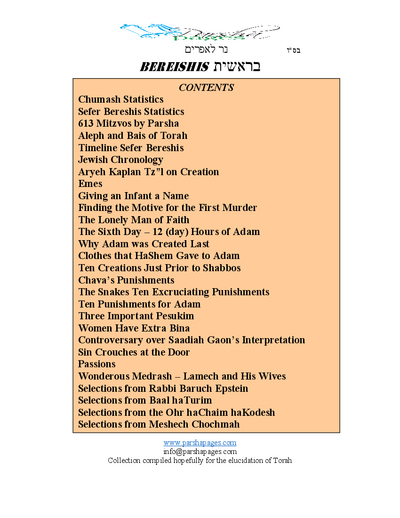
Giving an Infant a Name
Parsha Pages | October 09, 2023
Print This Article
View Original PDF

Giving an Infant a Name

Parsha Pages | December 31, 2025

Berachos 7 - Names are Significant

After the Creation, HaShem gathered all the animals to Adam so that he could name them (Bereishis 2:19-20) and the Midrashim say that Adam also named towns, deserts and angels.

Giving an infant a name is not something arbitrary. Ancient authors mention that a name is a fundamental part of a person and not a mere label (the Chida in Devash Lefi, ma’areches shin, os 20). Pirkei DeRabbi Eli’ezer says (Ch. 13) that Adam was requested to name the creatures, after the angels tried to do so and didn’t succeed.

HaShem puts the fitting name into the mouth of the parents: When a person names his child, HaShem directs him to give the right name, according to Rabbi Chayim Vital zt”l (Sha’ar HaGilgulim, Hakdamah, 23). It is interesting that because of this, there were tzadikim who avoided deciding for those who asked what name to give their child because only the name which comes to the parents' mouth without intervention is the right name for the child (Kuntres Shema Garim by HaGaon Rav M. Gross, 8).

If each parent gave the child a different name: The parents’ authority to give a name is identical and equal and each of them may give a different name and both will be the child’s names! Thus states HaGaon Rabbi Moshe Feinstein zt”l (Responsa Igros Moshe, Y.D., III, 97) as Yaakov called his youngest son Binyamin while Rachel called him Ben-Oni. However, it is accepted custom that the father and mother determine their children’s names alternately, one time by the father and one time by the mother.

The Ashkenazic custom: The Ashkenazic custom is to give the mother the right to name the first child but the sources of this custom are not clear at all, such that some wrote that it has no basis (Bris Avos, 8). Some suggested a fine idea according to the Chida (Nachal Kedumim, Shemos 18:3) that the foundations of this custom are holy as Moshe and his wife Tziporah did so: Tziporah named their firstborn Gershom and Moshe named their second son Eliezer (see however Shemos 2:22; we should mention that after examining the Chida’s statements, it is difficult to attribute the said custom to him).

Giving a name in exchange for a nedunyah: Some say that the custom stemmed from the European lifestyle, according to which young couples were supported by the bride’s parents for a few years after their marriage and they honored the wife’s parents to name the first grandchild growing up in their home (Otzar HaBris, I, p. 335).

The Sephardic custom: The Sephardic custom is for the father to give the first name and so wrote the Rishonim when they explained the order of naming Yehudah’s sons. When his first son was born, it is said “...and she bore a son and he called his name ‘Er” (Bereishis 38:3) – Yehudah named him. When the second son was born, we are told “...and she bore a son and she named him Onan” (ibid, 4) – his wife named him. When the third son was born, we are told “...and she bore a son and she named him Sheilah and he was in Keziv when she bore him” (ibid, 5). In other words, the verse gives a reason for her naming her son, because he was far from home and was staying in Keziv. Were he present, he would have named his son (Da’as Zekeinim MiBa’alei HaTosfos, Radak, Chizkuni and Alsheich). Ramban (on the Torah, ibid) strongly disagrees with this explanation, saying that "it has no taste or smell" but doesn’t disagree with the custom (see Responsa Rashbash, 291).

One way or the other, the holy works warn that no argument should develop about giving a name as aside from the need for polite behavior, arguing about the name endangers the child! (Responsa Mishneh Halachos, chelek 12, siman 361).

Who names the second twin, circumcised first? We conclude with an interesting ruling by Rabbi Moshe Feinstein (Responsa, ibid, 101). If twins are born and the circumcision of the second twin is held first, the Ashkenazic mother or the Sephardic father name him and don’t have to wait for the circumcision of the twin who was born first, as the right to give a name does not relate to the infant born first but to the first infant to be named regardless of the order of birth.

Based on DafNotes.com
Berachos 7 - Names are Significant

After the Creation, HaShem gathered all the animals to Adam so that he could name them (Bereishis 2:19-20) and the Midrashim say that Adam also named towns, deserts and angels.

Giving an infant a name is not something arbitrary. Ancient authors mention that a name is a fundamental part of a person and not a mere label (the Chida in Devash Lefi, ma’areches shin, os 20). Pirkei DeRabbi Eli’ezer says (Ch. 13) that Adam was requested to name the creatures, after the angels tried to do so and didn’t succeed.

HaShem puts the fitting name into the mouth of the parents: When a person names his child, HaShem directs him to give the right name, according to Rabbi Chayim Vital zt”l (Sha’ar HaGilgulim, Hakdamah, 23). It is interesting that because of this, there were tzadikim who avoided deciding for those who asked what name to give their child because only the name which comes to the parents' mouth without intervention is the right name for the child (Kuntres Shema Garim by HaGaon Rav M. Gross, 8).

If each parent gave the child a different name: The parents’ authority to give a name is identical and equal and each of them may give a different name and both will be the child’s names! Thus states HaGaon Rabbi Moshe Feinstein zt”l (Responsa Igros Moshe, Y.D., III, 97) as Yaakov called his youngest son Binyamin while Rachel called him Ben-Oni. However, it is accepted custom that the father and mother determine their children’s names alternately, one time by the father and one time by the mother.

The Ashkenazic custom: The Ashkenazic custom is to give the mother the right to name the first child but the sources of this custom are not clear at all, such that some wrote that it has no basis (Bris Avos, 8). Some suggested a fine idea according to the Chida (Nachal Kedumim, Shemos 18:3) that the foundations of this custom are holy as Moshe and his wife Tziporah did so: Tziporah named their firstborn Gershom and Moshe named their second son Eliezer (see however Shemos 2:22; we should mention that after examining the Chida’s statements, it is difficult to attribute the said custom to him).

Giving a name in exchange for a nedunyah: Some say that the custom stemmed from the European lifestyle, according to which young couples were supported by the bride’s parents for a few years after their marriage and they honored the wife’s parents to name the first grandchild growing up in their home (Otzar HaBris, I, p. 335).

The Sephardic custom: The Sephardic custom is for the father to give the first name and so wrote the Rishonim when they explained the order of naming Yehudah’s sons. When his first son was born, it is said “...and she bore a son and he called his name ‘Er” (Bereishis 38:3) – Yehudah named him. When the second son was born, we are told “...and she bore a son and she named him Onan” (ibid, 4) – his wife named him. When the third son was born, we are told “...and she bore a son and she named him Sheilah and he was in Keziv when she bore him” (ibid, 5). In other words, the verse gives a reason for her naming her son, because he was far from home and was staying in Keziv. Were he present, he would have named his son (Da’as Zekeinim MiBa’alei HaTosfos, Radak, Chizkuni and Alsheich). Ramban (on the Torah, ibid) strongly disagrees with this explanation, saying that "it has no taste or smell" but doesn’t disagree with the custom (see Responsa Rashbash, 291).

One way or the other, the holy works warn that no argument should develop about giving a name as aside from the need for polite behavior, arguing about the name endangers the child! (Responsa Mishneh Halachos, chelek 12, siman 361).

Who names the second twin, circumcised first? We conclude with an interesting ruling by Rabbi Moshe Feinstein (Responsa, ibid, 101). If twins are born and the circumcision of the second twin is held first, the Ashkenazic mother or the Sephardic father name him and don’t have to wait for the circumcision of the twin who was born first, as the right to give a name does not relate to the infant born first but to the first infant to be named regardless of the order of birth.

Based on DafNotes.com

PDF Preview