Parshas Beshalach Proper Preparation
Parsha Jewels | January 29, 2026
Print This Article
View Original PDF

Parshas Beshalach Proper Preparation

Parsha Jewels | January 30, 2026

In the sefer Ateres Dudaim, Rav Dovid Zucker brings a Medrash on the pasuk in Shemos (16:21), which describes how the mann would melt in the sun after everyone gathered their portion. The Mechilta explains that this melted mann turned into liquid and flowed into the rivers. Deer would drink from these rivers, and the gentile nations who hunted and ate these deer would experience the taste of the mann. This unique taste led them to appreciate the elevated status of Klal Yisrael.

Sefer Le’Hagid shares an incredible Medrash: A young man, bored of being confined within the Jewish encampment in the wilderness, decided to venture out. He traveled to the land of Amon, where he was given meat from a deer that had drunk from these mann-infused waters. The taste was unlike anything he had ever experienced, and he excitedly returned to the camp to tell his friends.

Moshe Rabbeinu noticed a commotion around this young man and inquired about the excitement. When the young man described the unparalleled taste of the deer meat, Moshe explained, “That flavor you are so amazed by comes from the mann. You are foolish—why chase an indirect taste when you have access to the real thing?”

This Medrash teaches us a deep lesson: Ruchniyus requires investment. The mann had the ability to taste like whatever the eater desired. But what if someone wasn’t thinking of a specific taste? The Chofetz Chaim answered: “Az mi tracht nisht, hut es kein taam nisht” – “If you don’t think, it has no taste.” The mann was a spiritual food, and if a person ate it without thought, it felt like nothing special. But if he approached it with intention, he could enjoy its full potential.

This young man in the Medrash ate the mann, but he put no thought into it, so he got nothing out of it. But when he went to Amon and ate the deer, which was a gashmiyus’dige food, he was able to taste its special flavor. Why? Because gashmiyus is different. Gashmiyus is instant gratification—easy come, easy go. If something is physical, it can be enjoyable without effort. Watching a football game, playing a video game—it’s enjoyable in the moment. But how long does that pleasure last? It’s fleeting and leaves a person empty afterward.

This is the way it works with all matters of ruchniyus. A person can fly through a blatt Gemara, mumbling the words quickly, and not experience any chiyus from it. But someone who sweats over a sugya, struggles to understand each step, and puts in real effort, will have an entirely different experience. He will feel a geshmak in learning because he invested himself in it. This is the secret of ruchniyus—the more you put in, the more you get out.

We say in Lecha Dodi: "Likras Shabbos lechu v’neilcha ki hi mekor ha’bracha" – Greet Shabbos, let us go, because Shabbos is the source of all bracha. If someone told you that at a specific time you could come to a house and receive an unlimited amount of jewels, wouldn’t you make sure to be there early? Shabbos is that treasure. We should be ready for Shabbos in advance, not rushing in at the last moment.

The Ohr HaChaim explains that the world was created for only six days. Shabbos gives it the strength to exist for another six days, just like a car needs gas to operate. When the gas runs out, you must refill. The same applies to Shabbos – if we want to receive the bracha that it has to offer, we need to invest in it. “Mi shetarach b’erev Shabbos, yochal b’Shabbos”. Only one who prepares properly for Shabbos will taste the sweetness of Shabbos.

The young man in the Medrash missed this fundamental point. He experienced the best venison he had ever eaten, but it was fleeting. Meanwhile, he had been eating mann every day without realizing that he had access to something far greater. Moshe Rabbeinu had to remind him: “Why are you running after a secondary version of the mann when you had the real thing all along?”

We sometimes chase fleeting pleasures, thinking they will bring us happiness. Meanwhile, true ruchniyus is available to us, but it requires effort. The key to living a life of meaning is understanding that the more we invest in Torah and mitzvos, the greater our experience will be. Az mi tracht nisht, hut min gornisht—but if we think, if we focus, if we invest, we can taste something truly heavenly and that joy will last forever.
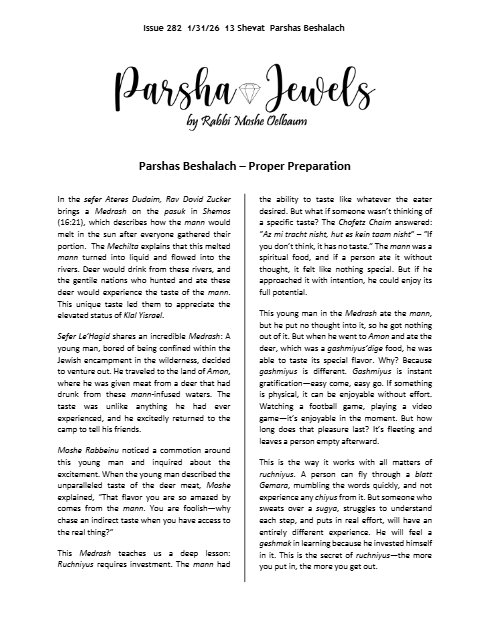

In the sefer Ateres Dudaim, Rav Dovid Zucker brings a Medrash on the pasuk in Shemos (16:21), which describes how the mann would melt in the sun after everyone gathered their portion. The Mechilta explains that this melted mann turned into liquid and flowed into the rivers. Deer would drink from these rivers, and the gentile nations who hunted and ate these deer would experience the taste of the mann. This unique taste led them to appreciate the elevated status of Klal Yisrael.

Sefer Le’Hagid shares an incredible Medrash: A young man, bored of being confined within the Jewish encampment in the wilderness, decided to venture out. He traveled to the land of Amon, where he was given meat from a deer that had drunk from these mann-infused waters. The taste was unlike anything he had ever experienced, and he excitedly returned to the camp to tell his friends.

Moshe Rabbeinu noticed a commotion around this young man and inquired about the excitement. When the young man described the unparalleled taste of the deer meat, Moshe explained, “That flavor you are so amazed by comes from the mann. You are foolish—why chase an indirect taste when you have access to the real thing?”

This Medrash teaches us a deep lesson: Ruchniyus requires investment. The mann had the ability to taste like whatever the eater desired. But what if someone wasn’t thinking of a specific taste? The Chofetz Chaim answered: “Az mi tracht nisht, hut es kein taam nisht” – “If you don’t think, it has no taste.” The mann was a spiritual food, and if a person ate it without thought, it felt like nothing special. But if he approached it with intention, he could enjoy its full potential.

This young man in the Medrash ate the mann, but he put no thought into it, so he got nothing out of it. But when he went to Amon and ate the deer, which was a gashmiyus’dige food, he was able to taste its special flavor. Why? Because gashmiyus is different. Gashmiyus is instant gratification—easy come, easy go. If something is physical, it can be enjoyable without effort. Watching a football game, playing a video game—it’s enjoyable in the moment. But how long does that pleasure last? It’s fleeting and leaves a person empty afterward.

This is the way it works with all matters of ruchniyus. A person can fly through a blatt Gemara, mumbling the words quickly, and not experience any chiyus from it. But someone who sweats over a sugya, struggles to understand each step, and puts in real effort, will have an entirely different experience. He will feel a geshmak in learning because he invested himself in it. This is the secret of ruchniyus—the more you put in, the more you get out.

We say in Lecha Dodi: "Likras Shabbos lechu v’neilcha ki hi mekor ha’bracha" – Greet Shabbos, let us go, because Shabbos is the source of all bracha. If someone told you that at a specific time you could come to a house and receive an unlimited amount of jewels, wouldn’t you make sure to be there early? Shabbos is that treasure. We should be ready for Shabbos in advance, not rushing in at the last moment.

The Ohr HaChaim explains that the world was created for only six days. Shabbos gives it the strength to exist for another six days, just like a car needs gas to operate. When the gas runs out, you must refill. The same applies to Shabbos – if we want to receive the bracha that it has to offer, we need to invest in it. “Mi shetarach b’erev Shabbos, yochal b’Shabbos”. Only one who prepares properly for Shabbos will taste the sweetness of Shabbos.

The young man in the Medrash missed this fundamental point. He experienced the best venison he had ever eaten, but it was fleeting. Meanwhile, he had been eating mann every day without realizing that he had access to something far greater. Moshe Rabbeinu had to remind him: “Why are you running after a secondary version of the mann when you had the real thing all along?”

We sometimes chase fleeting pleasures, thinking they will bring us happiness. Meanwhile, true ruchniyus is available to us, but it requires effort. The key to living a life of meaning is understanding that the more we invest in Torah and mitzvos, the greater our experience will be. Az mi tracht nisht, hut min gornisht—but if we think, if we focus, if we invest, we can taste something truly heavenly and that joy will last forever.

PDF Preview