Yesh Letmoha Parshas Beshalach 5783
יש לתמוה | January 26, 2024
Print This Article
View Original PDF

Yesh Letmoha Parshas Beshalach 5783

יש לתמוה | December 10, 2025

PARSHAS BESHALACH 5783 – Hakhel Year
By Rabbi Yeshaya Zushe a"h Wilhelm

Questions

1. Regarding which halachah is there a difference if a person is visiting his son or his daughter?

2. How is it possible to eat a seudas mitzvah the day after the mitzvah was done?

3. How is it possible to eat a seudas Yom Tov the day after Yom Tov?

4. How is it possible for a non-Jew to touch (non-mevushal) wine, and it is still permissible to drink it?

5. When is the brachah “Zocheir hatzaddikim” said?

6. For which aveirah does one fast five times as a way of doing teshuvah?

7. How is it possible to have a minyan of ten children under bar mitzvah?

8. When do you halachically need to pay a special fee if you want to leave the city?

9. When was the last time the Rebbe farbrenged during the week (not on Shabbos and Yom Tov)?

10. What were the names of the Rebbe’s two grandmothers?

Parsha

11. Which passuk in our parsha includes all the letters of the Alef-Beis?

12. It is known that it was possible to taste all flavors in the mann. Conversely, which food tasted like the mann?

13. We know that whenever the Torah says “Vayehi — and it was,” it is an indication of calamity. Why then does our parsha begin with the word, “‘Vayehi’ beshalach Pharaoh es ha’am — ‘and it was,’ when Pharaoh sent the nation [out of Egypt]” — wasn’t this a good thing?!

Answers

1. If a woman from a Sephardi family marries a man from an Ashekenazi family, she follows his customs, and vice versa. Therefore, if an Ashkenazi man visits his son on Pesach, he may eat in his house, but if he visits his daughter who is married to a Sephardi, he may not eat there (kitniyos etc.), and vice versa.

2. If a bris occurs on Yom Kippur or Tisha B’Av, the meal is eaten at night.

3. When Shushan Purim is on Shabbos, residents of Yerushalayim celebrate a “triple Purim,” and the Purim meal is eaten on Sunday.

4. If the non-Jew touched the wine just to cause damage to the Jew (Shulchan Aruch, Yoreh Dei’ah 124:27. See also Nekudos Hakesef there).

5. When seeing the pillar of salt of Lot’s wife (Shulchan Aruch, Orach Chaim 218:8).

6. If one drinks yayin nesech, they should fast five times, corresponding to the five times the word “gefen” is written in the Torah (besides for Chumash Devarim).

7. If you will not have a megillah available on Purim, you can read it from 11 Adar and on, but you must have a minyan. Since a minyan is not essentially needed in this case and is only there to publicize the miracle, it might be enough for it to consist of ten children (Mishnah Berurah 688:20).

8. If the people of the city will be left without a minyan, you need to pay for someone to complete the minyan.

9. 15 Shevat, 5748.

10. Rebbetzin Chana’s mother was Rochel (wife of Reb Meir Shlomo Yanovsky), and Reb Levi Yitzchok’s mother was Zelda Rochel (wife of Reb Boruch Shneur Schneerson).

11. "וְ אִ ם יִ מְ עַ ט הַ בַּ יִ ת מִ הְ יֹת מִ שֶּ ׂה וְ לָ קַ ח הוּא וּשְ ׁכֵ נוֹ הַ קָ ּרֹב אֶ ל בֵּ יתוֹ בְּ מִ כְ סַ ת נְ פָ שֹׁת אִ ישׁ לְ פִ י אָ כְ לוֹ תָּ כֹסּוּ עַ ל הַ שֶ ּׂה — But if the household is too small for a lamb, let him share one with a neighbor who dwells nearby, in proportion to the number of persons: you shall contribute for the lamb according to what each household will eat," (16:16).
The Ba’al Haturim writes that this passuk includes all of the Alef-Beis — to teach you that if someone fulfills the entire Torah, Hashem makes sustenance available to them without burden, like the Yidden who ate the mann.

12. The gemoro tells that the “cakes” (of matzos) which the Yidden took out of Mitzrayim tasted like mann.

13. Medrash Raba states:
When Pharaoh saw them [standing in] rows and rows of Kohanim, Levi’im and Yisra’elim, each by their flags — when he saw all of this population — he began to wail and say: ‘Woe, woe is to the man who let this [amount of people] from his hands.’ This is why the passuk says: ‘And it was — when Pharaoh sent the nation.’
Another interpretation: Moshe said, ‘Woe [is to me]. I, who toiled to extract the Jewish people from Mitzrayim, will not enter the land with them.’ This is why it says, ‘And it was — when he sent.’

Contact and Publication Information

If you would like to receive 'Yesh Letmoha' through WhatsApp, Message 1-347-678-2206

Design and Layout: Chaim Tauber
[email protected]

More Seforim of Rabbi Wilhelm can be found at: www.RabbiWilhelm.com
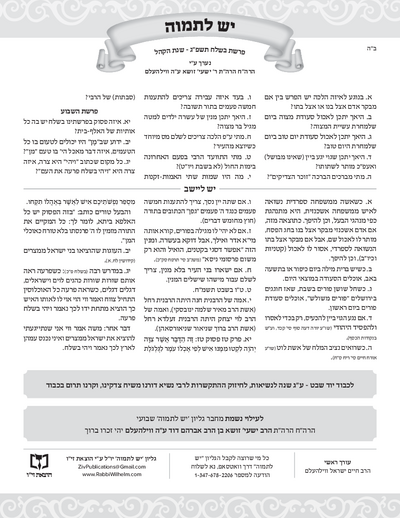
PARSHAS BESHALACH 5783 – Hakhel Year
By Rabbi Yeshaya Zushe a"h Wilhelm

Questions

1. Regarding which halachah is there a difference if a person is visiting his son or his daughter?

2. How is it possible to eat a seudas mitzvah the day after the mitzvah was done?

3. How is it possible to eat a seudas Yom Tov the day after Yom Tov?

4. How is it possible for a non-Jew to touch (non-mevushal) wine, and it is still permissible to drink it?

5. When is the brachah “Zocheir hatzaddikim” said?

6. For which aveirah does one fast five times as a way of doing teshuvah?

7. How is it possible to have a minyan of ten children under bar mitzvah?

8. When do you halachically need to pay a special fee if you want to leave the city?

9. When was the last time the Rebbe farbrenged during the week (not on Shabbos and Yom Tov)?

10. What were the names of the Rebbe’s two grandmothers?

Parsha

11. Which passuk in our parsha includes all the letters of the Alef-Beis?

12. It is known that it was possible to taste all flavors in the mann. Conversely, which food tasted like the mann?

13. We know that whenever the Torah says “Vayehi — and it was,” it is an indication of calamity. Why then does our parsha begin with the word, “‘Vayehi’ beshalach Pharaoh es ha’am — ‘and it was,’ when Pharaoh sent the nation [out of Egypt]” — wasn’t this a good thing?!

Answers

1. If a woman from a Sephardi family marries a man from an Ashekenazi family, she follows his customs, and vice versa. Therefore, if an Ashkenazi man visits his son on Pesach, he may eat in his house, but if he visits his daughter who is married to a Sephardi, he may not eat there (kitniyos etc.), and vice versa.

2. If a bris occurs on Yom Kippur or Tisha B’Av, the meal is eaten at night.

3. When Shushan Purim is on Shabbos, residents of Yerushalayim celebrate a “triple Purim,” and the Purim meal is eaten on Sunday.

4. If the non-Jew touched the wine just to cause damage to the Jew (Shulchan Aruch, Yoreh Dei’ah 124:27. See also Nekudos Hakesef there).

5. When seeing the pillar of salt of Lot’s wife (Shulchan Aruch, Orach Chaim 218:8).

6. If one drinks yayin nesech, they should fast five times, corresponding to the five times the word “gefen” is written in the Torah (besides for Chumash Devarim).

7. If you will not have a megillah available on Purim, you can read it from 11 Adar and on, but you must have a minyan. Since a minyan is not essentially needed in this case and is only there to publicize the miracle, it might be enough for it to consist of ten children (Mishnah Berurah 688:20).

8. If the people of the city will be left without a minyan, you need to pay for someone to complete the minyan.

9. 15 Shevat, 5748.

10. Rebbetzin Chana’s mother was Rochel (wife of Reb Meir Shlomo Yanovsky), and Reb Levi Yitzchok’s mother was Zelda Rochel (wife of Reb Boruch Shneur Schneerson).

11. "וְ אִ ם יִ מְ עַ ט הַ בַּ יִ ת מִ הְ יֹת מִ שֶּ ׂה וְ לָ קַ ח הוּא וּשְ ׁכֵ נוֹ הַ קָ ּרֹב אֶ ל בֵּ יתוֹ בְּ מִ כְ סַ ת נְ פָ שֹׁת אִ ישׁ לְ פִ י אָ כְ לוֹ תָּ כֹסּוּ עַ ל הַ שֶ ּׂה — But if the household is too small for a lamb, let him share one with a neighbor who dwells nearby, in proportion to the number of persons: you shall contribute for the lamb according to what each household will eat," (16:16).
The Ba’al Haturim writes that this passuk includes all of the Alef-Beis — to teach you that if someone fulfills the entire Torah, Hashem makes sustenance available to them without burden, like the Yidden who ate the mann.

12. The gemoro tells that the “cakes” (of matzos) which the Yidden took out of Mitzrayim tasted like mann.

13. Medrash Raba states:
When Pharaoh saw them [standing in] rows and rows of Kohanim, Levi’im and Yisra’elim, each by their flags — when he saw all of this population — he began to wail and say: ‘Woe, woe is to the man who let this [amount of people] from his hands.’ This is why the passuk says: ‘And it was — when Pharaoh sent the nation.’
Another interpretation: Moshe said, ‘Woe [is to me]. I, who toiled to extract the Jewish people from Mitzrayim, will not enter the land with them.’ This is why it says, ‘And it was — when he sent.’

Contact and Publication Information

If you would like to receive 'Yesh Letmoha' through WhatsApp, Message 1-347-678-2206

Design and Layout: Chaim Tauber
[email protected]

More Seforim of Rabbi Wilhelm can be found at: www.RabbiWilhelm.com

PDF Preview

