Haggadah Baruch Yomeiru
Torah Papers | January 19, 2024
Print This Article
View Original PDF

Haggadah Baruch Yomeiru

Torah Papers | December 10, 2025

We’re told that it is appropriate to recite the Maggid section of the Haggadah over a broken piece of matza, as a poor person is accustomed to eating a broken loaf – ד ּ ַ רְ כ ּ ו ֹ שׁ ֶ ל ע ָ נ ִ י. Is this really true? Do poor people break their food into pieces? I’ll explain the concept using a personal story. When I was a young Yeshiva bochur in Yerushalayim, there was a bakery in Talpiot called Hadar that sold cookies. Each Friday, we’d finish at noon and head there to buy broken pieces of cookies at half price. I recall purchasing both chocolate and lemon cookies, and where full cookies cost one lira, broken cookies cost only half a lira. The cookies still tasted great, and this was perfect for our limited budget of ten liras, which also had to cover our roundtrip transportation and all other needs that week. One Friday, I arrived and asked for a bag of broken cookies but was told there were only whole cookies available. I thanked the merchant but said I’d do without them that week and started walking out. The vendor called me over and asked how much I was looking to buy, to which I said a kilo of lemon and a kilo of chocolate. As he started filling up a bag, I quickly reminded him that I came to buy only broken cookies. He threw me a strange look and assured me he could break them if I insisted. After I explained why I sought to buy the broken ones, he informed me that at the end of each week he has permission to sell whole cookies at the same price as broken ones. Rabbotai, the poor person doesn’t buy broken food because they like broken food. They don’t intentionally take a whole cookie and break it, just so they can enjoy holding a broken piece. (This is especially true for handmade matza boxes which are sold for a pretty penny and come pre-Yachatz’ed, with half the box consisting of broken pieces ready for the afikomen bag.) The poor person takes a broken piece in order to save money, just as Yitzchak saved Bnei Yisrael time in slavery, and this is why we skip over the first available matza in order to break the middle one prior to Maggid.

The Meshech Chochma presents a beautiful thought on our topic. There are two items which can be redeemed, and a third which is, and remains, kadosh. The firstborn child and firstborn donkey can both be redeemed, whereas the firstborn of a pure animal is kadosh and must be given to the Kohen. Why is there a division between them? Or why is the firstborn son uniquely connected to the firstborn donkey? He answers, the Yerushalmi says we redeem the firstborn son because we sold the firstborn of Rachel – i.e., Yosef – for twenty kesef. Thus, this is the amount, in the currency of five shekalim, that one must give to redeem their firstborn son. The Meshech Chochma is troubled by this explanation though. If that is the case, why does someone from the tribe of Yosef (or Binyamin) need to perform the ritual and pay five shekalim? They should be exempt, as Yosef (and Binyamin) were not involved in that original transaction. He also asks how it makes sense that they should give their five shekalim to the Kohen. After all, he is from the tribe of Levi, a tribe that did take part in the sale of Yosef. It’s as if Levi made money from the original deal and is now reaping dividends!

He answers that the five shekalim are clearly not to atone for the sale of Yosef, but rather, the Yerushalmi means to teach us that we cannot place a value on any human being. Not on the whole being and not on any limb or organ. But when the brothers sold Yosef, that is exactly what they did. They placed a value on his life – twenty kesef. They were first to set a price and Hakadosh Baruch Hu thus said, “There were no price lists until you established the pricing. I will now follow it.” That is the meaning of the Yerushalmi, according to the Meshech Chochma. The Meshech Chochma continues, raising a pasuk in sefer Yeshayahu (43:12): ַדְ תִּ י וְ הוֹשׁ ַ עְ תִּ י וְ הִ שׁ ְ מַ עְ תִּ י וְ אֵ ין בָּ כֶ ם זָר וְ אַ תֶּ ם עֵ דַ י נְ אֻ ם אָ נֹכִ י הִ ג ה ' וַ אֲ נִ י־אֵ -ל׃ I have declared, and have saved, and I have announced, and there was no strange god among you: therefore, you are My witnesses, says the Lord, and I am G-d.

Hakadosh Baruch Hu arrived in Egypt as we escaped so that the Egyptians would give chase and drown in the sea. Hakadosh Baruch Hu then saved Bnei Yisrael for all to see and did not give any other nation the right to stand at the foot of Har Sinai. The Meshech Chochma explains the deeper significance and meaning here.

, רַ ק הַכֹּל בְּסִיבוּב הַסִּבּוֹת וַעֲלִילוֹת כִּי אֵין שִׁ נּוּי רָ צוֹן אֵצֶל הַשֵּׁם יִתְ בָּרַ ך ָחָ ה נִ פְ לָאָ ה בְּ הַ שׁ ְ ג . וְכַאֲשׁ ֶר תָּבֹא צָרָ ה לָאָדָ ם וְיִנָּצֵל מִ מֶּנָּה בִּישׁ וּעַת הַשֵּׁם שׁ ֶהָאָדָם ָלוּי לַשֵּׁם יִתְ בָּרַ ך רַ ק הָיָה ג אֵין זֶה שִׁ נּוּי חָלִילָה בִּרְ צוֹנוֹ יִתְ בָּרֵ ך יִתְ בָּרַ ך צָרִ יך .

For there is no change of will with Hakadosh Baruch Hu; rather, everything is within the framework of causes and wondrous providence. And when adversity befalls a person, and he escapes from it through the salvation of Hakadosh Baruch Hu, this is by no means a change in His will. Rather, it is openly known to Hakadosh Baruch Hu that a person needs to encounter adversity and escape from it.

Everything that takes place in our world is part of Hakadosh Baruch Hu’s plan, except upon encountering difficulties, we do not see or grasp the full picture and find ourselves looking around mid-rotation wondering what’s going on. Everything is thought out though, its path pre-determined and calculated from beginning to end. Egypt was no exception.

It was determined, by Hakadosh Baruch Hu, that Bnei Yisrael first needed to descend to Egypt and enter slavery in order to be readied for redemption and the Torah. The starting point of the sivuv was Brit Bein HaBetarim, and the end point was Yetziat Mitzrayim and delivery of the firstborn nation. It was the firstborn of Rachel who began that descent, as Yosef was the first to arrive in Egypt, and the rest of that descent until Yosef declared “Ani Yosef,” was performed with donkeys. Where do we find this? Parshat Mikeitz contains seven mentions of donkeys! The brothers travelled down on donkeys and returned on donkeys. They were fed along with their donkeys. They loaded and unloaded their donkeys. Their father sent donkeys as a gift. They feared being taken as slaves along with their donkeys. We read about donkey after donkey until the moment they disappear. That moment was Yosef’s revelation to his brothers, after which no further mention of donkeys is found. They turned into wagons. Yosef instructed that wagons be sent for his father’s journey, and הָ עֲגָלוֹת ַ רְ א אֶ ת וַ י – Yaacov saw the wagons his son sent, and his spirit was revived. Four mentions of agalot without a single donkey in sight because the donkeys played a role only until Bnei Yisrael were in position, in Egypt, so that the firstborn nation can later emerge. This descent started with Yosef, who was sold down to Egypt for twenty kesef – five shekalim – and therefore, firstborns are redeemed for that same amount. Petter Chamor, the firstborn of a donkey, was given an elevated status of kedusha due to the donkey being a prime partner in that descent. The donkey became a prime partner in the exodus from Mitzrayim, with each member of Bnei Yisrael taking donkeys to carry the load of their reward. The Meshech Chochma says Petter Chamor serves as a commemoration of this entire sivuv, which needs to be seen and appreciated through a big-picture lens, beginning to end.

I’d like to relay something appearing in Torat HaKabbalah, but please do not ask me any questions on the subject – I am simply relaying the limited amount I know, in the simplistic language I can relay it in. [Ed. The limitations of this paper’s author may further impact the idea’s delivery.] The Arizal, together with the Ba’al HaTanya, says the head contains three elements of the Ten Sefirot (חב"ד): Chochmah – Wisdom; Binah – Understanding; and Da’at – Knowledge. The body is referred to as חג"ת נהי"ם – the remaining seven Sefirot. The neck, in between the two, is nothing on its own. It is only a conduit for the head to influence the body. That conduit consists of the קָ נֶה and ו ֶ שׁ ֶ ט – the windpipe and gullet (food pipe) – together with arteries for the transfer of blood.

Yosef met three ministers in Egypt. In prison, he met the Sar HaMashkim and Sar HaOfim, representing the kaneh and veshet. And upon arriving in Egypt, he was sold to the Sar HaTabachim, who sat on his carotid artery. All three are found in the neck, the narrowest part of the body, and for that reason Egypt is called מִ צְ רַ יִ ם, from the word מֵ צַ ר – a narrow pass. The neck is called גָרוֹן, and its numerical value is equal to three times להים-א, as each conduit in the neck reflects one of the Sefirot, the modes or attributes through which G‑d manifests Himself. Yosef was to influence all three ministers and spread Chochmah, Binah and Da’at throughout Egypt. But the back of the neck is called ע וֹ רֶ ף – the same letters used to spell פּ ַ רְ ע ֹ ה. Why? Because he grabbed Yosef by the neck, not allowing for the shefa of Hakadosh Baruch Hu to reach the body. He did the same to Bnei Yisrael, holding us by the neck.

Go back now to what the Radbaz wrote on the Ra’avad, who was bothered by there being an alternative mitzvah to break the donkey’s neck when the original mitzvah was to redeem the donkey and never reach the point of requiring a fallback. The Radbaz wrote, whoever knows the secrets of the Torah does not ask such a question or raise such an objection. Pharoah was the back of the neck, the ע וֹ רֶ ף, and Hakadosh Baruch Hu came to redeem His firstborn nation. Pharoah denied Him the ability, and the result was Hakadosh Baruch Hu giving him a blow to the ע וֹ רֶ ף. Just as Pharoah was a chamor in not letting Bnei Yisrael out, that is precisely where the blow is delivered to kill the donkey as a fallback. And why are we commanded to redeem the firstborn of donkeys but not other impure animals? Rashi says, this applies solely to the donkey because the Egyptians are referred to as donkeys and Bnei Yisrael left Egypt with donkeys. But what is the significance of this זֵרַ ת הַכָּתוּב (textual parallel)? The Egyptians are called many names, including horse, yet this mitzvah does not apply to firstborn colts! The difference between them is that the donkeys helped Bnei Yisrael, and thus, the Chatam Sofer says, in actuality we were supposed to break the neck of every firstborn donkey. That was the true mitzvah! It commemorates Pharoah, the chief donkey, choking us by the neck and not letting spirituality flow to our bodies. But because the donkeys were kind to Bnei Yisrael, an alternative was provided whereby the firstborn donkey is redeemed with a lamb before it goes on to live a regular life. In Torat HaSodot, the act of breaking the donkey’s neck comes first, not redeeming it for a lamb as the simple reading of the pasuk implies.

The first donkey was created at twilight on Erev Shabbat of Creation. This was the donkey of Bilaam, and Pirkei DeRabbi Eliezer says, it was the mother of the donkey that served Avraham Avinu. After Avraham Avinu, Moshe Rabbeinu rode this same donkey to reach Egypt and redeem Bnei Yisrael. And the next in line to ride this donkey is Melech HaMashiach. Shemen Rosh asks how this donkey can live 5000 years and explains that the original donkey never ate from the fruit Chava served in Gan Eden and was never polluted by the snake’s venom.

ָאַלְתִּי אֶתְכֶם אַחֲרִ ית כְּרֵ אשִׁית – the same way the original geula took place, so too the final geula will take place. In the same way Hakadosh Baruch Hu broke the necks of the Egyptians leading to the first geula, all those sitting in Khan Yunis, in Hezbollah territory, in Yemen and in Qatar will see their necks broken as the final geula begins, and we are redeemed by Mashiach Tzidkeinu. ◊
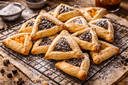
We’re told that it is appropriate to recite the Maggid section of the Haggadah over a broken piece of matza, as a poor person is accustomed to eating a broken loaf – ד ּ ַ רְ כ ּ ו ֹ שׁ ֶ ל ע ָ נ ִ י. Is this really true? Do poor people break their food into pieces? I’ll explain the concept using a personal story. When I was a young Yeshiva bochur in Yerushalayim, there was a bakery in Talpiot called Hadar that sold cookies. Each Friday, we’d finish at noon and head there to buy broken pieces of cookies at half price. I recall purchasing both chocolate and lemon cookies, and where full cookies cost one lira, broken cookies cost only half a lira. The cookies still tasted great, and this was perfect for our limited budget of ten liras, which also had to cover our roundtrip transportation and all other needs that week. One Friday, I arrived and asked for a bag of broken cookies but was told there were only whole cookies available. I thanked the merchant but said I’d do without them that week and started walking out. The vendor called me over and asked how much I was looking to buy, to which I said a kilo of lemon and a kilo of chocolate. As he started filling up a bag, I quickly reminded him that I came to buy only broken cookies. He threw me a strange look and assured me he could break them if I insisted. After I explained why I sought to buy the broken ones, he informed me that at the end of each week he has permission to sell whole cookies at the same price as broken ones. Rabbotai, the poor person doesn’t buy broken food because they like broken food. They don’t intentionally take a whole cookie and break it, just so they can enjoy holding a broken piece. (This is especially true for handmade matza boxes which are sold for a pretty penny and come pre-Yachatz’ed, with half the box consisting of broken pieces ready for the afikomen bag.) The poor person takes a broken piece in order to save money, just as Yitzchak saved Bnei Yisrael time in slavery, and this is why we skip over the first available matza in order to break the middle one prior to Maggid.

The Meshech Chochma presents a beautiful thought on our topic. There are two items which can be redeemed, and a third which is, and remains, kadosh. The firstborn child and firstborn donkey can both be redeemed, whereas the firstborn of a pure animal is kadosh and must be given to the Kohen. Why is there a division between them? Or why is the firstborn son uniquely connected to the firstborn donkey? He answers, the Yerushalmi says we redeem the firstborn son because we sold the firstborn of Rachel – i.e., Yosef – for twenty kesef. Thus, this is the amount, in the currency of five shekalim, that one must give to redeem their firstborn son. The Meshech Chochma is troubled by this explanation though. If that is the case, why does someone from the tribe of Yosef (or Binyamin) need to perform the ritual and pay five shekalim? They should be exempt, as Yosef (and Binyamin) were not involved in that original transaction. He also asks how it makes sense that they should give their five shekalim to the Kohen. After all, he is from the tribe of Levi, a tribe that did take part in the sale of Yosef. It’s as if Levi made money from the original deal and is now reaping dividends!

He answers that the five shekalim are clearly not to atone for the sale of Yosef, but rather, the Yerushalmi means to teach us that we cannot place a value on any human being. Not on the whole being and not on any limb or organ. But when the brothers sold Yosef, that is exactly what they did. They placed a value on his life – twenty kesef. They were first to set a price and Hakadosh Baruch Hu thus said, “There were no price lists until you established the pricing. I will now follow it.” That is the meaning of the Yerushalmi, according to the Meshech Chochma. The Meshech Chochma continues, raising a pasuk in sefer Yeshayahu (43:12): ַדְ תִּ י וְ הוֹשׁ ַ עְ תִּ י וְ הִ שׁ ְ מַ עְ תִּ י וְ אֵ ין בָּ כֶ ם זָר וְ אַ תֶּ ם עֵ דַ י נְ אֻ ם אָ נֹכִ י הִ ג ה ' וַ אֲ נִ י־אֵ -ל׃ I have declared, and have saved, and I have announced, and there was no strange god among you: therefore, you are My witnesses, says the Lord, and I am G-d.

Hakadosh Baruch Hu arrived in Egypt as we escaped so that the Egyptians would give chase and drown in the sea. Hakadosh Baruch Hu then saved Bnei Yisrael for all to see and did not give any other nation the right to stand at the foot of Har Sinai. The Meshech Chochma explains the deeper significance and meaning here.

, רַ ק הַכֹּל בְּסִיבוּב הַסִּבּוֹת וַעֲלִילוֹת כִּי אֵין שִׁ נּוּי רָ צוֹן אֵצֶל הַשֵּׁם יִתְ בָּרַ ך ָחָ ה נִ פְ לָאָ ה בְּ הַ שׁ ְ ג . וְכַאֲשׁ ֶר תָּבֹא צָרָ ה לָאָדָ ם וְיִנָּצֵל מִ מֶּנָּה בִּישׁ וּעַת הַשֵּׁם שׁ ֶהָאָדָם ָלוּי לַשֵּׁם יִתְ בָּרַ ך רַ ק הָיָה ג אֵין זֶה שִׁ נּוּי חָלִילָה בִּרְ צוֹנוֹ יִתְ בָּרֵ ך יִתְ בָּרַ ך צָרִ יך .

For there is no change of will with Hakadosh Baruch Hu; rather, everything is within the framework of causes and wondrous providence. And when adversity befalls a person, and he escapes from it through the salvation of Hakadosh Baruch Hu, this is by no means a change in His will. Rather, it is openly known to Hakadosh Baruch Hu that a person needs to encounter adversity and escape from it.

Everything that takes place in our world is part of Hakadosh Baruch Hu’s plan, except upon encountering difficulties, we do not see or grasp the full picture and find ourselves looking around mid-rotation wondering what’s going on. Everything is thought out though, its path pre-determined and calculated from beginning to end. Egypt was no exception.

It was determined, by Hakadosh Baruch Hu, that Bnei Yisrael first needed to descend to Egypt and enter slavery in order to be readied for redemption and the Torah. The starting point of the sivuv was Brit Bein HaBetarim, and the end point was Yetziat Mitzrayim and delivery of the firstborn nation. It was the firstborn of Rachel who began that descent, as Yosef was the first to arrive in Egypt, and the rest of that descent until Yosef declared “Ani Yosef,” was performed with donkeys. Where do we find this? Parshat Mikeitz contains seven mentions of donkeys! The brothers travelled down on donkeys and returned on donkeys. They were fed along with their donkeys. They loaded and unloaded their donkeys. Their father sent donkeys as a gift. They feared being taken as slaves along with their donkeys. We read about donkey after donkey until the moment they disappear. That moment was Yosef’s revelation to his brothers, after which no further mention of donkeys is found. They turned into wagons. Yosef instructed that wagons be sent for his father’s journey, and הָ עֲגָלוֹת ַ רְ א אֶ ת וַ י – Yaacov saw the wagons his son sent, and his spirit was revived. Four mentions of agalot without a single donkey in sight because the donkeys played a role only until Bnei Yisrael were in position, in Egypt, so that the firstborn nation can later emerge. This descent started with Yosef, who was sold down to Egypt for twenty kesef – five shekalim – and therefore, firstborns are redeemed for that same amount. Petter Chamor, the firstborn of a donkey, was given an elevated status of kedusha due to the donkey being a prime partner in that descent. The donkey became a prime partner in the exodus from Mitzrayim, with each member of Bnei Yisrael taking donkeys to carry the load of their reward. The Meshech Chochma says Petter Chamor serves as a commemoration of this entire sivuv, which needs to be seen and appreciated through a big-picture lens, beginning to end.

I’d like to relay something appearing in Torat HaKabbalah, but please do not ask me any questions on the subject – I am simply relaying the limited amount I know, in the simplistic language I can relay it in. [Ed. The limitations of this paper’s author may further impact the idea’s delivery.] The Arizal, together with the Ba’al HaTanya, says the head contains three elements of the Ten Sefirot (חב"ד): Chochmah – Wisdom; Binah – Understanding; and Da’at – Knowledge. The body is referred to as חג"ת נהי"ם – the remaining seven Sefirot. The neck, in between the two, is nothing on its own. It is only a conduit for the head to influence the body. That conduit consists of the קָ נֶה and ו ֶ שׁ ֶ ט – the windpipe and gullet (food pipe) – together with arteries for the transfer of blood.

Yosef met three ministers in Egypt. In prison, he met the Sar HaMashkim and Sar HaOfim, representing the kaneh and veshet. And upon arriving in Egypt, he was sold to the Sar HaTabachim, who sat on his carotid artery. All three are found in the neck, the narrowest part of the body, and for that reason Egypt is called מִ צְ רַ יִ ם, from the word מֵ צַ ר – a narrow pass. The neck is called גָרוֹן, and its numerical value is equal to three times להים-א, as each conduit in the neck reflects one of the Sefirot, the modes or attributes through which G‑d manifests Himself. Yosef was to influence all three ministers and spread Chochmah, Binah and Da’at throughout Egypt. But the back of the neck is called ע וֹ רֶ ף – the same letters used to spell פּ ַ רְ ע ֹ ה. Why? Because he grabbed Yosef by the neck, not allowing for the shefa of Hakadosh Baruch Hu to reach the body. He did the same to Bnei Yisrael, holding us by the neck.

Go back now to what the Radbaz wrote on the Ra’avad, who was bothered by there being an alternative mitzvah to break the donkey’s neck when the original mitzvah was to redeem the donkey and never reach the point of requiring a fallback. The Radbaz wrote, whoever knows the secrets of the Torah does not ask such a question or raise such an objection. Pharoah was the back of the neck, the ע וֹ רֶ ף, and Hakadosh Baruch Hu came to redeem His firstborn nation. Pharoah denied Him the ability, and the result was Hakadosh Baruch Hu giving him a blow to the ע וֹ רֶ ף. Just as Pharoah was a chamor in not letting Bnei Yisrael out, that is precisely where the blow is delivered to kill the donkey as a fallback. And why are we commanded to redeem the firstborn of donkeys but not other impure animals? Rashi says, this applies solely to the donkey because the Egyptians are referred to as donkeys and Bnei Yisrael left Egypt with donkeys. But what is the significance of this זֵרַ ת הַכָּתוּב (textual parallel)? The Egyptians are called many names, including horse, yet this mitzvah does not apply to firstborn colts! The difference between them is that the donkeys helped Bnei Yisrael, and thus, the Chatam Sofer says, in actuality we were supposed to break the neck of every firstborn donkey. That was the true mitzvah! It commemorates Pharoah, the chief donkey, choking us by the neck and not letting spirituality flow to our bodies. But because the donkeys were kind to Bnei Yisrael, an alternative was provided whereby the firstborn donkey is redeemed with a lamb before it goes on to live a regular life. In Torat HaSodot, the act of breaking the donkey’s neck comes first, not redeeming it for a lamb as the simple reading of the pasuk implies.

The first donkey was created at twilight on Erev Shabbat of Creation. This was the donkey of Bilaam, and Pirkei DeRabbi Eliezer says, it was the mother of the donkey that served Avraham Avinu. After Avraham Avinu, Moshe Rabbeinu rode this same donkey to reach Egypt and redeem Bnei Yisrael. And the next in line to ride this donkey is Melech HaMashiach. Shemen Rosh asks how this donkey can live 5000 years and explains that the original donkey never ate from the fruit Chava served in Gan Eden and was never polluted by the snake’s venom.

ָאַלְתִּי אֶתְכֶם אַחֲרִ ית כְּרֵ אשִׁית – the same way the original geula took place, so too the final geula will take place. In the same way Hakadosh Baruch Hu broke the necks of the Egyptians leading to the first geula, all those sitting in Khan Yunis, in Hezbollah territory, in Yemen and in Qatar will see their necks broken as the final geula begins, and we are redeemed by Mashiach Tzidkeinu. ◊
PDF Preview