Kiddush Levanah and Its Timing
קידוש לבנה
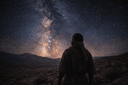
Some call the blessing on the moon, ברכת חידוש לבנה, since the moon is starting a new cycle. We can partially rely on the end of the blessing מחדש חדשים. However, the Medrosh Rabba on Parshas Bo says one opinion is that the blessing ends מקדש חדשים. It is possible that we can apply a frequent statement in the Talmud, that whatever term one uses there is a source for either option.
We have the custom to do Kiddush Levanah at night immediately after the conclusion of Shabbos. Some use the source from the Gemara (Sofrim beginning of Chapter 20) that the reason for the blessing on the night Shabbos concludes is since it is מבושם. This means that one has ability to make holy with a happy soul (like on Shabbos). Thus, Kiddush Levanah has a connection to Shabbos.
However, this explanation has difficulties. Actually, a person is a little sad due to the passing of Shabbos, like mentioned (Be’ah 16a) that on Motzei Shabbos the soul is pained since the extra soul of Shabbos has left. This is one of the reasons at Havdalah that one smells spices in order to enliven the soul for its loss.
Rather, we can begin with an understanding of the law (O.C. 126:4), that according to Kabalah one waits to do Kiddush Levanah after seven days passes from the beginning of the month. After that time the light is considered complete and מבושם.
Thus, the above source from Sofrim that Kiddush Levanah should be said on Motzei Shabbos is actually a scribal error. The text should read Motzei Shivah (after the seventh). And the words כשהוא מבושם refers to the moon, indicates that Kiddush Levanah is done after the seventh day when the moon is in the most pleasant (most light) state.
Thus, the origin of the custom to announce the time of the new moon was in order to know when seven days would pass, and then the time period of saying Kiddush Levanah would begin. However, after the lapse of many centuries the reason for the custom to announce time of the new moon was forgotten and only the custom remained.