The Mitzvah of Telling the Exodus Story
You will tell your children on that day, saying, 'It is because of what Hashem did for me as I went out from Egypt.'
Why does the Torah use the expression וְהִגַדְתָ – you shall tell, and not the more common version of וְ אָ מַרְ תָ – and you shall say? The Gemara says that the word וְהִגַדְתָ means harsh words, words as harsh as sinews, which are called גידין in Hebrew. What harsh words were supposed to be said?
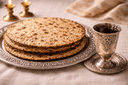
Another question asked by the Ohr Hachaim is why the Torah says בַיוֹם הַהוּא – on that day. This isn’t supposed to be done during the day; it is supposed to be done at a time when Matzah and Marror are sitting at the table, which is at night. This is learned from the words of this possuk בַעֲבוּר זֶה – for the sake of this, referring to the Matzah and Marror on the table. The Torah gives us two separate times for the same Mitzvah, and both in the same possuk.
Another observation made by the Ohr Hachaim is, what does the Torah mean with the word לֵאמֹר? To whom should the children repeat this message?
The Gemara says that the Mitzvah of saying the Haggada is מתחיל בגנות ומסיים בשבח – we begin with denigration and end up with praise. First, we describe our ancestors as people who served Avoda Zara, and then we describe the exodus from Mitzrayim. Indeed, in the Hagada we begin with מתחילה עובדי עבודה זרה היו אבותינו – At first, our forefathers were idol worshippers.
A person is supposed to say words that are harsh, like sinews. He is supposed to say harsh words to his family, words that describe our less-than- perfect background as descendants of idol- worshippers.
We then say לֵאמֹּר – easy words. We then say words that are filled with praise that gladden the heart. These are words of praise for our situation and thanks to the One who caused it.
The Torah calls the night of Pesach בַיוֹם הַהוּא – that day. The night of Pesach is considered a day. As the possuk says וְלַיְלָה כַיוֹם יָאִיר - the night shines as the day. This possuk is misleading because one would think that it actually refers to a night. That is why this possuk immediately changes and tells us בַעֲבוּר זֶה – for the sake of this, making clear that it is only when the Matzah and Marror are on the table.
The Ohr Hachaim then makes another point, a most important one. This Mitzvah of telling the story of the exodus to children is limited to those who have been blessed with children. What should a person who doesn’t have children do?
The Halacha is that he should still tell the story of Yetzias Mitzrayim. He should tell it to his wife, or to himself if he has no wife.
If so, why does the Torah command us to tell the story to a child? The Ohr Hachaim explains that a person fulfills this Mitzvah, he will merit to have a child. A segulah to have children is to be careful to keep this Mitzvah of telling the story of our exodus from Mitzrayim on Seder night.