Finding the Right Guide on the Side
Torah Sweets | July 11, 2024
Print This Article
View Original PDF

Finding the Right Guide on the Side

Torah Sweets | June 25, 2025

Marvin Mandelbaum was waiting in the examination room of Dr. Gold, a famous specialist. "So, who did you see before coming to me?" asked Dr. Gold. "My local General Practitioner, Dr. Cohen,” Mandelbaum replied. "Your GP?" scoffed Dr. Gold. "What a waste of time. Tell me, what sort of useless advice did Cohen give you?" "He told me to come and see you."

There are many people who will be quick to give you advice and their opinions on what you should do. However, just because they are offering guidance for free doesn’t mean it should be blindly accepted. Very often, unsolicited advice is not thought through (like “never go to bed angry”) or is not tailor-made for the person it is being given to.

The source of advice is as important as the content of the advice. It takes a special kind of person to know the person seeking advice and not be influenced by their own experiences or ulterior motives. Who, we may ask, is the best candidate for to offer us guidance that we sometimes need like air?

Our Parsha (Bamidbar 21:8) tells us: “Make for yourself a fiery serpent, and set it upon a pole; and it shall come to pass, that every one that is bitten, when he sees it, he shall live”. Once again it may be asked: Did the serpent kill, or did the serpent preserve life?

The Mishna (Rosh Hashanah 29a) asks: Did the snake kill, or did the snake preserve life? It is important to note that the Mishna is usually not busy with a back-and-forth discussion. That is primarily the job of the Gemara. The Mishna normally states a halacha with the occasional sevara (reasoning) behind it, in a very terse and precise way. Here, the Mishnah is asking a question about snakes - what is it trying to tell us?

The Mishna then answers that "when the Jewish people turned their eyes upward and subjected their hearts to their Father in Heaven, they were healed, but if not, they rotted from their snakebites." The Maharal (in the Nefesh Hachaim) asks famously: why did they make a snake and not look at Shomayim instead?

The Symbolism of the Snake and the Torah Sage

The Degel Machaneh Ephraim (grandson of the Ba'al Shem Tov) shares a wonderful idea, which is brought down from the Toldos Yaakov Yosef (a student of the Ba'al Shem Tov). The Gemara (Yoma 23a) says, “Any Talmid Chacham (Torah Sage) who does not strike and attack like a snake, is no Talmid Chacham." Revenge is doing bad to someone who does bad to us, while Netira (bearing a grudge) implies guarding." This means that one needs to be able to destroy the evil by getting back at it (like the Yetzer Harah or people who despise/hurt Torah Sages) and guard to make sure that one does not become susceptible to the enemy. The snake, it turns out, is a symbolism to the Torah Sage. Let us delve a little deeper.

The Torah is meant to become part of the Torah, as Moshe Rabbeinu became one with the Torah. The Torah is meant to be a potion, if one merits, the Torah is a potion of life and if not, it's a potion of death. If one learns Torah properly and attaches oneself to it, like a Talmid Chacham does, then he himself becomes a potion of life, since he is one with the Torah itself. This level of oneness is not just symbolic. There was once a Gadol who fell while doing Hagbah (lifting the Torah) along with the Torah and the Sefer Torah fell as well. The people present picked up the Gadol before the Sefer Torah, because the Gadol was like a Sefer Torah himself. As such, a Gadol from whom one learns can provide protection from being influenced by negative forces. One needs to attach oneself to such a person to get those benefits.

The Power of Attachment to Torah and Torah Sages

However, one who distances themselves from the Torah will turn the Torah into a potion of death. The Torah will, G-d Forbid, damage such a person. It is a natural byproduct that one who leaves Torah leaves life. This is why the Gemara (Shabbos 88a) tells us that Hashem told the Jews if they did not accept the Torah their demise will be there and then. Wherever one goes, there will be death for one who detaches oneself from the Torah.

Furthermore, the Gemara (Shabbos 119b) writes that there is no cure for denigrating a Talmid Chacham by detaching oneself from him or not honoring him properly. These are the scary words of the Toldos Yitzchak Yaakov. The Degel Machaneh Ephraim says that the Seraph-שרף are rashei teivos of reish, pei, and hei. These letters stand for 600,000 explanations- ם פירושי ריבו שישים. This is referring to the Torah that somehow has 600,000 letters (even though there are technically over 300 thousand letters). The idea is to “Aseh Lecha Seraph” - make for yourself a Seraph, Moshe who is the Torah himself.

A Talmid Chacham turns into the Torah itself and then he will have the power to do miracles (as our Pasuk continues). If someone is bitten and away from the Torah but then looks up to the Torah and the Talmid Chacham, then that individual will be able to live and break away from all the bad one may be experiencing.

The Pasuk before (ibid. 21:5) says, "and the people spoke against Hashem and against Moshe, ‘Why did you make us leave Egypt to die in the wilderness? There is no bread and no water, and we have come to loathe this miserable food.’ The people spoke: (ibid. 21:7) ‘we sinned against Hashem and Moshe,’ - the Torah itself because Moshe represents Torah. Once the snake was sent, they were healed.

The Lesson: Finding a Rebbi

The lesson here is to remember the importance of making (or finding) ourselves a Rebbi, someone who honors the Torah and someone to whom we could look up for guidance. This kind of person always has Hashem on their mind and there are plenty of such great individuals. When one attaches themselves to such a person, their lives improve vastly. They and their families find healing and blessing. Let us take this idea of giving proper respect, finding the right Rebbi and elevating our lives in a tremendous way.

If you have feedback on this article or if you would like Rabbi Moshe Klein, the Rav of Agudah of Staten Island, to speak in your community, email the Rav directly at [email protected].
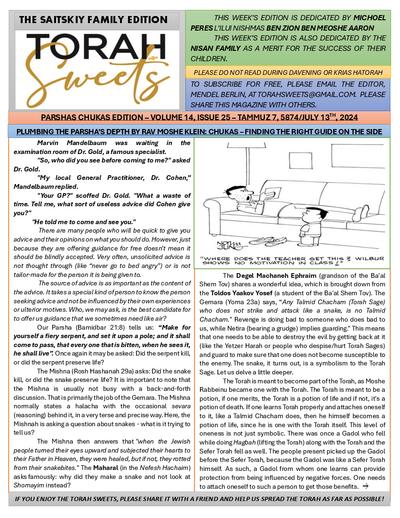
Marvin Mandelbaum was waiting in the examination room of Dr. Gold, a famous specialist. "So, who did you see before coming to me?" asked Dr. Gold. "My local General Practitioner, Dr. Cohen,” Mandelbaum replied. "Your GP?" scoffed Dr. Gold. "What a waste of time. Tell me, what sort of useless advice did Cohen give you?" "He told me to come and see you."

There are many people who will be quick to give you advice and their opinions on what you should do. However, just because they are offering guidance for free doesn’t mean it should be blindly accepted. Very often, unsolicited advice is not thought through (like “never go to bed angry”) or is not tailor-made for the person it is being given to.

The source of advice is as important as the content of the advice. It takes a special kind of person to know the person seeking advice and not be influenced by their own experiences or ulterior motives. Who, we may ask, is the best candidate for to offer us guidance that we sometimes need like air?

Our Parsha (Bamidbar 21:8) tells us: “Make for yourself a fiery serpent, and set it upon a pole; and it shall come to pass, that every one that is bitten, when he sees it, he shall live”. Once again it may be asked: Did the serpent kill, or did the serpent preserve life?

The Mishna (Rosh Hashanah 29a) asks: Did the snake kill, or did the snake preserve life? It is important to note that the Mishna is usually not busy with a back-and-forth discussion. That is primarily the job of the Gemara. The Mishna normally states a halacha with the occasional sevara (reasoning) behind it, in a very terse and precise way. Here, the Mishnah is asking a question about snakes - what is it trying to tell us?

The Mishna then answers that "when the Jewish people turned their eyes upward and subjected their hearts to their Father in Heaven, they were healed, but if not, they rotted from their snakebites." The Maharal (in the Nefesh Hachaim) asks famously: why did they make a snake and not look at Shomayim instead?

The Symbolism of the Snake and the Torah Sage

The Degel Machaneh Ephraim (grandson of the Ba'al Shem Tov) shares a wonderful idea, which is brought down from the Toldos Yaakov Yosef (a student of the Ba'al Shem Tov). The Gemara (Yoma 23a) says, “Any Talmid Chacham (Torah Sage) who does not strike and attack like a snake, is no Talmid Chacham." Revenge is doing bad to someone who does bad to us, while Netira (bearing a grudge) implies guarding." This means that one needs to be able to destroy the evil by getting back at it (like the Yetzer Harah or people who despise/hurt Torah Sages) and guard to make sure that one does not become susceptible to the enemy. The snake, it turns out, is a symbolism to the Torah Sage. Let us delve a little deeper.

The Torah is meant to become part of the Torah, as Moshe Rabbeinu became one with the Torah. The Torah is meant to be a potion, if one merits, the Torah is a potion of life and if not, it's a potion of death. If one learns Torah properly and attaches oneself to it, like a Talmid Chacham does, then he himself becomes a potion of life, since he is one with the Torah itself. This level of oneness is not just symbolic. There was once a Gadol who fell while doing Hagbah (lifting the Torah) along with the Torah and the Sefer Torah fell as well. The people present picked up the Gadol before the Sefer Torah, because the Gadol was like a Sefer Torah himself. As such, a Gadol from whom one learns can provide protection from being influenced by negative forces. One needs to attach oneself to such a person to get those benefits.

The Power of Attachment to Torah and Torah Sages

However, one who distances themselves from the Torah will turn the Torah into a potion of death. The Torah will, G-d Forbid, damage such a person. It is a natural byproduct that one who leaves Torah leaves life. This is why the Gemara (Shabbos 88a) tells us that Hashem told the Jews if they did not accept the Torah their demise will be there and then. Wherever one goes, there will be death for one who detaches oneself from the Torah.

Furthermore, the Gemara (Shabbos 119b) writes that there is no cure for denigrating a Talmid Chacham by detaching oneself from him or not honoring him properly. These are the scary words of the Toldos Yitzchak Yaakov. The Degel Machaneh Ephraim says that the Seraph-שרף are rashei teivos of reish, pei, and hei. These letters stand for 600,000 explanations- ם פירושי ריבו שישים. This is referring to the Torah that somehow has 600,000 letters (even though there are technically over 300 thousand letters). The idea is to “Aseh Lecha Seraph” - make for yourself a Seraph, Moshe who is the Torah himself.

A Talmid Chacham turns into the Torah itself and then he will have the power to do miracles (as our Pasuk continues). If someone is bitten and away from the Torah but then looks up to the Torah and the Talmid Chacham, then that individual will be able to live and break away from all the bad one may be experiencing.

The Pasuk before (ibid. 21:5) says, "and the people spoke against Hashem and against Moshe, ‘Why did you make us leave Egypt to die in the wilderness? There is no bread and no water, and we have come to loathe this miserable food.’ The people spoke: (ibid. 21:7) ‘we sinned against Hashem and Moshe,’ - the Torah itself because Moshe represents Torah. Once the snake was sent, they were healed.

The Lesson: Finding a Rebbi

The lesson here is to remember the importance of making (or finding) ourselves a Rebbi, someone who honors the Torah and someone to whom we could look up for guidance. This kind of person always has Hashem on their mind and there are plenty of such great individuals. When one attaches themselves to such a person, their lives improve vastly. They and their families find healing and blessing. Let us take this idea of giving proper respect, finding the right Rebbi and elevating our lives in a tremendous way.

If you have feedback on this article or if you would like Rabbi Moshe Klein, the Rav of Agudah of Staten Island, to speak in your community, email the Rav directly at [email protected].

PDF Preview



