The heilige Baal Shem Tov and the arrogant grand host
Pardes Yehuda | July 16, 2026
Print This Article
View Original PDF

The heilige Baal Shem Tov and the arrogant grand host

Pardes Yehuda | July 12, 2026

In the time of the heilige Baal Shem Tov, there was a Jewish man who was a great practitioner of Hachnasas Orchim (hospitality). He kept an open house for all, providing every guest with food, drink, and lodging for the night, and he would furthermore give them a charitable gift of cash. The Baal Shem Tov became aware of the greatness of this man’s deeds. However, the Baal Shem Tov also noticed that there was a flaw in his actions, as the mitzvah was not attaining satisfaction in Heaven.

This bothered the Baal Shem Tov greatly, and he wanted to know what the Yid was doing wrong. After looking into it, he discovered that the Yid possessed one major flaw: he would boast to every guest he accepted into his house, saying, "Indeed, am I not a truly grand host?!" The man's pride was causing his spiritual merits to be transferred to the Sitra Achra (the side of impurity).

[In Kabbalah we learn that Hashem divides everything in this world into either Sitra D’Kedushah (the side of holiness) or Sitra Achra (the side of impurity)—literally meaning “the other side,” or the side of Kelipah. There is nothing in between; every thought, word, action, or creation has its source either in Kedushah or Kelipah.]

The tragedy was that the Yid believed he was building a massive treasury of rewards for the World to Come, while in reality, his pride and arrogance were completely draining his spiritual rewards. The Baal Shem Tov, who had a great love for every fellow Yid, felt pity for him. He decided he must do something to rectify the man's trait and set him on the straight path, especially since he was performing such tremendous good deeds. Therefore, the Baal Shem Tov dispatched one of his closest talmidim (disciples), Rav Volf Kitzes, to visit the man as a guest.

The Yid realized that this guest was a tzaddik and received Rav Volf beautifully, serving him food and drink. Then, as was his custom, he began to boast: "Indeed, am I not a grand host?!" Rav Volf simply replied to him, "Well, we shall see." An hour later, the Yid boasted again, and Rav Volf replied once more, "Well, we shall see." The Yid asked if he could sleep in the same room. Rav Volf agreed. When it was time to sleep, the host, finally exhausted from the day's great commotion, drifted off. Rav Volf then approached him and gently took hold of his pinky finger.

The man immediately began to dream: He dreamed that the king had arrived at his home, and he honored the king by serving him tea. Suddenly, while drinking, the king fainted and died. A false accusation was leveled against the man, alleging that he had served poisoned tea, and he was thrown into a harsh dungeon. By a miracle, the prison caught fire, allowing him to escape. He fled to a distant city, and having no way to sustain himself, he was forced to become a water-carrier.

However, water-carrying in that city paid so poorly that he could not earn a livelihood. So he traveled to another city where the pay was higher. But in this new city, the rules were incredibly strict: if a carrier brought a bucket that wasn't completely full, the water was confiscated without payment. Therefore, he had to be exceedingly careful while carrying his load. One day, however, he tripped while carrying the water and broke his nose. Lying there injured and sick, he began to reflect on how he had once been a wealthy man, but had now fallen to such a low state in a foreign land—and he began to weep bitterly (all of this taking place within the dream).

At that moment, Rav Volf let go of his finger. The man startled awake and realized that he was actually lying honorably in his own bed among his guests. Out of sheer joy and relief, he nearly fainted. Rav Volf revived him and said, "All of this befell you because you constantly boast and are arrogant about your mitzvah. Therefore, you must travel to the Baal Shem Tov to seek a path of repentance."

And so it was. The man traveled to the Baal Shem Tov. The Baal Shem Tov showed him spiritually how the entire merit of his hospitality was being redirected to the Sitra Achra. The man was shocked to hear this and lowered his face in shame, declaring that he was ready to rectify his actions. The Baal Shem Tov told him exactly what he needed to do and undertake in order to straighten his path. The Yid accepted everything the Baal Shem Tov prescribed, taking upon himself a penance to atone for his wrongdoings. He fulfilled it completely, and from that day forward, he ceased boasting about his good deeds.

A while later, the Baal Shem Tov was speaking with Rav Volf, and the progress of the Yid came up. The Baal Shem Tov shared the good news with Rav Volf: the Yid’s hospitality was now shining brightly in Heaven!
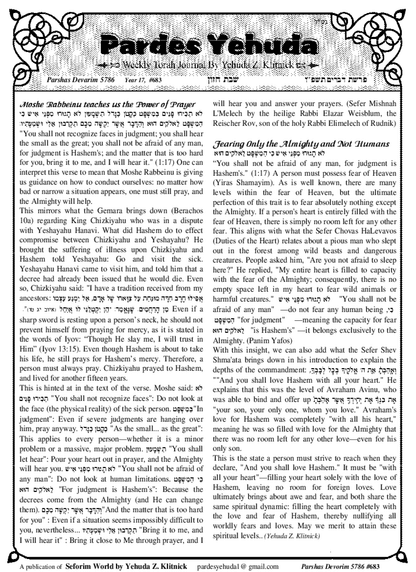
In the time of the heilige Baal Shem Tov, there was a Jewish man who was a great practitioner of Hachnasas Orchim (hospitality). He kept an open house for all, providing every guest with food, drink, and lodging for the night, and he would furthermore give them a charitable gift of cash. The Baal Shem Tov became aware of the greatness of this man’s deeds. However, the Baal Shem Tov also noticed that there was a flaw in his actions, as the mitzvah was not attaining satisfaction in Heaven.

This bothered the Baal Shem Tov greatly, and he wanted to know what the Yid was doing wrong. After looking into it, he discovered that the Yid possessed one major flaw: he would boast to every guest he accepted into his house, saying, "Indeed, am I not a truly grand host?!" The man's pride was causing his spiritual merits to be transferred to the Sitra Achra (the side of impurity).

[In Kabbalah we learn that Hashem divides everything in this world into either Sitra D’Kedushah (the side of holiness) or Sitra Achra (the side of impurity)—literally meaning “the other side,” or the side of Kelipah. There is nothing in between; every thought, word, action, or creation has its source either in Kedushah or Kelipah.]

The tragedy was that the Yid believed he was building a massive treasury of rewards for the World to Come, while in reality, his pride and arrogance were completely draining his spiritual rewards. The Baal Shem Tov, who had a great love for every fellow Yid, felt pity for him. He decided he must do something to rectify the man's trait and set him on the straight path, especially since he was performing such tremendous good deeds. Therefore, the Baal Shem Tov dispatched one of his closest talmidim (disciples), Rav Volf Kitzes, to visit the man as a guest.

The Yid realized that this guest was a tzaddik and received Rav Volf beautifully, serving him food and drink. Then, as was his custom, he began to boast: "Indeed, am I not a grand host?!" Rav Volf simply replied to him, "Well, we shall see." An hour later, the Yid boasted again, and Rav Volf replied once more, "Well, we shall see." The Yid asked if he could sleep in the same room. Rav Volf agreed. When it was time to sleep, the host, finally exhausted from the day's great commotion, drifted off. Rav Volf then approached him and gently took hold of his pinky finger.

The man immediately began to dream: He dreamed that the king had arrived at his home, and he honored the king by serving him tea. Suddenly, while drinking, the king fainted and died. A false accusation was leveled against the man, alleging that he had served poisoned tea, and he was thrown into a harsh dungeon. By a miracle, the prison caught fire, allowing him to escape. He fled to a distant city, and having no way to sustain himself, he was forced to become a water-carrier.

However, water-carrying in that city paid so poorly that he could not earn a livelihood. So he traveled to another city where the pay was higher. But in this new city, the rules were incredibly strict: if a carrier brought a bucket that wasn't completely full, the water was confiscated without payment. Therefore, he had to be exceedingly careful while carrying his load. One day, however, he tripped while carrying the water and broke his nose. Lying there injured and sick, he began to reflect on how he had once been a wealthy man, but had now fallen to such a low state in a foreign land—and he began to weep bitterly (all of this taking place within the dream).

At that moment, Rav Volf let go of his finger. The man startled awake and realized that he was actually lying honorably in his own bed among his guests. Out of sheer joy and relief, he nearly fainted. Rav Volf revived him and said, "All of this befell you because you constantly boast and are arrogant about your mitzvah. Therefore, you must travel to the Baal Shem Tov to seek a path of repentance."

And so it was. The man traveled to the Baal Shem Tov. The Baal Shem Tov showed him spiritually how the entire merit of his hospitality was being redirected to the Sitra Achra. The man was shocked to hear this and lowered his face in shame, declaring that he was ready to rectify his actions. The Baal Shem Tov told him exactly what he needed to do and undertake in order to straighten his path. The Yid accepted everything the Baal Shem Tov prescribed, taking upon himself a penance to atone for his wrongdoings. He fulfilled it completely, and from that day forward, he ceased boasting about his good deeds.

A while later, the Baal Shem Tov was speaking with Rav Volf, and the progress of the Yid came up. The Baal Shem Tov shared the good news with Rav Volf: the Yid’s hospitality was now shining brightly in Heaven!

PDF Preview