What Exactly is the Shechinah and Where Does it Reside?
למודי משה | July 15, 2026
Print This Article
View Original PDF

What Exactly is the Shechinah and Where Does it Reside?

למודי משה | August 04, 2024

The son of the Aruch LaNer (Binyan Tzion, Vol. 1, 3) asked his father an incisive question: The Gemara (Yoma 21b) explicitly teaches that five things were missing from the Second Beis HaMikdash, one of them being the Shechinah, so how can Chazal say that the Shechinah still dwells at the Kosel after the churban?

The Aruch LaNer raised a further difficulty: How can we recite in our tefillos: לציון שכינתו המחזיר – “Who restores His Presence to Tzion” if, according to the Midrashim and Zohar, the Shechinah never departed? What sense is there in speaking of “restoring” it?

To resolve these questions, he offered a remarkable analogy. The Gemara (Sanhedrin 39a) tells that Rabban Gamliel once visited a certain heretic (some identify him as the Roman emperor). The heretic challenged him: “You Jews say that the Divine Presence rests wherever ten Jews gather. That cannot be! At any moment there are countless such groups. Where, then, is the Shechinah found?”

Rabban Gamliel gently struck the heretic’s servant and asked, “Why has the sun entered your master’s house? Has it taken away its light from everyone else?”

The servant, bewildered, replied: “The sun shines for the entire world. Its light enters any house that has an open door or window.”

Said Rabban Gamliel: “If the sun, one of the Creator’s countless servants, can illuminate the whole world without diminishing its own light, surely the Creator Himself can rest His Presence wherever ten Jews assemble.”

The Aruch LaNer explains that just as the sun, though distant, illuminates every place open to receive its rays, so too the light of the Shechinah shines into every soul. The degree of illumination depends on how much we open ourselves to it, how fully we remove the obstructions and open a window in our heart for that light to enter.

He distinguishes between the Kavod Hashem — the concealed Glory of Hashem — and the Or HaShechinah — the radiance of His Presence. The Kavod Hashem is hidden from all creation; even the angels ask one another, “Where is the place of His glory?” In the First Beis HaMikdash, a wondrous miracle occurred: the Glory of Hashem was tangibly manifest between the Badei HaAron. That revelation was absent from the Second Beis HaMikdash and will return only with the final redemption.

Yet from that concealed source, a precious spiritual light continues to shine throughout creation. In some places it is obstructed by man-made barriers; where those are removed, the light pours in. And the more one opens oneself, the brighter the light shines. This is the meaning of the pasuk, “The whole earth is filled with His glory”: Hashem’s hidden Glory radiates everywhere, wherever nothing blocks its revelation. Therefore, wherever a minyan gathers to honor Hashem, the light of the Shechinah rests upon them.

Thus, the Aruch LaNer explains that since the destruction of the First Beis HaMikdash, the essential manifestation of the Shechinah has become hidden. Yet its radiance continues to shine wherever ten Jews gather, and it shines with special intensity at the “Kosel HaMaravi”. Even amid concealment and exile, that light endures there, influencing, uplifting, and drawing close anyone who approaches in prayer.

The Leshem Shevo Ve’achlama (Rabbi Shlomo Elyashiv) offers a different approach (Sefer HaZikaron Tiferes Raphael, p. 139): since the destruction of the First Beis HaMikdash, the revelation of the Shechinah has been withdrawn from us, yet in its hidden form the Shechinah remains ever present at the “Kosel HaMaravi”.

Summary of What Comes Out:

  1. “Kosel HaMaravi”: Is a place from which the Shechinah never parts.
  2. Azorah or Har HaBayis: Some are stringent and are concerned that the “Kosel HaMaravi” is the wall of the Azorah, therefore, one must keep 11 amos away, the distance of cheil (חיל), as the din is that one who is tomei mes, is not allowed to enter that area. However, most poskim and the widespread minhag today, is that the “Kosel HaMaravi” is the wall of Har HaBayis, therefore one approach and walk right up to the wall.
  3. Inserting Fingers: Some prohibit inserting fingers between the stones based on the din of biah b’miktzas, and they only allow one to do so if he has toiveled in a mikveh de’O’raisa that day (and therefore has the din of a tevul yom). Others are lenient in all cases.
  4. Kedushah: The structure of Kosel carries kedusha — either because it is the Azorah of the Beis HaMikdash, or because it was built from shiyorei halishkah [remnants of the Temple treasury]. Although, some argue that it is the wall of Har HaBayis and it has no kedushah.
  5. Chillul: Some hold that the stones were desacralized at the time of the churban and they carry no me’ilah today due to the din of וחללוה פריצים בה ובאו. Some argue, and maintain they still have kedusha, and the stones would require geniza.
  6. Fallen Stone: A stone that has fallen from the “Kosel HaMaravi” requires genizah. If possible, it is a mitzvah to return it to its place, preferably performed by a Torah-observant Jew. Some authorities permit using a non-Jew for the physical repair.

Rav Moshe Chaim Luzzatto draws a comparison between a deceased person and the destroyed Beis HaMikdash. Although when a person dies, his soul departs the body, which then decomposes, one bone in the body, known as the luz bone of the spine remains intact from the time of death until techiyas hamesim. This bone, containing a tiny spiritual force, will develop into a complete human being at the time of techiyas hameisim. Similarly, although the Shechinah parted from the Beis HaMikdash whose structure was demolished, the “Kosel HaMaravi”, which retains a vestige of kedushas HaMikdash, remains standing and will serve as the cornerstone for the future Beis HaMikdash. May we merit both techiyas hamesim and the rebuilding of the Beis HaMikdash speedily in our days.
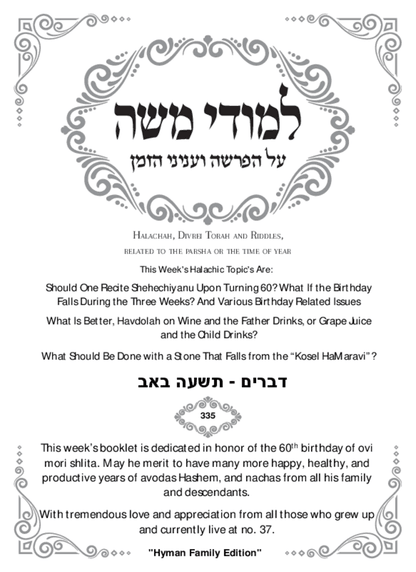
The son of the Aruch LaNer (Binyan Tzion, Vol. 1, 3) asked his father an incisive question: The Gemara (Yoma 21b) explicitly teaches that five things were missing from the Second Beis HaMikdash, one of them being the Shechinah, so how can Chazal say that the Shechinah still dwells at the Kosel after the churban?

The Aruch LaNer raised a further difficulty: How can we recite in our tefillos: לציון שכינתו המחזיר – “Who restores His Presence to Tzion” if, according to the Midrashim and Zohar, the Shechinah never departed? What sense is there in speaking of “restoring” it?

To resolve these questions, he offered a remarkable analogy. The Gemara (Sanhedrin 39a) tells that Rabban Gamliel once visited a certain heretic (some identify him as the Roman emperor). The heretic challenged him: “You Jews say that the Divine Presence rests wherever ten Jews gather. That cannot be! At any moment there are countless such groups. Where, then, is the Shechinah found?”

Rabban Gamliel gently struck the heretic’s servant and asked, “Why has the sun entered your master’s house? Has it taken away its light from everyone else?”

The servant, bewildered, replied: “The sun shines for the entire world. Its light enters any house that has an open door or window.”

Said Rabban Gamliel: “If the sun, one of the Creator’s countless servants, can illuminate the whole world without diminishing its own light, surely the Creator Himself can rest His Presence wherever ten Jews assemble.”

The Aruch LaNer explains that just as the sun, though distant, illuminates every place open to receive its rays, so too the light of the Shechinah shines into every soul. The degree of illumination depends on how much we open ourselves to it, how fully we remove the obstructions and open a window in our heart for that light to enter.

He distinguishes between the Kavod Hashem — the concealed Glory of Hashem — and the Or HaShechinah — the radiance of His Presence. The Kavod Hashem is hidden from all creation; even the angels ask one another, “Where is the place of His glory?” In the First Beis HaMikdash, a wondrous miracle occurred: the Glory of Hashem was tangibly manifest between the Badei HaAron. That revelation was absent from the Second Beis HaMikdash and will return only with the final redemption.

Yet from that concealed source, a precious spiritual light continues to shine throughout creation. In some places it is obstructed by man-made barriers; where those are removed, the light pours in. And the more one opens oneself, the brighter the light shines. This is the meaning of the pasuk, “The whole earth is filled with His glory”: Hashem’s hidden Glory radiates everywhere, wherever nothing blocks its revelation. Therefore, wherever a minyan gathers to honor Hashem, the light of the Shechinah rests upon them.

Thus, the Aruch LaNer explains that since the destruction of the First Beis HaMikdash, the essential manifestation of the Shechinah has become hidden. Yet its radiance continues to shine wherever ten Jews gather, and it shines with special intensity at the “Kosel HaMaravi”. Even amid concealment and exile, that light endures there, influencing, uplifting, and drawing close anyone who approaches in prayer.

The Leshem Shevo Ve’achlama (Rabbi Shlomo Elyashiv) offers a different approach (Sefer HaZikaron Tiferes Raphael, p. 139): since the destruction of the First Beis HaMikdash, the revelation of the Shechinah has been withdrawn from us, yet in its hidden form the Shechinah remains ever present at the “Kosel HaMaravi”.

Summary of What Comes Out:

  1. “Kosel HaMaravi”: Is a place from which the Shechinah never parts.
  2. Azorah or Har HaBayis: Some are stringent and are concerned that the “Kosel HaMaravi” is the wall of the Azorah, therefore, one must keep 11 amos away, the distance of cheil (חיל), as the din is that one who is tomei mes, is not allowed to enter that area. However, most poskim and the widespread minhag today, is that the “Kosel HaMaravi” is the wall of Har HaBayis, therefore one approach and walk right up to the wall.
  3. Inserting Fingers: Some prohibit inserting fingers between the stones based on the din of biah b’miktzas, and they only allow one to do so if he has toiveled in a mikveh de’O’raisa that day (and therefore has the din of a tevul yom). Others are lenient in all cases.
  4. Kedushah: The structure of Kosel carries kedusha — either because it is the Azorah of the Beis HaMikdash, or because it was built from shiyorei halishkah [remnants of the Temple treasury]. Although, some argue that it is the wall of Har HaBayis and it has no kedushah.
  5. Chillul: Some hold that the stones were desacralized at the time of the churban and they carry no me’ilah today due to the din of וחללוה פריצים בה ובאו. Some argue, and maintain they still have kedusha, and the stones would require geniza.
  6. Fallen Stone: A stone that has fallen from the “Kosel HaMaravi” requires genizah. If possible, it is a mitzvah to return it to its place, preferably performed by a Torah-observant Jew. Some authorities permit using a non-Jew for the physical repair.

Rav Moshe Chaim Luzzatto draws a comparison between a deceased person and the destroyed Beis HaMikdash. Although when a person dies, his soul departs the body, which then decomposes, one bone in the body, known as the luz bone of the spine remains intact from the time of death until techiyas hamesim. This bone, containing a tiny spiritual force, will develop into a complete human being at the time of techiyas hameisim. Similarly, although the Shechinah parted from the Beis HaMikdash whose structure was demolished, the “Kosel HaMaravi”, which retains a vestige of kedushas HaMikdash, remains standing and will serve as the cornerstone for the future Beis HaMikdash. May we merit both techiyas hamesim and the rebuilding of the Beis HaMikdash speedily in our days.

PDF Preview