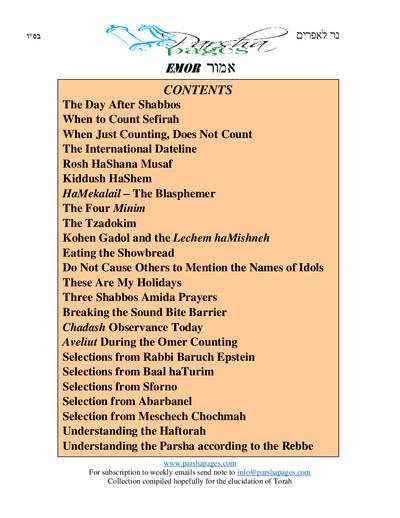
Do Not Cause Others to Mention the Names of Idols
Parsha Pages | May 13, 2024
Print This Article
View Original PDF

Do Not Cause Others to Mention the Names of Idols

Parsha Pages | June 27, 2025

שמות פרק כג, יג וּבְכֹּל אֲשֶּׁר-אָמַרְ תִי אֲלֵיכֶּם תִשָמֵרוּ וְשֵׁם אֱלֹהִים אֲחֵרִ ים לֹּא תַזְכִירוּ לֹּא יִשָמַע עַל-פִיךָ :

“You should be careful to keep everything that I have said to you. Do not mention the name of the gods of others. You should not cause (a non-Jew) to make heard the (name of an idol) by your mouth.”

סנהדרין ס"ג: אבוה דשמואל אסור לאדם שיעשה שותפות עם העובד כוכבים שמא יתחייב לו שבועה ונשבע בעבודת כוכבים שלו והתורה אמרה לא ישמע על פיך

Shmuel's father: One may not make a partnership with a Nochri, lest the Nochri need to swear in the name of idolatry, and the Yisrael transgresses "Lo Yishma Al Picha” (not be said by others by your mouth).

The principle learned is that one should not cause another (even a non-Jew) to said the name of idol.

The Lubavitcher Rebbe (Reshimos 6, pg 8) applies the above principle in understanding Megilas Esther. The Marasha wrote that the Megilah was written by Persians and that is why the name of HaShem is absent from the text. The intention of the Marasha cannot be per plain meaning, since this contradicts several statements of Chaza”l: that Esther said the Megilah with ruach hakodesh and the Anshei Kennesses HaGadolah wrote and canonized the Megilah.

So, the possible explanation is the Anshei Kenesses HaGadolah knew that the Persians would copy the story and distribute it since it was a recent event in their country (obviously a great series for mass publication). Therefore, they did not place the name of HaShem in the Megilah to avoid having the Persians replace the name with the name of their idol. This is according to the principle learned from the above verse that one should not cause another (even a non-Jew) to say the name of idol (especially in this situation in which the miraculous events would enhance that idol).

And thus, we can understand the Marasha to mean that since it was anticipated that the Persians would copy the text of the Megilah and would substitute the names of idols, thus it was proper not to mention the name of HaShem in the Megilah.

The Rishonim disagree as to the basis of this principle of Shmuel’s father. Some learn that this is a prohibition from the Torah from the above verse (Rabenu Shmuel, Yad Ramah). Others maintain this is a rabbinical decree and permitted in a place of monetary loss (Rabenu Tam, Rosh, Ran). And the Ramban teaches that it is permitted but is a practice of “midas Chassidus” not to engage in such a partnership.

Rema (O.C. 156) mentions that there are some that are lenient to allow nowadays a partnership between a Jew and a non-Jew. First reason is that in these times a non-Jew’s intention when mentioning the name of an idol to partner with the One that made the heavens and earth (Igros Moshe). Second reason is that some disagree if the prohibition of idol worship by a non-Jew includes “partnership” of an idol together with the true G-d.

It appears to Rabbi Baruch Epstein that an additional proof can be brought to support the Rema (above) from Sanhendrin 74b, where the Gemara asks “are Bnei Noach commanded about Kiddush HaShem?” And the Gemara derives an answer from verse: מלכים ב פרק ה, יח לַדָבָר הַזֶּה יִסְלַח ה' לְעַבְדֶּךָ בְבוֹא אֲדֹּנִי בֵית-רִ מּוֹן- לְהִשְׁתַחֲוֹת שָׁמָּה וְהוּא נִשְׁעָן עַל -יָדִי וְהִשְׁתַחֲוֵיתִי בֵית רִ מֹּּן בְהִשְׁתַחֲוָיָתִי בֵית רִ מֹּּן (Na'aman accepted to be a Ger Toshav, and mentioned that he must bow with his {new} master also to idolatry) and then Elisha agreed, "Lech l'Shalom" “Go in peace”.

If Na’aman (as a Ben Noach) was commanded on Kiddush HaShem, then Elisha should have protested. And Rashi explains that from this language Elisha agreed to what Na’aman did, as a Bnei Noach making “partnership” with G-d and an idol.

Further this can be shown from the prior verse (Kings II 5,17) where Na’aman says he would no longer offer sacrifices to idols כי אם (usually translated as only) to HaShem. The Gemara (Berachos 12b) teaches that these words כי אם does not imply replacing the prior item, but in addition to that item. (Similar to the verse that states that Yaakov would no longer be called Yaacov כי אם Yisroel, and yet he continued to be called Yaakov, but the main name was now Yisroel). Thus, Na’aman stipulates that while offering sacrifices primarily to HaShem, he would “partner” with idols, and nevertheless, Elisha did not object, providing further evidence that the concept of “partnership” does not apply to Bnei Noach.

Summary and Ruling: The Shulchan Aruch (C.M. 176, 51) rules that it is prohibited to enter into a partnership with an idol worshiper, and if one does enter and the idol worshiper is now required to swear to him, he is allowed to make him swear. The Rema (O. C. 156, 1) rules that one may be lenient and enter into a partnership with a gentile nowadays, since when swearing their intent is to the Creator.
שמות פרק כג, יג וּבְכֹּל אֲשֶּׁר-אָמַרְ תִי אֲלֵיכֶּם תִשָמֵרוּ וְשֵׁם אֱלֹהִים אֲחֵרִ ים לֹּא תַזְכִירוּ לֹּא יִשָמַע עַל-פִיךָ :

“You should be careful to keep everything that I have said to you. Do not mention the name of the gods of others. You should not cause (a non-Jew) to make heard the (name of an idol) by your mouth.”

סנהדרין ס"ג: אבוה דשמואל אסור לאדם שיעשה שותפות עם העובד כוכבים שמא יתחייב לו שבועה ונשבע בעבודת כוכבים שלו והתורה אמרה לא ישמע על פיך

Shmuel's father: One may not make a partnership with a Nochri, lest the Nochri need to swear in the name of idolatry, and the Yisrael transgresses "Lo Yishma Al Picha” (not be said by others by your mouth).

The principle learned is that one should not cause another (even a non-Jew) to said the name of idol.

The Lubavitcher Rebbe (Reshimos 6, pg 8) applies the above principle in understanding Megilas Esther. The Marasha wrote that the Megilah was written by Persians and that is why the name of HaShem is absent from the text. The intention of the Marasha cannot be per plain meaning, since this contradicts several statements of Chaza”l: that Esther said the Megilah with ruach hakodesh and the Anshei Kennesses HaGadolah wrote and canonized the Megilah.

So, the possible explanation is the Anshei Kenesses HaGadolah knew that the Persians would copy the story and distribute it since it was a recent event in their country (obviously a great series for mass publication). Therefore, they did not place the name of HaShem in the Megilah to avoid having the Persians replace the name with the name of their idol. This is according to the principle learned from the above verse that one should not cause another (even a non-Jew) to say the name of idol (especially in this situation in which the miraculous events would enhance that idol).

And thus, we can understand the Marasha to mean that since it was anticipated that the Persians would copy the text of the Megilah and would substitute the names of idols, thus it was proper not to mention the name of HaShem in the Megilah.

The Rishonim disagree as to the basis of this principle of Shmuel’s father. Some learn that this is a prohibition from the Torah from the above verse (Rabenu Shmuel, Yad Ramah). Others maintain this is a rabbinical decree and permitted in a place of monetary loss (Rabenu Tam, Rosh, Ran). And the Ramban teaches that it is permitted but is a practice of “midas Chassidus” not to engage in such a partnership.

Rema (O.C. 156) mentions that there are some that are lenient to allow nowadays a partnership between a Jew and a non-Jew. First reason is that in these times a non-Jew’s intention when mentioning the name of an idol to partner with the One that made the heavens and earth (Igros Moshe). Second reason is that some disagree if the prohibition of idol worship by a non-Jew includes “partnership” of an idol together with the true G-d.

It appears to Rabbi Baruch Epstein that an additional proof can be brought to support the Rema (above) from Sanhendrin 74b, where the Gemara asks “are Bnei Noach commanded about Kiddush HaShem?” And the Gemara derives an answer from verse: מלכים ב פרק ה, יח לַדָבָר הַזֶּה יִסְלַח ה' לְעַבְדֶּךָ בְבוֹא אֲדֹּנִי בֵית-רִ מּוֹן- לְהִשְׁתַחֲוֹת שָׁמָּה וְהוּא נִשְׁעָן עַל -יָדִי וְהִשְׁתַחֲוֵיתִי בֵית רִ מֹּּן בְהִשְׁתַחֲוָיָתִי בֵית רִ מֹּּן (Na'aman accepted to be a Ger Toshav, and mentioned that he must bow with his {new} master also to idolatry) and then Elisha agreed, "Lech l'Shalom" “Go in peace”.

If Na’aman (as a Ben Noach) was commanded on Kiddush HaShem, then Elisha should have protested. And Rashi explains that from this language Elisha agreed to what Na’aman did, as a Bnei Noach making “partnership” with G-d and an idol.

Further this can be shown from the prior verse (Kings II 5,17) where Na’aman says he would no longer offer sacrifices to idols כי אם (usually translated as only) to HaShem. The Gemara (Berachos 12b) teaches that these words כי אם does not imply replacing the prior item, but in addition to that item. (Similar to the verse that states that Yaakov would no longer be called Yaacov כי אם Yisroel, and yet he continued to be called Yaakov, but the main name was now Yisroel). Thus, Na’aman stipulates that while offering sacrifices primarily to HaShem, he would “partner” with idols, and nevertheless, Elisha did not object, providing further evidence that the concept of “partnership” does not apply to Bnei Noach.

Summary and Ruling: The Shulchan Aruch (C.M. 176, 51) rules that it is prohibited to enter into a partnership with an idol worshiper, and if one does enter and the idol worshiper is now required to swear to him, he is allowed to make him swear. The Rema (O. C. 156, 1) rules that one may be lenient and enter into a partnership with a gentile nowadays, since when swearing their intent is to the Creator.

PDF Preview