The Lenient Approach of the Bach
Parsha Pages | May 13, 2024
Print This Article
View Original PDF

The Lenient Approach of the Bach

Parsha Pages | June 27, 2025

The Bach (in his comments to Tur Yoreh Deah 293 s.v. Ketiv Vilechem) notes that in his area of residence (sixteenth-century Poland) almost everyone (including great Rabbis) was lenient regarding the Chadash issue. The Bach cites a number of lesser-known Rishonim who assert that Chadash does not apply if the grain grows in a field owned by a non-Jew. The Bach writes at length in an attempt to defend this approach. He cites the Gemara in Rosh Hashana (13a) which states that one may not offer the Korban Omeir from barley that grew in a field owned by a non-Jew. The Bach then notes that according to the Gemara in Menachot (84a) Chadash does not apply to grain that is not suitable to be used for the Korban Omer. Accordingly, the Bach concludes that Chadash does not apply to grain that grew in a field owned by a non-Jew because that grain is not suitable for the Korban Omer.

This celebrated approach of the Bach elicited much criticism. The Shach (Yoreh Deah 293:6), the Taz (293:2), and the Vilna Gaon (Biur Hagra 293:2) vigorously reject this approach. Indeed, Tosafot (Kiddushin 36b s.v. Kol) specifically states that the Talmud Yerushalmi indicates that Chadash applies to grain grown in a field that is owned by non-Jews. Moreover, the Shulchan Aruch (Yoreh Deah 293:2) rules that Chadash applies to grain grown in a field owned by non-Jews. Nevertheless, Teshuvot Mishkenot Yaakov (64) writes at length in defense of the Bach from his many eminent critics.
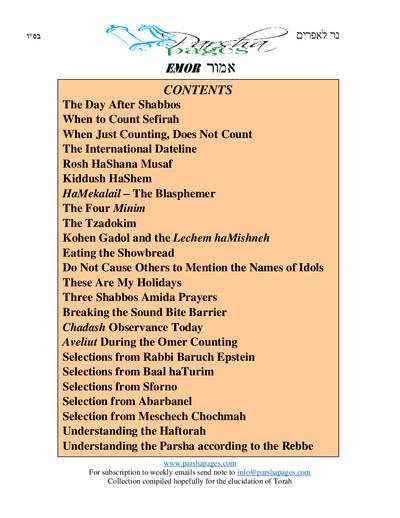
The Bach (in his comments to Tur Yoreh Deah 293 s.v. Ketiv Vilechem) notes that in his area of residence (sixteenth-century Poland) almost everyone (including great Rabbis) was lenient regarding the Chadash issue. The Bach cites a number of lesser-known Rishonim who assert that Chadash does not apply if the grain grows in a field owned by a non-Jew. The Bach writes at length in an attempt to defend this approach. He cites the Gemara in Rosh Hashana (13a) which states that one may not offer the Korban Omeir from barley that grew in a field owned by a non-Jew. The Bach then notes that according to the Gemara in Menachot (84a) Chadash does not apply to grain that is not suitable to be used for the Korban Omer. Accordingly, the Bach concludes that Chadash does not apply to grain that grew in a field owned by a non-Jew because that grain is not suitable for the Korban Omer.

This celebrated approach of the Bach elicited much criticism. The Shach (Yoreh Deah 293:6), the Taz (293:2), and the Vilna Gaon (Biur Hagra 293:2) vigorously reject this approach. Indeed, Tosafot (Kiddushin 36b s.v. Kol) specifically states that the Talmud Yerushalmi indicates that Chadash applies to grain grown in a field that is owned by non-Jews. Moreover, the Shulchan Aruch (Yoreh Deah 293:2) rules that Chadash applies to grain grown in a field owned by non-Jews. Nevertheless, Teshuvot Mishkenot Yaakov (64) writes at length in defense of the Bach from his many eminent critics.

PDF Preview