The Tractor War of 1966 – Are Military Commanders Relied Upon to Determine Pikuach Nefesh, or Do We Need to Go to Gedolei Yisroel
Limuday Moshe | February 29, 2024
Print This Article
View Original PDF

The Tractor War of 1966 – Are Military Commanders Relied Upon to Determine Pikuach Nefesh, or Do We Need to Go to Gedolei Yisroel

Limuday Moshe | December 10, 2025

The Tractor War was one of the most interesting (and strange) battles that took place in the fields surrounding Kibbutz Shaalvim. The religious kibbutz, situated in the Ayalon valley was, in 1965, adjacent to the border. The Jordanians on the other side tried to annex the demilitarized zone by sending the Arab falahs to plow the no-man’s land on Shabbos Chol HaMoed Succos of 1966, which was a shemittah year. The plan was discovered, and Yitzchak Rabin, then Military General, demanded all the tractors in the kibbutz, along with tractors from neighboring kibbutzim, to take part in the opposite plowing, with the goal to annex as much of the land as possible before the UN and the ceasefire committee intervened. On that Shabbbos Chol HaMoed, dozens of Israeli tractors plowed against dozens of Arab tractors, with firing rounds going back and forth between farmers and soldiers on both sides. Eventually, the UN security council intervened, all the tractors withdrew, and the threat of annexation was averted. The area quieted down until, during the Six Day War when the entire Ayalon valley was conquered.

Further details which were discovered only in 1967, illustrate the very real danger the kibbutz was in.

Halachic Debate

The Tractor War spurred a wide halachic debate. Is conquering land for security reasons permitted on Shabbos, or is it just land and therefore, forbidden?

Those opposing the move claimed the war was played on the ground and not in the diplomatic arena because of the stormy political election season, in which Ben Gurion ran for the first time as the head of an independent party. Desperate to demonstrate decisive military action, the government used this clash with the Jordanians to show their prowess. The move proved successful when they were elected with a sizable majority.

This brings another issue to the fore: are military commanders relied upon for non-combat related issues, if there are grounds for suspecting that the halachos of pikuach nefesh are not guiding their decisions?

Shabbos Plowing

The story of Kibbutz Shaalvim plowing on Shabbos raised a public outcry, led by the Steipler who famously pronounced, “Shaalvim has been (spiritually) burned down.”

On the other hand, Rabbi Shlomah Zalman Auerbach supported the permit, encouraging Rabbi Meir Schlesinger to publish the sources for his heter in HaMe’ayen (volume 6, issue 2 Teves, 5726, p.12), and even edited the publication before its printing.

The reasons were as follows:

  • The Shulchan Aruch writes (Orach Chaim 329:6) that when gentiles come to steal money, desecrating Shabbos to stop them is forbidden, unless there are lives at risk. However, in a border town, even thieves coming after straw and chaff must be chased away, even if doing so involves desecration of Shabbos, to prevent them from getting close or infiltrating the town. Letting them set foot in a town might give them knowledge how to conquer it at a later date. Therefore, eliminating them immediately is imperative.
  • Fighting back invaders does not necessarily have to take place with ammunition. If a war can be waged by plowing with tractors, that too must be done.
  • When a doctor orders a surgical procedure on Shabbos we rely upon his opinion because he is the authority in medical issues. Although the doctor might have ulterior motives, his opinion is seen as professional and followed, even if it involves Shabbos desecration. The same is true in military issues: military commanders on the ground are the professionals, and they have the tools to determine what is the best way to fight a war. Therefore, we are not charged to second guess their decisions.

On the other hand, the Steipler (Orchos Rabbeinu I, p. 297) opines that there were other ways to prevent the Arabs from annexing the land without plowing on Shabbos, and the reason the army sent farmers to plow was in order to conquer new land, not to retain land that was already theirs. Conquering new land is not included in the Shulchan Aruch’s permit for border town, and therefore forbidden. (Later, interrogations of Jordanian POWs taught that the Jordanians only fired at the farmers because they interpreted the religious Shaalvim farmers’ ploughing on Shabbos as a declaration of war [Ha’Shabbas B’Shaalvim p.34].)

Rabbi Mordechai Imanuel (Ha’Shabbas B’Shaalvim p.31) understands that the Steipler’s main concern was the kibbutz’s failure to approach leading poskim before Shabbos on the issue, despite knowing about it ahead of time. Rav Chaim Kanievsky agreed with this understanding, which also explains why the Steipler does not take issue with the fact that they plowed during shemittah, despite being fully shemittah-observant.

Summary

The halachic debate on The Tractor War, highlights the controversy whether a commander’s decisions are reliable to decide to desecrate the Shabbos. While the Steipler maintains that only Gedolei Yisroel have the power to determine if another solution is necessary or not, Rav Shlomah Zalman Auerbach sees a military person as the professional authority for military decisions, and, like a doctor, must be trusted in these issues, provided the instructions seem logical.
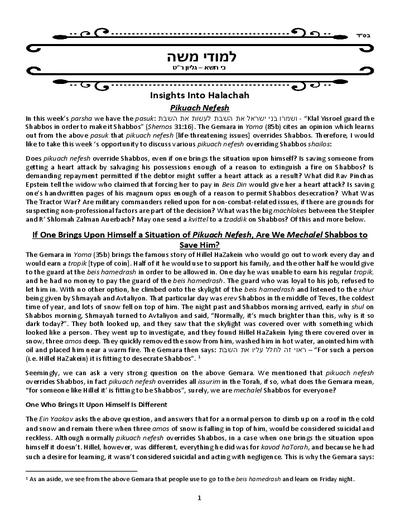

The Tractor War was one of the most interesting (and strange) battles that took place in the fields surrounding Kibbutz Shaalvim. The religious kibbutz, situated in the Ayalon valley was, in 1965, adjacent to the border. The Jordanians on the other side tried to annex the demilitarized zone by sending the Arab falahs to plow the no-man’s land on Shabbos Chol HaMoed Succos of 1966, which was a shemittah year. The plan was discovered, and Yitzchak Rabin, then Military General, demanded all the tractors in the kibbutz, along with tractors from neighboring kibbutzim, to take part in the opposite plowing, with the goal to annex as much of the land as possible before the UN and the ceasefire committee intervened. On that Shabbbos Chol HaMoed, dozens of Israeli tractors plowed against dozens of Arab tractors, with firing rounds going back and forth between farmers and soldiers on both sides. Eventually, the UN security council intervened, all the tractors withdrew, and the threat of annexation was averted. The area quieted down until, during the Six Day War when the entire Ayalon valley was conquered.

Further details which were discovered only in 1967, illustrate the very real danger the kibbutz was in.

Halachic Debate

The Tractor War spurred a wide halachic debate. Is conquering land for security reasons permitted on Shabbos, or is it just land and therefore, forbidden?

Those opposing the move claimed the war was played on the ground and not in the diplomatic arena because of the stormy political election season, in which Ben Gurion ran for the first time as the head of an independent party. Desperate to demonstrate decisive military action, the government used this clash with the Jordanians to show their prowess. The move proved successful when they were elected with a sizable majority.

This brings another issue to the fore: are military commanders relied upon for non-combat related issues, if there are grounds for suspecting that the halachos of pikuach nefesh are not guiding their decisions?

Shabbos Plowing

The story of Kibbutz Shaalvim plowing on Shabbos raised a public outcry, led by the Steipler who famously pronounced, “Shaalvim has been (spiritually) burned down.”

On the other hand, Rabbi Shlomah Zalman Auerbach supported the permit, encouraging Rabbi Meir Schlesinger to publish the sources for his heter in HaMe’ayen (volume 6, issue 2 Teves, 5726, p.12), and even edited the publication before its printing.

The reasons were as follows:

  • The Shulchan Aruch writes (Orach Chaim 329:6) that when gentiles come to steal money, desecrating Shabbos to stop them is forbidden, unless there are lives at risk. However, in a border town, even thieves coming after straw and chaff must be chased away, even if doing so involves desecration of Shabbos, to prevent them from getting close or infiltrating the town. Letting them set foot in a town might give them knowledge how to conquer it at a later date. Therefore, eliminating them immediately is imperative.
  • Fighting back invaders does not necessarily have to take place with ammunition. If a war can be waged by plowing with tractors, that too must be done.
  • When a doctor orders a surgical procedure on Shabbos we rely upon his opinion because he is the authority in medical issues. Although the doctor might have ulterior motives, his opinion is seen as professional and followed, even if it involves Shabbos desecration. The same is true in military issues: military commanders on the ground are the professionals, and they have the tools to determine what is the best way to fight a war. Therefore, we are not charged to second guess their decisions.

On the other hand, the Steipler (Orchos Rabbeinu I, p. 297) opines that there were other ways to prevent the Arabs from annexing the land without plowing on Shabbos, and the reason the army sent farmers to plow was in order to conquer new land, not to retain land that was already theirs. Conquering new land is not included in the Shulchan Aruch’s permit for border town, and therefore forbidden. (Later, interrogations of Jordanian POWs taught that the Jordanians only fired at the farmers because they interpreted the religious Shaalvim farmers’ ploughing on Shabbos as a declaration of war [Ha’Shabbas B’Shaalvim p.34].)

Rabbi Mordechai Imanuel (Ha’Shabbas B’Shaalvim p.31) understands that the Steipler’s main concern was the kibbutz’s failure to approach leading poskim before Shabbos on the issue, despite knowing about it ahead of time. Rav Chaim Kanievsky agreed with this understanding, which also explains why the Steipler does not take issue with the fact that they plowed during shemittah, despite being fully shemittah-observant.

Summary

The halachic debate on The Tractor War, highlights the controversy whether a commander’s decisions are reliable to decide to desecrate the Shabbos. While the Steipler maintains that only Gedolei Yisroel have the power to determine if another solution is necessary or not, Rav Shlomah Zalman Auerbach sees a military person as the professional authority for military decisions, and, like a doctor, must be trusted in these issues, provided the instructions seem logical.

PDF Preview