General Knowledge
יש לתמוה | September 01, 2023
General Knowledge
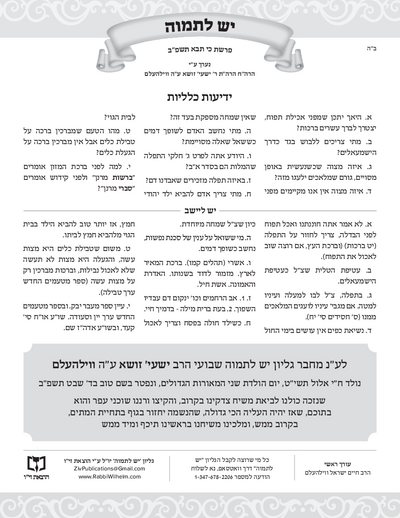
Questions:
- How is it possible that one will need to recite 20 brachos because of eating an apple?
- When must a garment be worn similar to the manner of Arabs?
- The performance of which mitzvah, in which way, makes the angels laugh?
- Which mitzvah do we not fulfill because of a lack of joy?
- When is someone considered a “blood spiller” for asking a certain question?
- Which 3 parts of the davening are set up following the order of the Alef-Beis?
- In which prayer do we mention that we have lost blood?
- When must one bring a Jewish child to a non-Jewish home?
- Why do we recite a blessing for immersing utensils, and not for kashering utensils?
- Before benching, we say “Birshus Maranan — with the permission of my masters,” and before kiddush, we say “Savri Maranan — pay attention, masters.” Why this difference?
Answers:
- If one had not said Ata Chonantanu, and ate an apple (or anything else) before Havdalah, they need to repeat the entire Shemoneh Esrei of Ma’ariv (19 brachos), and recite another bracha of Ha’eitz, if they want to continue eating the apple.
- Wrapping the talis must be similar to how the Arabs wrap it.
- During davening, we are taught that “one’s heart should be above, and one’s eyes below.” If one raises their eyes, the angels laugh at him. (Sefer Chassidim, siman 18)
- We do not hold Birchas Kohanim during the weekdays, because there must be unique happiness when performing it.
- If someone asks whether something is permitted to save a life, it is like “spilling blood.”
- (1:) Ashrei (Tehillim, 146). (2:) Hame’ir La’aretz. (3:) Mizmor L’Dovid Beshanoso. (3:) Ho’aderes V’hoemuna. (4:) Eishes Chayil.
- (1:) In “Av Harachamim”: “He should avenge the spilled blood of His servants.” (2:) During a bris milah: “Live by your blood.”
- If a child is sick on Pesach and needs to eat chometz — it is better to bring the child to a non-Jew’s home for that purpose.
- Because immersing utensils is a mitzvas asei, and kashering is to avoid a transgression of a lo sa’aseh — not to eat non-kosher; and we only recite blessings over mitzvos asei. (Sefer Mat’amim Hachodosh, Tevila.)
- See sefer Ma’avar Yabok. Sefer Mat’amim Hachodosh, Yayin Useudah. Shulchan Aruch, Orach Chayim, siman 174, and the Alter Rebbe’s Shulchan Aruch in that location.
Compiled by: Rabbi Yeshaya Zushe a"h Wilhelm
Managing editor: Rabbi Eliyahu Baron
Design and Layout: Chaim Tauber
More Seforim of Rabbi Wilhelm can be found at: www.RabbiWilhelm.com
View The Full Article (PDF)




