ABSTRACT Likkutei Sichos Part 3
Ben Chamesh L'Mikra | September 12, 2024
Print This Article
View Original PDF

ABSTRACT Likkutei Sichos Part 3

Ben Chamesh L'Mikra | June 27, 2025

In kedusha where everything is batel to HaShem, even two opposites can be together in the service of HaShem. Mixture of wool and linen (צומח וחי) is sometimes permitted, whereas the other forbidden mixtures (כלאים) are not; within holiness able to combine differing energies, as long as they are essentially not intermingled (Shatnez); but may not obliterate the distinctions HaShem placed in the creations (mixture of 2 animals or of 2 plants).

G-d makes an oath to bring the geulah (change the world) causing the object, i.e. the world, to demand that the Jews go into Eretz Yisrael. Just like making a bamah (private altar) one creates an object of prohibition that the Torah did not forbid, so does making a vow transforms an object to be assur, which G-d has not forbidden.

Yet, HaShem is obligated to give the Jews their daily “expenses” and all their needs. Just like an employer needs to pay a laborer on that day, so a Jew upon finishing a mitzvah, "on that day" should receive his recompense; however, the total work of Mitzvos are not complete until the entire world is transformed into a dwelling place fit for G-d (then we shall be rewarded).

When pleasure and will (called the clothing of the soul) are involved in one type of service, they cannot be involved in another service. Is the Kilayim (mixture) of Shatnez (clothes) similar to kilayim of the vineyard (become one entity) or similar to kilayim of animals (each retaining its own identity)? (see chart below)

One can serve G-d in the manner of “grain” as a chore, but which is greater bitul; or in the manner of “grapes” as a delight a limited revelation. Employee’s right to eat while at work: Yerushalmi – result of work done – type of bonus. Bavli – toil exerted in the action of the work done – right to eat as part of wages. Rambam – agent of the work – indirect gift.

G-d's concealment in exile is to bring about an even deeper level of union and commitment between "husband" & "wife," G-d and the Jewish people. If a person intends to divorce one’s wife, according to the Rambam, there are two distinct concerns: one, regarding a marriage lacking a total commitment to cleave to one’s spouse; the other, regarding a prohibition of a person treating another in a poor manner.

After Matan Torah we have the ability to draw kedusha (which is beyond the world) into the world that it permeates a person (in spite of one’s limitations). Rambam implies that first stage of marriage (kiddushin) changed after the Giving of the Torah, but the second stage (nesuiim) remained the same.
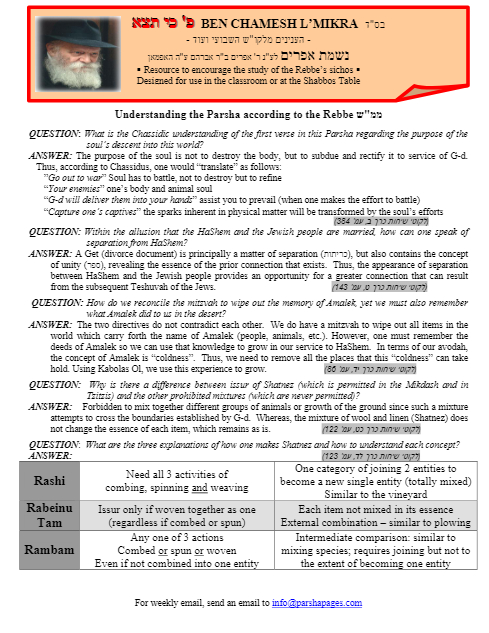
In kedusha where everything is batel to HaShem, even two opposites can be together in the service of HaShem. Mixture of wool and linen (צומח וחי) is sometimes permitted, whereas the other forbidden mixtures (כלאים) are not; within holiness able to combine differing energies, as long as they are essentially not intermingled (Shatnez); but may not obliterate the distinctions HaShem placed in the creations (mixture of 2 animals or of 2 plants).

G-d makes an oath to bring the geulah (change the world) causing the object, i.e. the world, to demand that the Jews go into Eretz Yisrael. Just like making a bamah (private altar) one creates an object of prohibition that the Torah did not forbid, so does making a vow transforms an object to be assur, which G-d has not forbidden.

Yet, HaShem is obligated to give the Jews their daily “expenses” and all their needs. Just like an employer needs to pay a laborer on that day, so a Jew upon finishing a mitzvah, "on that day" should receive his recompense; however, the total work of Mitzvos are not complete until the entire world is transformed into a dwelling place fit for G-d (then we shall be rewarded).

When pleasure and will (called the clothing of the soul) are involved in one type of service, they cannot be involved in another service. Is the Kilayim (mixture) of Shatnez (clothes) similar to kilayim of the vineyard (become one entity) or similar to kilayim of animals (each retaining its own identity)? (see chart below)

One can serve G-d in the manner of “grain” as a chore, but which is greater bitul; or in the manner of “grapes” as a delight a limited revelation. Employee’s right to eat while at work: Yerushalmi – result of work done – type of bonus. Bavli – toil exerted in the action of the work done – right to eat as part of wages. Rambam – agent of the work – indirect gift.

G-d's concealment in exile is to bring about an even deeper level of union and commitment between "husband" & "wife," G-d and the Jewish people. If a person intends to divorce one’s wife, according to the Rambam, there are two distinct concerns: one, regarding a marriage lacking a total commitment to cleave to one’s spouse; the other, regarding a prohibition of a person treating another in a poor manner.

After Matan Torah we have the ability to draw kedusha (which is beyond the world) into the world that it permeates a person (in spite of one’s limitations). Rambam implies that first stage of marriage (kiddushin) changed after the Giving of the Torah, but the second stage (nesuiim) remained the same.

PDF Preview