Peace in the World: Torah's Universal Impact
Ben Chamesh L'Mikra | August 20, 2023
Print This Article
View Original PDF

Peace in the World: Torah's Universal Impact

Ben Chamesh L'Mikra | December 31, 2025

Peace in the World

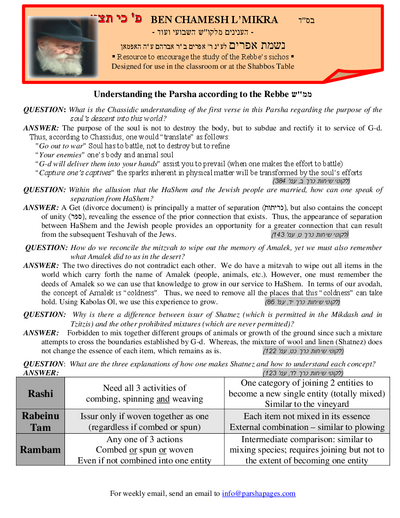
The above concept, that “the entire Torah was given to bring about peace within the world,” as expressed in the end of the book of Zmanim, has a connection as well to the idea that was explained above—that Nissuin remained the same from before the giving of the Torah and that the novelty of the giving of the Torah is found in the concept of Eirusin, as will be explained.

Seemingly though, one can ask another question: Rambam’s statement of “the entire Torah was given to bring about peace within the world” is perplexing: How can this be true—that Torah brings peace to the world—when the Torah was specifically given to the Jewish people?

Text 12

The Torah that Moshe commanded us is a legacy for the congregation of Yaakov.
Devarim 33:4

Ostensibly, the Torah only “brings about peace” amongst the Jewish people and not within “the world” at large. What then, is the meaning to the above statement that “Torah brings about peace within the world?”

Teaching the World

This can possibly be resolved through prefacing what Rambam relates concerning the Seven Noahide Laws:

Text 13

Moshe was commanded by the Almighty to compel all the inhabitants of the world to accept the commandments given to Noach's descendants.
Rambam, Laws of Kings 8:10

When a non-Jew fulfills the Seven Noahide Laws as expressed in the Torah, he is creating peace in the world. The Jewish people bring about peace through the 613 mitzvot and the non-Jews through the Seven Noahide laws. It is therefore understood that Torah brings peace to the whole world.

This as well explains the redundancy in the following verse concerning the Torah that Rambam quotes:

Text 14

Its ways are pleasant ways and all its paths are peace.
Mishlei 3:17

The difference between a way (derech) and a path (netiv), is that the former is broad and the latter is narrow. The word “way,” connoting breadth, is expressive of the bulk of the mitzvot, while “paths,” which are narrow, are expressive of the Seven Noahide laws.

Concerning “ways,” the verse states that they are “pleasant,” and concerning “paths,” the verse declares that they bring “peace.” This is due to the inherent difference between the souls of Jews and Gentiles.

Concerning the connection that exists between the Jewish people the verse states:

Text 15

And all the men of Israel were gathered concerning the city, as one man in unison.
Shoftim 20:11

The Jewish people are one in the very make up of their souls. It is therefore understood, that the effect of Torah in a Jewish person is not to create peace, as the Jewish people are inherently connected. Rather, the intent of Torah is to bring about “pleasantness”—an additional measure of sweetness. However, for a non-Jewish person, who does not have this inherent connection, Torah brings about “peace.”

It can therefore be explained that the reason why Rambam writes that “Torah was given to bring about peace within the world,” is because it effects peace within Gentiles as well as Jews.

Yet, this explanation is not satisfactory for the following reasoning: Rambam writes, “the entire Torah was given to bring about peace within the world.” He does not state that a part of the Torah brings about peace but that all of Torah brings peace. According to the above however, the only component of the Torah that accomplishes this is the region that pertains to a Gentile. Consequently it is clear that when Rambam writes that the purpose of Torah is to bring about peace in the world, he is not discussing the Seven Noahide Laws, but is rather discussing the “entire Torah.”

Two Parts of Torah

Within Torah and mitzvot there are generally two types of commandments: There are those religious precepts that pertain only to Jewish people and have no connection to the world, and then there are other commandments which, although their counterpart is found in regular, worldly life, the Torah adds a new dimension to them in a way that “brings peace to the world.”

Rambam explains that the objective of Torah is not in those mitzvot which makes a person transcend the world, but specifically in those mitzvot that cause peace within worldliness. This is particularly expressed in the concept of marriage as explained by Rambam.

Rambam stresses that before the giving of the Torah there was as well the concept of marriage, and a fashion through which the marital relationship was brought about. The giving of the Torah though, added another dimension of “peace” and “pleasantness” into marriage by prefacing the concept of Eirusin that proceeds Nissuin.

A Deeper Dimension

The idea of bride and groom are corollary to G-d and the Jewish people. The connection between G-d and the Jewish people can be likened to the time of Eirusin (Betrothal) and Nissuin (Marriage). In Talmudic parlance, the time of nthal is called Kiddushin. The meaning of this term is as the Talmud explains:
Peace in the World

The above concept, that “the entire Torah was given to bring about peace within the world,” as expressed in the end of the book of Zmanim, has a connection as well to the idea that was explained above—that Nissuin remained the same from before the giving of the Torah and that the novelty of the giving of the Torah is found in the concept of Eirusin, as will be explained.

Seemingly though, one can ask another question: Rambam’s statement of “the entire Torah was given to bring about peace within the world” is perplexing: How can this be true—that Torah brings peace to the world—when the Torah was specifically given to the Jewish people?

Text 12

The Torah that Moshe commanded us is a legacy for the congregation of Yaakov.
Devarim 33:4

Ostensibly, the Torah only “brings about peace” amongst the Jewish people and not within “the world” at large. What then, is the meaning to the above statement that “Torah brings about peace within the world?”

Teaching the World

This can possibly be resolved through prefacing what Rambam relates concerning the Seven Noahide Laws:

Text 13

Moshe was commanded by the Almighty to compel all the inhabitants of the world to accept the commandments given to Noach's descendants.
Rambam, Laws of Kings 8:10

When a non-Jew fulfills the Seven Noahide Laws as expressed in the Torah, he is creating peace in the world. The Jewish people bring about peace through the 613 mitzvot and the non-Jews through the Seven Noahide laws. It is therefore understood that Torah brings peace to the whole world.

This as well explains the redundancy in the following verse concerning the Torah that Rambam quotes:

Text 14

Its ways are pleasant ways and all its paths are peace.
Mishlei 3:17

The difference between a way (derech) and a path (netiv), is that the former is broad and the latter is narrow. The word “way,” connoting breadth, is expressive of the bulk of the mitzvot, while “paths,” which are narrow, are expressive of the Seven Noahide laws.

Concerning “ways,” the verse states that they are “pleasant,” and concerning “paths,” the verse declares that they bring “peace.” This is due to the inherent difference between the souls of Jews and Gentiles.

Concerning the connection that exists between the Jewish people the verse states:

Text 15

And all the men of Israel were gathered concerning the city, as one man in unison.
Shoftim 20:11

The Jewish people are one in the very make up of their souls. It is therefore understood, that the effect of Torah in a Jewish person is not to create peace, as the Jewish people are inherently connected. Rather, the intent of Torah is to bring about “pleasantness”—an additional measure of sweetness. However, for a non-Jewish person, who does not have this inherent connection, Torah brings about “peace.”

It can therefore be explained that the reason why Rambam writes that “Torah was given to bring about peace within the world,” is because it effects peace within Gentiles as well as Jews.

Yet, this explanation is not satisfactory for the following reasoning: Rambam writes, “the entire Torah was given to bring about peace within the world.” He does not state that a part of the Torah brings about peace but that all of Torah brings peace. According to the above however, the only component of the Torah that accomplishes this is the region that pertains to a Gentile. Consequently it is clear that when Rambam writes that the purpose of Torah is to bring about peace in the world, he is not discussing the Seven Noahide Laws, but is rather discussing the “entire Torah.”

Two Parts of Torah

Within Torah and mitzvot there are generally two types of commandments: There are those religious precepts that pertain only to Jewish people and have no connection to the world, and then there are other commandments which, although their counterpart is found in regular, worldly life, the Torah adds a new dimension to them in a way that “brings peace to the world.”

Rambam explains that the objective of Torah is not in those mitzvot which makes a person transcend the world, but specifically in those mitzvot that cause peace within worldliness. This is particularly expressed in the concept of marriage as explained by Rambam.

Rambam stresses that before the giving of the Torah there was as well the concept of marriage, and a fashion through which the marital relationship was brought about. The giving of the Torah though, added another dimension of “peace” and “pleasantness” into marriage by prefacing the concept of Eirusin that proceeds Nissuin.

A Deeper Dimension

The idea of bride and groom are corollary to G-d and the Jewish people. The connection between G-d and the Jewish people can be likened to the time of Eirusin (Betrothal) and Nissuin (Marriage). In Talmudic parlance, the time of nthal is called Kiddushin. The meaning of this term is as the Talmud explains:

PDF Preview