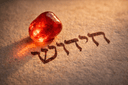
The Joy That Needs No Command The Essence of Elul
By Rabbi Moishe New
We’re now in the month of Elul, the final month of the Jewish year, and it raises a question that cuts right to the heart of what Elul truly is.
Why is there no commandment to be joyful in Elul?
If anything, this should be the time of joy. These forty days—from Rosh Chodesh Elul until Yom Kippur—are the holiest stretch of the calendar. They echo the time when Moshe ascended Mount Sinai for the third time and returned with G-d’s full forgiveness and the second set of tablets. Ever since, this period has carried a powerful energy of Divine grace and mercy.
We’re told that “the King is in the field”—a parable from the Alter Rebbe. Unlike Shabbos or Yom Tov, when G-d is “in the palace,” requiring us to disengage from our worldly pursuits in order to connect, during Elul, G-d comes to us, into our world, our routines, our imperfections.
And yet, Jewish law doesn’t change. We don’t dress differently. We don’t avoid weekday work. There’s not even a halachic demand to be joyous! Why not? Because Elul is deeper than a command.
THE DIFFERENCE BETWEEN JOY THAT'S COMMANDED AND JOY THAT JUST IS
On Shabbos or Yom Tov, joy is commanded because we’re stepping into sacred territory—we’re guests in the palace. There are rules, rituals, and customs that help lift us into that elevated state. It’s a holiness that demands the appropriate protocol.
But in Elul, G-d steps into our space. And when you're standing in the presence of someone who loves you unconditionally, no one has to tell you to smile.
The joy of Elul is not the joy of ceremony. It's the quiet, essential joy of presence—of being held by something greater, without needing to do anything to earn it. It's the joy of a child in a parent’s arms. It’s not dramatic or choreographed—it’s simple, real, and deep.
WHY THERE’S NO COMMAND TO TRAIN CHILDREN
This idea also explains another mystery: Why isn’t there a commandment in the Torah to train our children in observance of the Mitzvos?
Because like Elul, education begins in essence. A child is not a blank slate—we're not imposing spirituality or identity from the outside. We're revealing what's already there.
There’s no need to connect the soul to G-d. It’s already connected. The goal of Jewish education (chinuch) is not to impose something foreign, but to draw out what’s natural and innate—the G-dly spark that's already burning within.
That’s why children are not obligated in mitzvot. Mitzvot are tools to reconnect our ego-driven adult selves to our soul-source. Children don’t need reconnection. They’re still close.
THE POWER OF CUSTOM OVER COMMAND
If Elul has no commandments, what do we have? Customs.
Daily shofar. Saying Psalms. Giving extra tzedakah. Checking mezuzot and tefillin. These aren’t commanded; they emerged organically, generation after generation. And that’s the point.
Commandments speak to our conscious selves. Customs flow from the soul. They come from a deeper place—an essential knowing that doesn’t need articulation. Elul is not about law. It’s about essence.
ELUL’S SILENT INVITATION
In Elul, God is not commanding us to come close. He’s already here. The king is in the field. No guards, no appointments. Just God and you. No need to change clothes, no need to prepare speeches. Just look up and notice who’s standing next to you.
That’s the choice of Elul:
- Stay busy with your "tomatoes and potatoes" and miss the moment,
- —or—
- Look up, lock eyes with the King, and let that essential joy rise from within.
Let’s not miss it.

Related Articles