The Ohr Hachaim haKodesh The Beautiful Captive Soul
Parsha Pages | September 12, 2024
Print This Article
View Original PDF

The Ohr Hachaim haKodesh The Beautiful Captive Soul

Parsha Pages | June 27, 2025

“If you see among the captives a woman who has a beautiful appearance” (21:11).

The Ohr HaChaim HaKodosh asks the obvious question: How can HaShem give us a mitzva to defile ourselves with a non-Jewish captive? How could it be that the same Torah, whose commandments are to subjugate our evil passions, would here give in to those very same desires and give its consent to them? Especially during a miraculous victory, where we witness HaShem’s victorious hand in battle – at such a high point how can it be that we should sink so low? During such a time we would expect a mitzva that adds sanctity and holiness and engenders greater attachment to HaShem, not an ugly act that surely defiles us, thereby distancing us from HaShem.

Whereas an argument could be made that on the battlefront one should permit consumption of non-kosher food to prevent starvation (see Rambam Chapter 8 of Hilchos Melochim), regarding this mitzva our sages say in Kiddushin 21b that the Torah spoke here regarding the yetzer hora, and so, says the Ohr HaChaim HaKodosh, wouldn’t we expect the Torah instead to command us to subdue the yetzer and conquer it at a time when our King is waging war for us?

He answers that the appellation Eishes yefas to’ar is a term that means much more than just “a beautiful captive woman”. She is literally described as a woman with a beautiful appearance, this beautiful appearance being much more than just skin deep. In fact, the Ohr HaChaim reveals to us that this yefas to’ar– this beautiful appearance – is the rays of holiness of a hidden neshoma, a pure soul held captive within the body of this prisoner of war.

The Ohr HaChaim begins by revealing to us that HaShem has hidden ways in which He runs the world. One of these secrets is that He plants souls within bodies. Citing the Zohar Chodosh in Parshas Bolok, the Ohr HaChaim teaches us that when Odom sinned, some of the many holy, pure souls he contained were taken captive by the forces of evil and the “Other Side”. These are the souls of geirim (converts) who return to the fold of Klal Yisrael from among the nations of the world. There were great Tzaddikim and Gedolei Yisrael whose souls came from geirim such as Rus the Moabite, Shmaya, Avtalyon and Onkelos. These are just a few examples of righteous converts with lofty souls who became Gedolim.

Another secret that the Ohr HaChaim reveals to us is that some holy and pure souls are held captive in impure bodies until they are released by being pulled free from their prison. They can only be freed by attraction to high levels of purity and kedusha. Like a magnet’s forces of attraction draws metals that share its affinity, so too does kedusha attract kedusha, removing it from its impure host. This was the deeper secret behind the story of Dina and Shechem the son of Chamor and why he was so attracted to her, for he contained within himself the soul of Rav Chanina ben Tradyon as explained in the writings of the Arizal (Likkutei Torah Vayishlach). That holy soul was attached to Dina and was then drawn from him.

There are other holy souls held captive among the klippos, those husks and shells of impurity that can guide and focus the intentions and actions of their hosts, and these are the souls of the geirim who, of their own volition, convert to Yiddishkeit from among the nations, such as Rus the Moabite and, as the Ohr HaChaim testifies about himself, “We ourselves have witnessed with our own eyes such geirim who come of their own free will to convert.”

The Ohr HaChaim explains that when we perform mitzvos the divine light of the Shechina clothes us and chases away all evil and darkness, as it says in Koheles 8: shomer mitzva lo yeida dovor ra – “he who performs the commandments shall know no evil”. Especially shluchim (agents) who are sent to perform mitzvos on behalf of others, as explained in Parshas Shelach, such shluchim are even protected from the evil yetzer when they are in the midst of performing their shlichus.

After understanding all this, says the Ohr HaChaim, we can perceive this mitzva as clearly as the midday sun. The pasuk says, “When you go out to war,” referring to a war that is a mitzva, setting the stage for us to be actively engaged in performing our holy duty. At this moment, therefore, when we take captives, we are again actively engaged in a mitzva (see Rambam Chapter 8 Hilchos Melochim).We are thus shluchim and protected from evil, so when we encounter among the captives a non-Jewish woman and we see that she is a yefas to’ar–that she has a radiant and beautiful appearance – we can surmise that it is not her external, physical beauty that we are seeing; rather, because we are actively engaged in a mitzva it must be the holy soul captive within her that we are seeing, that beautiful lofty soul is peeking out and displaying its radiance and beauty. This is the yefas to’ar that we see.

The very fact that at the moment you are engaged in a mitzva and surrounded by the Shechina’s light and radiance, you desire this beautiful woman proves that it is the captive soul’s beauty and not her physicality that you desire, because you are engaged in the shlichus of a mitzva and it must therefore be a positive desire that you feel. That is why the pasuk says, “You desired boh – “in her”– and not osah – “her”. It is the soul within her that you desire, the yefas to’ar, the goodly portion of the pure soul captive within her.

As we explained, the holy soul, when freed from the clutches of the klippos, attaches herself to holiness in one of two ways: either it is freed and then it leaves its host, like in the story of Dina and Shechem, or, if the holy soul remains, she converts and the host becomes a Ger Tzedek like Rus the Moabite. The litmus test the Torah gives us now is to bring her home and shave her hair and fingernails. You must remove all exterior facades of physical beauty and see if she converts and if you still desire and love her. If she does convert, you may marry her, for her soul remains and she is a truly righteous convert. If not, that soul has left her. This will prevent you from desiring her for unholy purposes, for once you are no longer actively engaged in the mitzva of war, perhaps your yetzer will desire a non-Jewish wife. Once she is no longer physically attractive we will see if you are still attracted to her. If she converts and you wish to marry her, it proves that the attraction is toward the holy soul within her, which has made her a righteous convert.
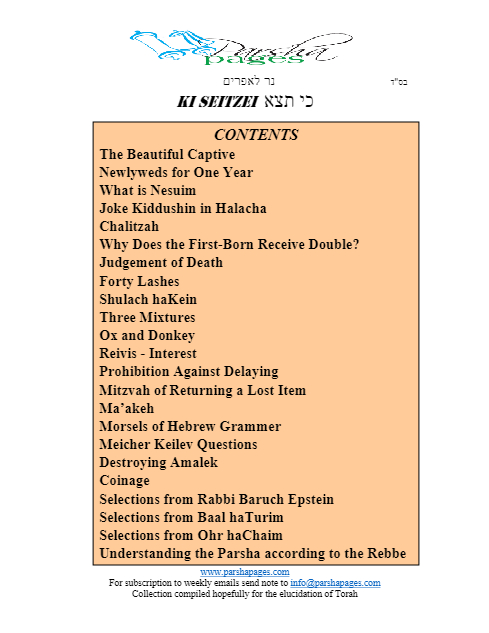
“If you see among the captives a woman who has a beautiful appearance” (21:11).

The Ohr HaChaim HaKodosh asks the obvious question: How can HaShem give us a mitzva to defile ourselves with a non-Jewish captive? How could it be that the same Torah, whose commandments are to subjugate our evil passions, would here give in to those very same desires and give its consent to them? Especially during a miraculous victory, where we witness HaShem’s victorious hand in battle – at such a high point how can it be that we should sink so low? During such a time we would expect a mitzva that adds sanctity and holiness and engenders greater attachment to HaShem, not an ugly act that surely defiles us, thereby distancing us from HaShem.

Whereas an argument could be made that on the battlefront one should permit consumption of non-kosher food to prevent starvation (see Rambam Chapter 8 of Hilchos Melochim), regarding this mitzva our sages say in Kiddushin 21b that the Torah spoke here regarding the yetzer hora, and so, says the Ohr HaChaim HaKodosh, wouldn’t we expect the Torah instead to command us to subdue the yetzer and conquer it at a time when our King is waging war for us?

He answers that the appellation Eishes yefas to’ar is a term that means much more than just “a beautiful captive woman”. She is literally described as a woman with a beautiful appearance, this beautiful appearance being much more than just skin deep. In fact, the Ohr HaChaim reveals to us that this yefas to’ar– this beautiful appearance – is the rays of holiness of a hidden neshoma, a pure soul held captive within the body of this prisoner of war.

The Ohr HaChaim begins by revealing to us that HaShem has hidden ways in which He runs the world. One of these secrets is that He plants souls within bodies. Citing the Zohar Chodosh in Parshas Bolok, the Ohr HaChaim teaches us that when Odom sinned, some of the many holy, pure souls he contained were taken captive by the forces of evil and the “Other Side”. These are the souls of geirim (converts) who return to the fold of Klal Yisrael from among the nations of the world. There were great Tzaddikim and Gedolei Yisrael whose souls came from geirim such as Rus the Moabite, Shmaya, Avtalyon and Onkelos. These are just a few examples of righteous converts with lofty souls who became Gedolim.

Another secret that the Ohr HaChaim reveals to us is that some holy and pure souls are held captive in impure bodies until they are released by being pulled free from their prison. They can only be freed by attraction to high levels of purity and kedusha. Like a magnet’s forces of attraction draws metals that share its affinity, so too does kedusha attract kedusha, removing it from its impure host. This was the deeper secret behind the story of Dina and Shechem the son of Chamor and why he was so attracted to her, for he contained within himself the soul of Rav Chanina ben Tradyon as explained in the writings of the Arizal (Likkutei Torah Vayishlach). That holy soul was attached to Dina and was then drawn from him.

There are other holy souls held captive among the klippos, those husks and shells of impurity that can guide and focus the intentions and actions of their hosts, and these are the souls of the geirim who, of their own volition, convert to Yiddishkeit from among the nations, such as Rus the Moabite and, as the Ohr HaChaim testifies about himself, “We ourselves have witnessed with our own eyes such geirim who come of their own free will to convert.”

The Ohr HaChaim explains that when we perform mitzvos the divine light of the Shechina clothes us and chases away all evil and darkness, as it says in Koheles 8: shomer mitzva lo yeida dovor ra – “he who performs the commandments shall know no evil”. Especially shluchim (agents) who are sent to perform mitzvos on behalf of others, as explained in Parshas Shelach, such shluchim are even protected from the evil yetzer when they are in the midst of performing their shlichus.

After understanding all this, says the Ohr HaChaim, we can perceive this mitzva as clearly as the midday sun. The pasuk says, “When you go out to war,” referring to a war that is a mitzva, setting the stage for us to be actively engaged in performing our holy duty. At this moment, therefore, when we take captives, we are again actively engaged in a mitzva (see Rambam Chapter 8 Hilchos Melochim).We are thus shluchim and protected from evil, so when we encounter among the captives a non-Jewish woman and we see that she is a yefas to’ar–that she has a radiant and beautiful appearance – we can surmise that it is not her external, physical beauty that we are seeing; rather, because we are actively engaged in a mitzva it must be the holy soul captive within her that we are seeing, that beautiful lofty soul is peeking out and displaying its radiance and beauty. This is the yefas to’ar that we see.

The very fact that at the moment you are engaged in a mitzva and surrounded by the Shechina’s light and radiance, you desire this beautiful woman proves that it is the captive soul’s beauty and not her physicality that you desire, because you are engaged in the shlichus of a mitzva and it must therefore be a positive desire that you feel. That is why the pasuk says, “You desired boh – “in her”– and not osah – “her”. It is the soul within her that you desire, the yefas to’ar, the goodly portion of the pure soul captive within her.

As we explained, the holy soul, when freed from the clutches of the klippos, attaches herself to holiness in one of two ways: either it is freed and then it leaves its host, like in the story of Dina and Shechem, or, if the holy soul remains, she converts and the host becomes a Ger Tzedek like Rus the Moabite. The litmus test the Torah gives us now is to bring her home and shave her hair and fingernails. You must remove all exterior facades of physical beauty and see if she converts and if you still desire and love her. If she does convert, you may marry her, for her soul remains and she is a truly righteous convert. If not, that soul has left her. This will prevent you from desiring her for unholy purposes, for once you are no longer actively engaged in the mitzva of war, perhaps your yetzer will desire a non-Jewish wife. Once she is no longer physically attractive we will see if you are still attracted to her. If she converts and you wish to marry her, it proves that the attraction is toward the holy soul within her, which has made her a righteous convert.

PDF Preview