The Spiritual Meaning of Kiddushin and Nissuin
Ben Chamesh L'Mikra | August 20, 2023
Print This Article
View Original PDF

The Spiritual Meaning of Kiddushin and Nissuin

Ben Chamesh L'Mikra | December 31, 2025

The term Kiddushin is called Betrothal. The meaning of this term is as the Talmud explains:

Text 16
Now what does the rabbinical term (for Betrothal of Kiddushin) connote? — That he [the husband] prohibits her to all [men] as hekdesh (material consecrated for temple use).
Talmud, Kiddushin 2b

The idea of Kiddushin, or Betrothal, in spiritual terms is that G-d draws a holiness upon the Jewish people which separates them from corporeality and worldliness.

The concept of Nissuin (actual marriage), however, is the opposite. Instead of being removed from the world, Nissuin expresses drawing down G-dliness into the individual as he is confined to a body, and transforming that vessel into a receptacle for G-dliness.

It is for this reason that the concept of Nissuin is not the novelty which came about after the giving of the Torah. For, even before the giving of the Torah, G-dliness resided in the world, albeit with a limited form of G-dliness that the world was able to tolerate.

The main innovation of the giving of the Torah was in the concept of Kiddushin, in which a person was effected by a level of holiness that transcended the world.

However, the objective of Kiddushin-Betrothal is for the marriage that follows. So too, the objective of drawing down this degree of holiness that transcended the world was for the purpose that afterwards this holiness should affect the world as well. Ultimately, the objective is not to remain removed from the world, but to draw down this G-dliness into the world.

The ultimate fruition of this accomplishment will occur with the coming of Moshiach—may it be speedily in our times!

(Based on Likutei Sichos 39, reworked by Rabbi Dovid Markel. To see other projects and to partner in our work, see: www.Neirot.com.)
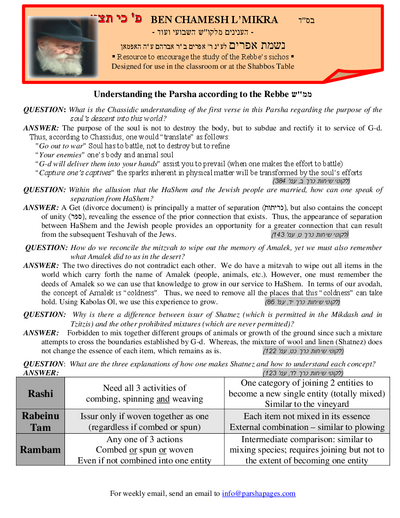

The term Kiddushin is called Betrothal. The meaning of this term is as the Talmud explains:

Text 16
Now what does the rabbinical term (for Betrothal of Kiddushin) connote? — That he [the husband] prohibits her to all [men] as hekdesh (material consecrated for temple use).
Talmud, Kiddushin 2b

The idea of Kiddushin, or Betrothal, in spiritual terms is that G-d draws a holiness upon the Jewish people which separates them from corporeality and worldliness.

The concept of Nissuin (actual marriage), however, is the opposite. Instead of being removed from the world, Nissuin expresses drawing down G-dliness into the individual as he is confined to a body, and transforming that vessel into a receptacle for G-dliness.

It is for this reason that the concept of Nissuin is not the novelty which came about after the giving of the Torah. For, even before the giving of the Torah, G-dliness resided in the world, albeit with a limited form of G-dliness that the world was able to tolerate.

The main innovation of the giving of the Torah was in the concept of Kiddushin, in which a person was effected by a level of holiness that transcended the world.

However, the objective of Kiddushin-Betrothal is for the marriage that follows. So too, the objective of drawing down this degree of holiness that transcended the world was for the purpose that afterwards this holiness should affect the world as well. Ultimately, the objective is not to remain removed from the world, but to draw down this G-dliness into the world.

The ultimate fruition of this accomplishment will occur with the coming of Moshiach—may it be speedily in our times!

(Based on Likutei Sichos 39, reworked by Rabbi Dovid Markel. To see other projects and to partner in our work, see: www.Neirot.com.)

PDF Preview