13 Midos HaRachamim
Parsha Pages | February 25, 2024
Print This Article
View Original PDF

13 Midos HaRachamim

Parsha Pages | December 10, 2025

13 MIDOS HARACHAMIM

The Gemara (Rosh HaShana 17b) states the greatness of these 13 attributes that HaShem taught to Moshe was that any the time that the Jews would sin in the future, they would be forgiven if they “do” according to this order (like the order of the 13 attributes).

How is it possible that G-d would forgive through such an easy method of simply saying the 13 attributes? Is our religion based on a simple reciting of a text and all is forgiven? Also, why does the Gemara state that the Jews should “do” and not that they should “say”?

Therefore, the intention of the Gemara seems to be that G-d taught to Moshe that if the Jews would DO according to this order (just like G-d is merciful so we should be, just like G-d forgives so should we, etc.). And G-d then states that he would forgive our mistakes if we fulfill these attributes in actual deed to be kind, just, forgiving, etc.

שמות פרק לד , יד כִּי לֹא תִּשְׁתַחֲוֶה לְׁאֵּ -ל אַחֵּר כִּי ה' קַנָא שְׁמוֹ אֵּ -ל קַנָא הוּא :
קנא is His name. Rashi explains G-d is “jealous” to pay back. How does the name of G-d connect to קנא?

Possibly this concept of G-d is connected to the name of G-d אהי-ה (numerical value filled). Earlier Rashi explained that this name of G-d infers that He would be with us in Galus to protect us. Same concept applies to קנא that G-d would protect us in Galus to pay back those that attempt to harm us.

אל"ף 111
ה"ה 10
יו"ד 20
ה"ה 10
Total equals קנא 151

שמות פרק לד כז כְׁתָב -לְׁךָ אֶת-הַדְׁבָרִּ ים הָאֵּלֶה כִּי עַל-פִּי הַדְׁבָרִּ ים הָאֵּלֶה כָרַתִּי אִּתְׁךָ בְׁרִּ ית

On this verse, Chaza”l state a basic principle that items that are written should not (only) be meant to be said orally (memorized).

The concept being that many laws are derived from the order of the letters, and the missing or additional letters, and even the “trop.” And if the verses were only said orally, we would not recognize the source for many traditions and laws that can only be understood from the written text.

שמות פרק לד , לג לַע ןֵּת יַו םָתִּא רֵּבַדִּמ הֶשמ לַכְׁיַו-פָנָיו מַסְׁוֶה:
Some translate מסוה not as a veil, but as a סודרא (head covering). The word רא-סוד alludes to the concept that סוד יוראה' לי, secrets of HaShem goes to those that fear Him.
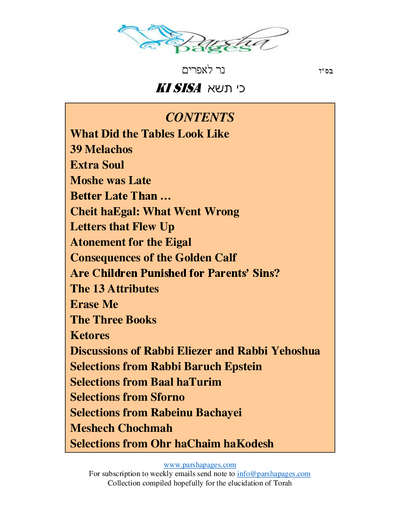

13 MIDOS HARACHAMIM

The Gemara (Rosh HaShana 17b) states the greatness of these 13 attributes that HaShem taught to Moshe was that any the time that the Jews would sin in the future, they would be forgiven if they “do” according to this order (like the order of the 13 attributes).

How is it possible that G-d would forgive through such an easy method of simply saying the 13 attributes? Is our religion based on a simple reciting of a text and all is forgiven? Also, why does the Gemara state that the Jews should “do” and not that they should “say”?

Therefore, the intention of the Gemara seems to be that G-d taught to Moshe that if the Jews would DO according to this order (just like G-d is merciful so we should be, just like G-d forgives so should we, etc.). And G-d then states that he would forgive our mistakes if we fulfill these attributes in actual deed to be kind, just, forgiving, etc.

שמות פרק לד , יד כִּי לֹא תִּשְׁתַחֲוֶה לְׁאֵּ -ל אַחֵּר כִּי ה' קַנָא שְׁמוֹ אֵּ -ל קַנָא הוּא :
קנא is His name. Rashi explains G-d is “jealous” to pay back. How does the name of G-d connect to קנא?

Possibly this concept of G-d is connected to the name of G-d אהי-ה (numerical value filled). Earlier Rashi explained that this name of G-d infers that He would be with us in Galus to protect us. Same concept applies to קנא that G-d would protect us in Galus to pay back those that attempt to harm us.

אל"ף 111
ה"ה 10
יו"ד 20
ה"ה 10
Total equals קנא 151

שמות פרק לד כז כְׁתָב -לְׁךָ אֶת-הַדְׁבָרִּ ים הָאֵּלֶה כִּי עַל-פִּי הַדְׁבָרִּ ים הָאֵּלֶה כָרַתִּי אִּתְׁךָ בְׁרִּ ית

On this verse, Chaza”l state a basic principle that items that are written should not (only) be meant to be said orally (memorized).

The concept being that many laws are derived from the order of the letters, and the missing or additional letters, and even the “trop.” And if the verses were only said orally, we would not recognize the source for many traditions and laws that can only be understood from the written text.

שמות פרק לד , לג לַע ןֵּת יַו םָתִּא רֵּבַדִּמ הֶשמ לַכְׁיַו-פָנָיו מַסְׁוֶה:
Some translate מסוה not as a veil, but as a סודרא (head covering). The word רא-סוד alludes to the concept that סוד יוראה' לי, secrets of HaShem goes to those that fear Him.

PDF Preview