Differences between redemption of the first-born son and by a first-born donkey
Parsha Pages | July 01, 2024
Print This Article
View Original PDF

Differences between redemption of the first-born son and by a first-born donkey

Parsha Pages | June 27, 2025

Shulchan Aruch Y.D. 305:7 rules that one may redeem his bechor son for 5 shekolim, but may split this to numerous Kohanim, and also, he may redeem on different days. By the redemption of a firstborn donkey, the redemption is done with a live sheep. This is not divisible and may only be given to one Kohein (Y.D. 321:5). Although if one has no sheep he may use money, our Rabbis instituted that it be given to one Kohein only, as the original redeeming item, the sheep, was not divisible. Hence, by the redemption of a child the Torah repeats the word form of redemption, to allude to redemption being done in parts, while by the redemption of the donkey it is mentioned only once, as its redemption can only be done in one go. (Hadrash V’ho’iyun)

Another answer: the Gemara Bechoros 51a says that if one set aside money for his son’s redemption and it is lost he must replace it, even numerous times, hence the repetition. By the redemption of a donkey, the Gemara Bechoros 12b says that if one set aside a sheep for the redemption and it dies he is not required to replace it, hence only one expression of redemption. (Luach Erez)

Two differences between the redemption of man and animal are that if one sets aside the required five shekalim for a man and they go missing, the money must be replaced and given to the Kohein. If the money set aside for redeeming the first-born donkey goes missing it need not be replaced. Also, a person must be redeemed, while the animal need not be redeemed. Given these differences, the Torah does not want to combine the redemption of the two. As well, since the redemption of man is much more binding, as per the two halachos cited, redemption is mentioned before man to stress the importance of this act, while it is mentioned after the animal that is to be redeemed to show that its redemption is not as strict. (Haksav V'hakaboloh)

Importance of not delaying the redemption of the first-born child:

Rabbeinu Bachyei (Shmos 34,20): A firstborn has a greater responsibility to involve himself with toiling in Torah study and instilling in himself the fear of Heaven than does a non-firstborn.

The Midbar K'deimos (Chid"a) writes that if a father redeems his son without delaying the redemption money from reaching the Kohein and without giving it conditional upon its later being returned, we can rest assured that the firstborn will be blessed with good health throughout his life.

The Holy Zohar writes that as long as a firstborn is not redeemed he is under the control of the "sitro acharo," negative forces. Based on this the Otzar Yad Hachaim says that the question Tosfos on the B.K. 80a d.h. "l'vei y'shu'a ha'ben" raises on Rashi is answered. The Gemara mentions the event called "yeshua haben." Rashi translates this as the redemption of a firstborn. He bases this on the Targum of "Vayosha" (Shmos 14:30), which is "ufrak." Tosfos considers this quite far-fetched as the word "vayosha" indeed means "and He saved" bnei Yisroel from an imminent danger, but this does not apply to the redeeming of a firstborn who is not in danger. However, according to the Holy Zohar Rashi is well understood, as the firstborn is indeed redeemed from the danger of being under the control of evil forces. He also uses this insight to explain the opening words of the Kohein at the firstborn redemption ritual, "Mei bois tefei," normally translated as, "Which do you prefer, retaining your 5 shekolim, or your firstborn son?" We can translate "bois" as "fear." Which do you more fear, when you are now about to redeem your firstborn? Is it the word of HaShem, the commandment to redeem your son, or are you motivated to do so because you fear leaving your son without redemption and remaining under the supervision of evil forces?

The Gemara (Bava Kama 80a) states that once the redemption of a firstborn was delayed and in the interim a cat bit off the hand of the baby.

Sefer Chasidim #334 relates that there was a single man who was deathly ill. He repeatedly said, "Redeem me." Not understanding his intention, those who heard his request mentioned this to their Rabbi. He asked if the ill person is a firstborn, and upon receiving a positive response he said that five shekolim should immediately be given to a Kohein as the redemption of this person. It was done and he returned to good health and lived for another 25 years.
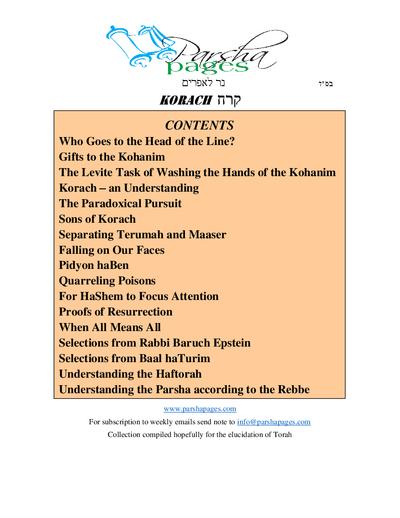
Shulchan Aruch Y.D. 305:7 rules that one may redeem his bechor son for 5 shekolim, but may split this to numerous Kohanim, and also, he may redeem on different days. By the redemption of a firstborn donkey, the redemption is done with a live sheep. This is not divisible and may only be given to one Kohein (Y.D. 321:5). Although if one has no sheep he may use money, our Rabbis instituted that it be given to one Kohein only, as the original redeeming item, the sheep, was not divisible. Hence, by the redemption of a child the Torah repeats the word form of redemption, to allude to redemption being done in parts, while by the redemption of the donkey it is mentioned only once, as its redemption can only be done in one go. (Hadrash V’ho’iyun)

Another answer: the Gemara Bechoros 51a says that if one set aside money for his son’s redemption and it is lost he must replace it, even numerous times, hence the repetition. By the redemption of a donkey, the Gemara Bechoros 12b says that if one set aside a sheep for the redemption and it dies he is not required to replace it, hence only one expression of redemption. (Luach Erez)

Two differences between the redemption of man and animal are that if one sets aside the required five shekalim for a man and they go missing, the money must be replaced and given to the Kohein. If the money set aside for redeeming the first-born donkey goes missing it need not be replaced. Also, a person must be redeemed, while the animal need not be redeemed. Given these differences, the Torah does not want to combine the redemption of the two. As well, since the redemption of man is much more binding, as per the two halachos cited, redemption is mentioned before man to stress the importance of this act, while it is mentioned after the animal that is to be redeemed to show that its redemption is not as strict. (Haksav V'hakaboloh)

Importance of not delaying the redemption of the first-born child:

Rabbeinu Bachyei (Shmos 34,20): A firstborn has a greater responsibility to involve himself with toiling in Torah study and instilling in himself the fear of Heaven than does a non-firstborn.

The Midbar K'deimos (Chid"a) writes that if a father redeems his son without delaying the redemption money from reaching the Kohein and without giving it conditional upon its later being returned, we can rest assured that the firstborn will be blessed with good health throughout his life.

The Holy Zohar writes that as long as a firstborn is not redeemed he is under the control of the "sitro acharo," negative forces. Based on this the Otzar Yad Hachaim says that the question Tosfos on the B.K. 80a d.h. "l'vei y'shu'a ha'ben" raises on Rashi is answered. The Gemara mentions the event called "yeshua haben." Rashi translates this as the redemption of a firstborn. He bases this on the Targum of "Vayosha" (Shmos 14:30), which is "ufrak." Tosfos considers this quite far-fetched as the word "vayosha" indeed means "and He saved" bnei Yisroel from an imminent danger, but this does not apply to the redeeming of a firstborn who is not in danger. However, according to the Holy Zohar Rashi is well understood, as the firstborn is indeed redeemed from the danger of being under the control of evil forces. He also uses this insight to explain the opening words of the Kohein at the firstborn redemption ritual, "Mei bois tefei," normally translated as, "Which do you prefer, retaining your 5 shekolim, or your firstborn son?" We can translate "bois" as "fear." Which do you more fear, when you are now about to redeem your firstborn? Is it the word of HaShem, the commandment to redeem your son, or are you motivated to do so because you fear leaving your son without redemption and remaining under the supervision of evil forces?

The Gemara (Bava Kama 80a) states that once the redemption of a firstborn was delayed and in the interim a cat bit off the hand of the baby.

Sefer Chasidim #334 relates that there was a single man who was deathly ill. He repeatedly said, "Redeem me." Not understanding his intention, those who heard his request mentioned this to their Rabbi. He asked if the ill person is a firstborn, and upon receiving a positive response he said that five shekolim should immediately be given to a Kohein as the redemption of this person. It was done and he returned to good health and lived for another 25 years.

PDF Preview