Cities of Refuge
HE SEDRA (MAS’EI) STATES THAT CITIES OF REFUGE SHOULD BE ESTABLISHED. A person who had accidentally killed someone would flee to one of these cities. The Rebbe points out that this Sedra is always read in the Three Weeks, when we are mourning for the Destruction of the Temple.
The connection between the theme of the Cities of Refuge and the Exile is explained in Chassidic teachings based on a Midrash.
The Midrash states that Hashem told Adam that on the day he would eat from the Tree of Knowledge, he would die. They did eat from the Tree of Knowledge, but Hashem in His great mercy, expelled them from the Garden of Eden as if they were fleeing to a City of Refuge, where their lives would be spared. But Hashem had mercy on him (and Eve), and instead of putting them to death they were expelled from the Garden of Eden. The Midrash compares this to the accidental murderer being banished to a City of Refuge. This means that the whole world, outside Eden, is a kind of City of Refuge, a domain to which one is exiled because of one’s crime.
Hence the theme of the Cities of Refuge links with the time of the Three Weeks, which express the concept of Exile. And Exile is ‘on account of our sins’, and the source of sin is the sin of the Tree of Knowledge.
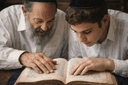
Now the Tikkun, the repair for this situation – is through Torah. For the whole point of expelling Adam and Eve from Eden was ‘to guard the way to the Tree of Life’. But the Tree of Life means Torah, as it says ‘[Torah] is a Tree of Life’. And Torah study parallels the Cities of Refuge, for the Sages tell us that ‘words of Torah are a Refuge’.
The Hebrew term for the Cities of Refuge is ‘Arei Miklat. The word Miklat means Refuge, but this word is also used for absorption or conception. The person is received and absorbed in the words of Torah, so that they have an effect in that ‘conception’ takes place and the person produces the fruits of this process [ie Mitzvot].
As it says in Tanya, through Torah study there is a tremendous unity between the person, the Torah they are studying, and with Hashem Who gives the Torah. Hence through Torah it is as if one meets the King [G-d], of who it is said: ‘in the radiance of the face of the King there is life’. Thus too it says about the Cities of Refuge, that the person taking refuge in them ‘lives’, and the Talmud adds that one has to make sure that he really does ‘live’.
The City of Refuge is called a City, and the ultimate city is Jerusalem, the City of our G-d. But from this sacred city there also come into being lesser cities which can be places of impurity. But in order for it to be a true City, there must be unity among its inhabitants. And this is to be found in a City of holiness rather than anywhere else.
Further, the Book of Creation says: ‘two stones make two houses, three stones make six houses... ‘ increasing exponentially. By ‘stones’ it means letters, and it is speaking of combinations of the letters. These are like the letters of Torah. And through the letters of Torah the City of our G-d is built. Since Torah and G-d are one, through study of Torah we bond with G-d.
Further, the fact that there are (initially) six Cities of Refuge is explained as relating to the Six Orders of the Mishnah. One might ask: why shouldn’t there be five, relating to the Five Books of Moses, the Torah?
The answer is because the Mishnah, the Oral Torah, needs to be studied with understanding, while the Written Torah can just be recited by someone who does not understand what it means. In order to achieve the full ‘City of Refuge’ quality of the Torah, one has to understand what one is saying, because then the Torah teachings permeate one’s being.
Originally there were six Cities of Refuge, three on the west side of the Jordan, three on the east side, and in the future there will be another three. These relate to the Sefirot, and also to the three garments of Thought, Speech and Action. When one studies Torah it has to be with all three of these ‘garments’ of the soul, so that, as mentioned, the Torah permeates one’s being. As well as saying the words aloud [which is ‘action’], one should also make an effort to understand the Torah properly, and this effort takes place on the level of Thought. Thus the Torah really becomes part of the person.
Now the Rebbe discusses why there should be a further three Cities of Refuge in the time of Moshiach. Surely then ‘the spirit of impurity will be removed from the world’..? Surely, then people will not commit murder, even accidentally, so why should there be three extra Cities of Refuge?
The Rebbe gives several answers including: the extra Cities will be for those aspects of holiness which one did not complete to their full extent. The fact of this incompleteness itself stems from the sin of the Tree of Knowledge.
Hence one will need the Cities, not just for protection, but as atonement, so that through the process of Teshuvah one comes as close to G-d again as before the error of the sin.
All this is very relevant to the beginning of the month of Av, for it is through Torah that the sadness of the month can be changed to joy, with the coming of Moshiach who will take us back to our Land.
Torah teachings are holy – please treat these pages with care