Tzadikim are Proud of Their Tefillos
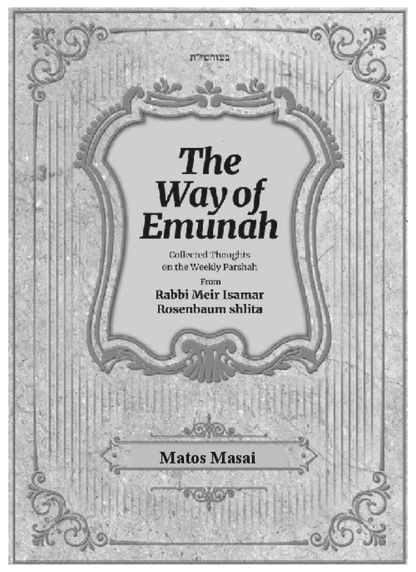
The Way of Emunah | July 06, 2026
Print This Article
View Original PDF

Tzadikim are Proud of Their Tefillos

The Way of Emunah | July 28, 2024

וַיְדַּבֵּר מֹשֶׁה אֶל רָאשֵׁי הַמַּטּוֹת לִבְנֵי יִשְׂרָאֵל וגו' זֶה הַדָּבָר אֲשֶׁר צִוָּה ה' (ל, ב)

Moshe spoke to the heads of the tribes of the children of Yisroel, saying, "This is the thing Hashem has commanded." (30:2)

This pasuk hints to the responsibility of the leaders of a generation to pray for their flock in times of difficulty. They should not engage in excessive humility and claim that they are unworthy of praying on behalf of the nation. Rather, they should be proud that their tefillos have power and are desired by Hashem, and they should recognize that through their prayers, they can annul harsh decrees.

Chazal (see Mechilta, Yisro 20:2) refer to Hashem as "malei rachamim" (full of compassion). Rav Avrohom Yaakov (the second) of Sadiger zy"a (Sefer Abir Yaakov) quotes his father, Rav Yisroel of Sadiger zy"a (Ohr Yisroel, Parshas Yisro) as explaining this title with a parable of a cup that is filled to the top with water. With just a small tap, water will spill out of the cup. So too, Hashem is "full" of rachamim, and just a bit of hisorerus can cause His compassion to spill out upon us.

Rav Avrohom Yaakov uses this idea to explain the pasuk (Iyov 3:38): "From the mouth of the One Above does not come bad and good." Hashem's way is to provide constant goodness. Although He occasionally must issue harsh decrees, they too are good, as they are only meant to stir the tzadikim of the generation to daven to Him. And these prayers create much goodness and blessing for the world.

In this vein, Chazal say (Moed Koton 16B): "Hashem decrees and a tzadik annuls." He makes decrees to bring a tzadik to pray and annul them because He desires their prayers. Thus, this too is good.

This also explains the Gemara (Bava Basra 116A) that says: "If one has a sick person in his household, he should go to a chochom who will pray for mercy for him." This means that if one is facing a harsh decree, it was only sent so that a tzadik will daven for him. Hashem sent the problem because He wants to hear the tefillos of the righteous man.

The Abir Yaakov discerns from this that although a tzadik must be humble, he should not be modest to recognize the power of his prayers. He should realize that his tefillos are very potent because they are desired by Hashem, and they can provide yeshuos for his brethren.

Accordingly, he explains the pasuk as follows. It starts with the word "vayedaber", which indicates speaking in a harsh manner (Makkos 11A). Hashem told Moshe in this harsh way: "Roshei hamatos." The word "roshei" is an acronym for "yaasu ratzon avihem shebashomayim" (do the will of your Father in Heaven), while the word "matos" (literally "a stick") indicates humility and lowliness.

Thus, Moshe Rabenu was telling the tzadikim of the generations who are humble and lowly in their own eyes that if Hashem, chas v'shalom, deals harshly with the nation, they should not maintain this conduct of humility. Rather, "laymor", they should speak softly (the word "laymor" means a soft manner of speaking, see Mechilta, Yisro, 19:3). This is a reference to prayer. He was telling them not to be humble to pray for the nation.

The verse concludes "asher tziva Hashem" (which Hashem commands), which indicates that this is the will of Hashem because He desires to hear the prayers of the righteous.
וַיְדַּבֵּר מֹשֶׁה אֶל רָאשֵׁי הַמַּטּוֹת לִבְנֵי יִשְׂרָאֵל וגו' זֶה הַדָּבָר אֲשֶׁר צִוָּה ה' (ל, ב)

Moshe spoke to the heads of the tribes of the children of Yisroel, saying, "This is the thing Hashem has commanded." (30:2)

This pasuk hints to the responsibility of the leaders of a generation to pray for their flock in times of difficulty. They should not engage in excessive humility and claim that they are unworthy of praying on behalf of the nation. Rather, they should be proud that their tefillos have power and are desired by Hashem, and they should recognize that through their prayers, they can annul harsh decrees.

Chazal (see Mechilta, Yisro 20:2) refer to Hashem as "malei rachamim" (full of compassion). Rav Avrohom Yaakov (the second) of Sadiger zy"a (Sefer Abir Yaakov) quotes his father, Rav Yisroel of Sadiger zy"a (Ohr Yisroel, Parshas Yisro) as explaining this title with a parable of a cup that is filled to the top with water. With just a small tap, water will spill out of the cup. So too, Hashem is "full" of rachamim, and just a bit of hisorerus can cause His compassion to spill out upon us.

Rav Avrohom Yaakov uses this idea to explain the pasuk (Iyov 3:38): "From the mouth of the One Above does not come bad and good." Hashem's way is to provide constant goodness. Although He occasionally must issue harsh decrees, they too are good, as they are only meant to stir the tzadikim of the generation to daven to Him. And these prayers create much goodness and blessing for the world.

In this vein, Chazal say (Moed Koton 16B): "Hashem decrees and a tzadik annuls." He makes decrees to bring a tzadik to pray and annul them because He desires their prayers. Thus, this too is good.

This also explains the Gemara (Bava Basra 116A) that says: "If one has a sick person in his household, he should go to a chochom who will pray for mercy for him." This means that if one is facing a harsh decree, it was only sent so that a tzadik will daven for him. Hashem sent the problem because He wants to hear the tefillos of the righteous man.

The Abir Yaakov discerns from this that although a tzadik must be humble, he should not be modest to recognize the power of his prayers. He should realize that his tefillos are very potent because they are desired by Hashem, and they can provide yeshuos for his brethren.

Accordingly, he explains the pasuk as follows. It starts with the word "vayedaber", which indicates speaking in a harsh manner (Makkos 11A). Hashem told Moshe in this harsh way: "Roshei hamatos." The word "roshei" is an acronym for "yaasu ratzon avihem shebashomayim" (do the will of your Father in Heaven), while the word "matos" (literally "a stick") indicates humility and lowliness.

Thus, Moshe Rabenu was telling the tzadikim of the generations who are humble and lowly in their own eyes that if Hashem, chas v'shalom, deals harshly with the nation, they should not maintain this conduct of humility. Rather, "laymor", they should speak softly (the word "laymor" means a soft manner of speaking, see Mechilta, Yisro, 19:3). This is a reference to prayer. He was telling them not to be humble to pray for the nation.

The verse concludes "asher tziva Hashem" (which Hashem commands), which indicates that this is the will of Hashem because He desires to hear the prayers of the righteous.

PDF Preview