The Laws of Sacrifices and Atonement for Another
Ben Chamesh L'Mikra | April 15, 2024
Print This Article
View Original PDF

The Laws of Sacrifices and Atonement for Another

Ben Chamesh L'Mikra | June 27, 2025

Making it all clear

This is the focal difference between these two seemingly contradictory laws regarding one who takes upon sacrifice of another, and the clarification of first question on the Rambam as well.
Rambam had written each of the variant rulings in a different category of laws:

When Rambam stated that “if the afflicted person or the woman is poor, the one who took the vow should bring the sacrifices of a poor person,” this was mentioned in the section of the Laws of Sacrifices, regarding the laws of fulfilling his oath.
Rambam therefore said that the patron must bring the sacrifice according to the financial status of the original individual who was obligated in the sacrifice—the pauper. For, as a result of the patron’s oath, he became bound by the sacrifice of this person—the sacrifice of a poor individual.

Nonetheless, concerning the Laws of Atonement, he is not bringing the sacrifice in order to fulfil the obligation of his own oath, but is offering this sacrifice in order to affect atonement for the individual who requires it—in this case, the Metzorah who was afflicted by tzara’as.

For this reason, Rambam rules in the chapter concerning these laws, that even if the patron was wealthy and the afflicted person was poor, “he must bring the sacrifices of a wealthy man, for the person who took the vow has the financial capacity.”
Being that in general, a rich person who seeks atonement must bring a more expensive offering and this patron is wealthy, he must therefore bring the more expensive sacrifice.

The reason is that when a Jew absolves the duty of his fellow as a guarantor for him, the patron is now not only fulfilling an oath, but he, so-to-speak, takes on the obligation of the person who requires a sacrifice, the Metzorah. It is as if he himself had sinned, and needs to atone in the appropriate manner according to his personal financial means.
Thus, if the one accepting his fellow’s offering is wealthy, even if the original Metzorah or woman was poor, he must bring a sacrifice of a wealthy man.

The second statement

In the same vein, Rambam’s second statement in the laws of atonement and his seemingly inaccurate wording is clarified as well.
Rambam wrote that if a pauper took responsibility for the sacrifice of a rich person, he must bring the sacrifices of a wealthy man, “for the person who took the vow obligated himself to bring the sacrifices of a wealthy man.”
Above, the question was posed as to why Rambam wrote that the reason for this requirement was because of the oath, and did not write that the reason was due to the original obligation of the wealthy individual. According to what was explained above however, this can be understood as well.

Rambam’s intention in expressing the law in this manner is due to the nature of the laws of oaths, as mentioned above:
Although, from the standpoint of atonement one follows the status of the person who is actually bringing the sacrifice (being that he takes on the status of the original person upon himself), from the perspective of the oath, he must fulfill the oath exactly as the afflicted person had pledged.
So, while from a perspective of atonement he would only need to bring the sacrifice of a poor person—although the individual who needs atonement is wealthy—from the standpoint of an oath he must bring the sacrifice of a wealthy individual.
Since the individual stated, “I take responsibility for the sacrifices of this afflicted person," and that individual was wealthy, he must bring the sacrifice of a wealthy individual.

Not enough

This explanation is not adequate though.
In both statements Rambam writes that the individual who makes an oath brings the sacrifice on account of the individual whom he made the oath regarding. In both situations his sacrifices are not only because of an oath, but to absolve his need for atonement.
It would therefore stand to reason that the aspect of atonement as well transfers to the poor patron. It is this for this reason that he must bring the sacrifice of the rich individual, although he himself is poor.
This, however, needs clarification. Why, when a poor individual brings the sacrifice for a wealthy individual to atone for him, must the sacrifice be according to the means of the wealthy individual?
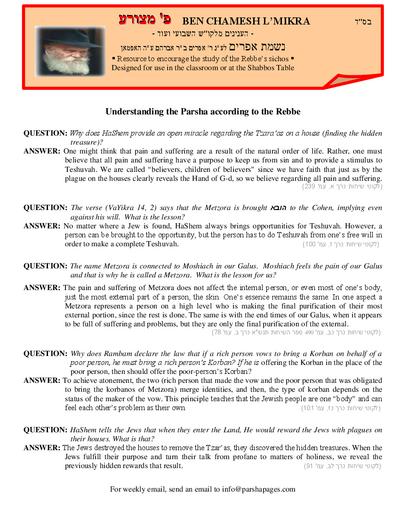
Making it all clear

This is the focal difference between these two seemingly contradictory laws regarding one who takes upon sacrifice of another, and the clarification of first question on the Rambam as well.
Rambam had written each of the variant rulings in a different category of laws:

When Rambam stated that “if the afflicted person or the woman is poor, the one who took the vow should bring the sacrifices of a poor person,” this was mentioned in the section of the Laws of Sacrifices, regarding the laws of fulfilling his oath.
Rambam therefore said that the patron must bring the sacrifice according to the financial status of the original individual who was obligated in the sacrifice—the pauper. For, as a result of the patron’s oath, he became bound by the sacrifice of this person—the sacrifice of a poor individual.

Nonetheless, concerning the Laws of Atonement, he is not bringing the sacrifice in order to fulfil the obligation of his own oath, but is offering this sacrifice in order to affect atonement for the individual who requires it—in this case, the Metzorah who was afflicted by tzara’as.

For this reason, Rambam rules in the chapter concerning these laws, that even if the patron was wealthy and the afflicted person was poor, “he must bring the sacrifices of a wealthy man, for the person who took the vow has the financial capacity.”
Being that in general, a rich person who seeks atonement must bring a more expensive offering and this patron is wealthy, he must therefore bring the more expensive sacrifice.

The reason is that when a Jew absolves the duty of his fellow as a guarantor for him, the patron is now not only fulfilling an oath, but he, so-to-speak, takes on the obligation of the person who requires a sacrifice, the Metzorah. It is as if he himself had sinned, and needs to atone in the appropriate manner according to his personal financial means.
Thus, if the one accepting his fellow’s offering is wealthy, even if the original Metzorah or woman was poor, he must bring a sacrifice of a wealthy man.

The second statement

In the same vein, Rambam’s second statement in the laws of atonement and his seemingly inaccurate wording is clarified as well.
Rambam wrote that if a pauper took responsibility for the sacrifice of a rich person, he must bring the sacrifices of a wealthy man, “for the person who took the vow obligated himself to bring the sacrifices of a wealthy man.”
Above, the question was posed as to why Rambam wrote that the reason for this requirement was because of the oath, and did not write that the reason was due to the original obligation of the wealthy individual. According to what was explained above however, this can be understood as well.

Rambam’s intention in expressing the law in this manner is due to the nature of the laws of oaths, as mentioned above:
Although, from the standpoint of atonement one follows the status of the person who is actually bringing the sacrifice (being that he takes on the status of the original person upon himself), from the perspective of the oath, he must fulfill the oath exactly as the afflicted person had pledged.
So, while from a perspective of atonement he would only need to bring the sacrifice of a poor person—although the individual who needs atonement is wealthy—from the standpoint of an oath he must bring the sacrifice of a wealthy individual.
Since the individual stated, “I take responsibility for the sacrifices of this afflicted person," and that individual was wealthy, he must bring the sacrifice of a wealthy individual.

Not enough

This explanation is not adequate though.
In both statements Rambam writes that the individual who makes an oath brings the sacrifice on account of the individual whom he made the oath regarding. In both situations his sacrifices are not only because of an oath, but to absolve his need for atonement.
It would therefore stand to reason that the aspect of atonement as well transfers to the poor patron. It is this for this reason that he must bring the sacrifice of the rich individual, although he himself is poor.
This, however, needs clarification. Why, when a poor individual brings the sacrifice for a wealthy individual to atone for him, must the sacrifice be according to the means of the wealthy individual?

PDF Preview