Chanukah – Eyes Fixed on Eternity – Part II
BET Journal | December 26, 2024
Print This Article
View Original PDF

Chanukah – Eyes Fixed on Eternity – Part II

BET Journal | June 27, 2025

Let’s compare Chanukah to Passover and Purim. In both of these holidays, we celebrate the salvation of the Jewish people from genocide. On Chanukah, in contrast, we are celebrating that the oil lasted for eight days.

Imagine that following the Israeli victory of the 1967 six-day war, during which six Arab armies were determined to exterminate Israel and its three million Jews, a candle located in a Jerusalem synagogue would have burned for six days. Sure, it would have added a nice sentimental touch to the euphoria of Israel’s salvation, but would this, rather than the deliverance of millions of innocent human beings from a second holocaust, have been the cause of the celebration? Would this detail even make it to the front page of the news?

Similarly, the burning of the Temple candelabra for eight days was, no doubt, a heart-warming follow-up to a great victory. It was a demonstrative sign that G-d cherished the sacrifice of His children and had rewarded them with a display of unique affection. Yet this was merely the icing on the cake, a coup-de-grace to a historical momentous victory on the battlefield. Yet the Talmud turns this minor detail into the decisive motif of the Chanukah celebration!

What is more, the miracle with the oil is the only element of the Chanukah events that we commemorate to this very day. We have no custom or ritual commemorating a miraculous triumph. What we do have is the kindling of a menorah for eight days, commemorating the fact that the oil in the Temple menorah lasted for eight days.

The answer allows us to appreciate the essential ingredient that has defined 4,000 years of Jewish history. The military victory was extraordinary, yet it didn't last. The dynasty of the Hasmonean family became entrenched in civil war and corruption. 210 years after Chanukah, in 68 CE, the Temple was destroyed, this time by the Romans. Jerusalem was plundered, Israel was decimated, and the Jewish people exiled. It was the beginning of a period of Jewish powerlessness, dispersion, and persecution which had lasted almost two millennia.

The political and military victory of Chanukah did not last. What lasted was the spiritual miracle — the faith which, like the oil, was inextinguishable. Strength that is founded on military power alone is temporary. It may endure for long periods of time, but ultimately, its might will wane, and it will be defeated by another power. The strength that is founded on moral and spiritual light can never be destroyed.

With their eyes focused on eternity, the Rabbis of the Second Temple era grasped that the timeless core of Chanukah was not the victory on the battlefield alone, but rather the fact that this military triumph led to the rekindling of the sacred light and the moral torch. The military victory was an enormously significant event that we must be deeply grateful for. Yet what makes Chanukah a vibrant and heart-stirring holiday thousands of years later across the globe is the story of a little cruse of oil that would not cease to cast its brightness even in the darkest of nights and among the mightiest of winds.

For more than two millennia, Jews have been gathering around their Chanukah candelabras, kindling an additional candle each night. As they gazed at the dancing flame atop their menorahs they heard the candles sharing their story. It consisted of a simple punch line: The flame of Jewish faith, the flame of Torah, the flame of the Mitzvos, would never be extinguished. The candles were right: Judaism lives.

Imperial Greece and Rome have long since disappeared. Civilizations built on power never last. Those built on care for the powerless never die. What matters in the long run is not simply political, military or economic strength, but how we light the flame of the human spirit.
Let’s compare Chanukah to Passover and Purim. In both of these holidays, we celebrate the salvation of the Jewish people from genocide. On Chanukah, in contrast, we are celebrating that the oil lasted for eight days.

Imagine that following the Israeli victory of the 1967 six-day war, during which six Arab armies were determined to exterminate Israel and its three million Jews, a candle located in a Jerusalem synagogue would have burned for six days. Sure, it would have added a nice sentimental touch to the euphoria of Israel’s salvation, but would this, rather than the deliverance of millions of innocent human beings from a second holocaust, have been the cause of the celebration? Would this detail even make it to the front page of the news?

Similarly, the burning of the Temple candelabra for eight days was, no doubt, a heart-warming follow-up to a great victory. It was a demonstrative sign that G-d cherished the sacrifice of His children and had rewarded them with a display of unique affection. Yet this was merely the icing on the cake, a coup-de-grace to a historical momentous victory on the battlefield. Yet the Talmud turns this minor detail into the decisive motif of the Chanukah celebration!

What is more, the miracle with the oil is the only element of the Chanukah events that we commemorate to this very day. We have no custom or ritual commemorating a miraculous triumph. What we do have is the kindling of a menorah for eight days, commemorating the fact that the oil in the Temple menorah lasted for eight days.

The answer allows us to appreciate the essential ingredient that has defined 4,000 years of Jewish history. The military victory was extraordinary, yet it didn't last. The dynasty of the Hasmonean family became entrenched in civil war and corruption. 210 years after Chanukah, in 68 CE, the Temple was destroyed, this time by the Romans. Jerusalem was plundered, Israel was decimated, and the Jewish people exiled. It was the beginning of a period of Jewish powerlessness, dispersion, and persecution which had lasted almost two millennia.

The political and military victory of Chanukah did not last. What lasted was the spiritual miracle — the faith which, like the oil, was inextinguishable. Strength that is founded on military power alone is temporary. It may endure for long periods of time, but ultimately, its might will wane, and it will be defeated by another power. The strength that is founded on moral and spiritual light can never be destroyed.

With their eyes focused on eternity, the Rabbis of the Second Temple era grasped that the timeless core of Chanukah was not the victory on the battlefield alone, but rather the fact that this military triumph led to the rekindling of the sacred light and the moral torch. The military victory was an enormously significant event that we must be deeply grateful for. Yet what makes Chanukah a vibrant and heart-stirring holiday thousands of years later across the globe is the story of a little cruse of oil that would not cease to cast its brightness even in the darkest of nights and among the mightiest of winds.

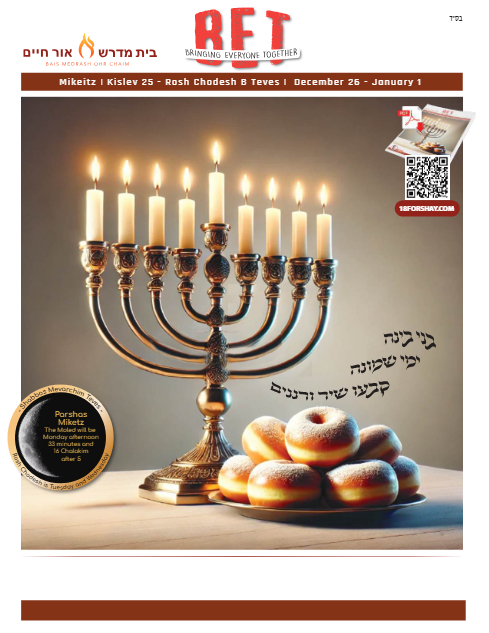
For more than two millennia, Jews have been gathering around their Chanukah candelabras, kindling an additional candle each night. As they gazed at the dancing flame atop their menorahs they heard the candles sharing their story. It consisted of a simple punch line: The flame of Jewish faith, the flame of Torah, the flame of the Mitzvos, would never be extinguished. The candles were right: Judaism lives.

Imperial Greece and Rome have long since disappeared. Civilizations built on power never last. Those built on care for the powerless never die. What matters in the long run is not simply political, military or economic strength, but how we light the flame of the human spirit.

PDF Preview