Chanukah Light Beyond Enlightenment
By Rabbi Moishe New
Chanukah is often described as the story of a small cruse of oil that burned far longer than it should have. But when we look carefully at the details, it becomes clear that the oil is not just part of the story—it is the story.
The Greeks had occupied Eretz Yisrael, beginning with Alexander the Great and continuing under his successors. The uprising against them was led by one family, Matityahu and his five sons, known as the Maccabees. Their very name reflects the essence of the struggle. Maccabee is an acronym for “Mi chamocha ba’eilim Hashem”—“Who is like You among the mighty, Hashem,” a line we still say daily before the Amidah. The word also means “hammer,” expressing the force with which the enemy was ultimately broken.
After the Greeks were driven out, the Jews entered the Beis Hamikdash. The word Chanukah means dedication or rededication: the Temple had been spiritually defiled and now needed to be restored as the House of G-d. That same root letters of the word Chanukah gives us the word chinuch, education. To educate a child is to dedicate them on a path, to set their life’s direction. Chanukah, then, is not only about rededicating a building, but about rededicating Jewish life itself.
The Oil and the Problem of Purity
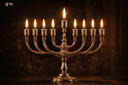
As part of the resumed Temple service, the Menorah is lit each evening with pure oil. The Greeks had entered the oil chamber and contaminated the supply. After searching, the Jews found one small cruse, sealed with the seal of the Kohen Gadol, untouched and pure. It contained enough oil for only one night.
Making new oil was not simple. The devastation of war meant that access to proper olive sources could take days of travel. More significantly, everyone was ritually impure due to the loss of life during the war. The purification process takes seven days, and any oil handled before that would immediately become impure as well. The miracle, then, was not only that the oil lasted, but that it made continued service possible at all.
This also answers another technical question: how could the oil be handled without contaminating it? Halachically, ritual impurity transfers through functional utensils. Raw natural material, such as unprocessed wood, does not. The oil was handled then using such sticks of wood and thus the oil preserved its purity.
Why the Greeks Defiled Instead of Destroying
Here we come to the heart of Chanukah. Unlike the Babylonians and the Romans, the Greeks did not destroy the Beis Hamikdash. Everything remained standing. Nothing was stolen. The Menorah was not taken. The Temple was simply defiled.
Why?
Because the Greek struggle with Judaism was not physical. They did not seek to eliminate the Jews; they sought to redefine Judaism.
Greek culture celebrated reason, beauty, intellect, and the physical world. As far as they were concerned, Judaism could exist as a philosophy, a moral system, even as a form of religious expression—so long as it fit within a rational framework.
They had no objection to mitzvos that made sense. They could even tolerate mitzvos we do not fully understand, as long as one assumes that a logical explanation exists. They were even willing to accept G-d—as long as He was understood as a supreme intelligence, a Divinely super-intelligent designer.
Judaism says otherwise.
G-d is not limited to reason, not even to Divine reason. He is beyond all categories. When we perform mitzvos that are logical, our motivation is not the logic itself, but the fact that the Infinite G-d commanded them. Logic is beautiful and valuable, but it is not the essence. It is the packaging as it were of the commandment. The essence is holiness. Sanctity totally beyond the realms of nature and limits.
This is the difference between morality alone and divinity invested in morality. It is not merely “good.” It is G-dly.
Oil as Sacred Light
Oil represents intellect. It floats above other liquids, just as intellect stands at the highest level of human consciousness. Oil produces light and warmth; intellect illuminates and clarifies. The Greeks championed enlightenment, and in that sense they admired the Menorah.
What they rejected was sacred light. To them, oil was oil. To the Jew, oil used in the Menorah had to be pure, because it represented something higher than intellect alone. It represented G-dly illumination.
This is why the Greeks defiled the oil. They were saying: remove the idea of sanctity. Reduce everything to reason. The Jewish response was to insist that it is holiness that is the ultimate and enduring reality.
Why Eight Days?
This brings us to the famous question: if the cruse contained enough oil for one day, then the miracle was that it lasted an additional seven days. So it was a seven day miracle. Why do we celebrate eight?
Many answers are offered. But at a deeper level, the answer lies in symbolism. Seven represents nature—the natural order of the world. Seven days of creation. Seven emotional attributes of the human heart. Eight represents what is beyond nature, the infinite. Chanukah is celebrated for eight days because it marks the victory of what transcends logic and nature. Judaism is not bound by time, fashion, or rational trends. It is rooted in the eternal.
Light for the World
Unlike Shabbos candles, which are lit inside the home to create peace and enjoyment, the Chanukah Menorah faces outward. Its light is meant for the street. Chanukah teaches that our mission is not only personal or private. We are meant to bring holiness into the world.
This is not arrogance. It is deeply humbling. We are not the source of the light; we are its carriers. Our message is simple and universal: every human being is created by G-d, and therefore every life is infinitely precious. G-d wants a relationship with people here in this world, in the body, in everyday life.
The Torah itself reflects this focus. From beginning to end, it is not centered on the afterlife. The ultimate vision of Judaism is heaven on earth—sanctity lived out in the physical world. That is why the final promise is resurrection: souls returning to perfected bodies, holiness fully revealed within creation.
Goodness without sanctity can be distorted. Logic without holiness can justify almost anything. But logic rooted in holiness is both enduringly moral and meaningful.
Happy Chanukah. Moshiach Now!