The main significance of the victory over the Greeks
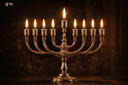
"They established these eight days of Chanukah as a time to thank and praise Your great name." These are the concluding words of the Al Hanissim prayer in Chanukah. We celebrate eight days of Chanukah. The Bais Yosef, a commentator on the Tur Shulchan Aruch, asks a question that has been termed "The Bais Yosef’s Question" on Chanukah, (Orach Chayim 670) due to the popularity of the question. Why is the miracle of Chanuka celebrated for eight days, when there was oil in the flask to last one day, then the miracle was for the latter seven days. however, we celebrate Chanukah for eight days! What is the reason behind the eight-day celebration?
The Pri Chodosh answers, that the 8th day of Chanukah comes as a commemoration for the miracle of defeating the Greek powerful army. Therefore, the oil burning was a 7 day miracle and day 8 was to commemorate the the winning of the war. However, the Pri Megadim asks on this answer, why do we commemorate winning the war with lighting a candle, it doesn't seem as if that is was meant to commemorate the victory?
To answer this difficulty of the 8 days of miracle: We recite in the Al Hanisim: Hashem waged their battles, defended their rights, and avenged the wrong done to them. He delivered the mighty into the hands of the weak, the many into the hands of the few, the impure into the hands of the pure, the wicked into the hands of the righteous, and the sinners into the hands of those who occupy themselves with Your Torah. The Satmar Rebbe, Reb Yoel Ztzal, talks about strength, "mi ¦W ̈N ©g c©i §A mi ¦xeA ¦b" that there are two types of strengths. There is a typical type of strength, a brutal force of energy, which is physical power. Here we are talking about this type of physical strength. Then there is another strength of spirit, a resolve. A strength that comes from the energy of a driven person who is focused. That energy also appears in this world. It is the energy of a mother who miraculously lifts the car to save the life a child who is underneath. It is the energy of a small army that is focused, that can defeat a great army. The Kesef Mishneh says such a defeat is not a Neis, a miracle. Because when the small army is focused, it can defeat a large army.
This is one act of spiritual strength, But there is a second type of spiritual strength, and that is to defeat the Yetzer Hara who was disguised as the Greek army, to entice the Yidden to sin and deviate from the Torah. This was a difficult battle, and the Chashmanoyim were able to win the battle against the Greek army, who’s main objective was, as it says in Al Hanissim “when the wicked Hellenic government rose up against Your people Israel to make them forget Your Torah and violate the decrees of Your will”. This spiritual strength was not only then, but also eternal to pave the way for the Yidden in exile to conquer the Yetzer Hara.
It states in Mishlei 20:27 o ¤h« ̈a i ¥x §c ©g l ̈M U À¥t ¹g m® ̈c ̈` z ́©n §W ¦p 'd x ́¥p Man's soul is the Lord's candle, which searches out all the innermost parts. The lighting of a candle on the eighth day was to commemorate the winning of the battle, which was the battle of the soul with the Yetzer Hara, and it’s done with a candle. This paved the way for the spiritual war of the innerparts.
Chazal teach us that the acts of the Avos which was done with Mesiras Nefesh made it easier for their children to perform. In the war of the Greeks, the purpose was to eradicate three things from Klal Yisrael. The three mitzvos that were given before the Torah was given on Har Sinai: One: the Mitzvah of Milah, was given to Avraham Avinu. Two: the Mitzvah of Kidush Hachodesh, to sanctify the New Moon, was given to the Children of Israel in Egypt. The third was the Mitzvah of Shabbos, which was given at Marah. All three of these Mitzvos are the root and foundation of the Torah, therefore, the Greeks sought to uproot them all.
The Greeks wanted to disconnect Klal Yisrael from the Torah, and without these three foundational mitzvos, it is impossible to access its depths. They did not want to destroy the Jews physically; they wanted to destroy Judaism in spirit, the uniqueness of Am Yisrael. Hence, we greatly appreciate the victory to this day. The eighth candle is a symbol of the Torah, Orah Zu Torah, which was the intention of the Greeks to nullify. For this we have to thank Hashem eight days.
To note an interesting point in the Neis of Chanuka. When the Gemarra Shabbos 21b asks vfubj htn “ What is Chanukah”? The answer given is the emphasis in on the miracle of the oil burning for 8 days, but only a slight mention of the victory over the Greeks. Whereas, in Al Hanissim, the main emphasis is on the victory of the Torah, and a slight mention of the oil miracle.
(Yehuda Z. Klitnick)