The Mitzvah of Ner Chanukah Illuminates the Night with the Light of Torah Abolishing the Klipah of Yavan that Darkened the Nights with Neglect of Torah
Shvilei Pinchas | December 26, 2024
Print This Article
View Original PDF

The Mitzvah of Ner Chanukah Illuminates the Night with the Light of Torah Abolishing the Klipah of Yavan that Darkened the Nights with Neglect of Torah

Shvilei Pinchas | June 27, 2025

The Shabbas of Chanukah approaches auspiciously. Hence, we will examine the formula instituted by the holy kohanim, the Chashmonaim, in the prayer of “Ahl HaNissim,” which we add to our tefilos: "כשעמדה מלכות יון הרשעה על עמך ישראל להשכיחם תורתך"—when the wicked Greek regime rose against Your people Yisrael attempting to make them forget Your Torah and to compel them to abandon the statutes of Your will. The commentaries are puzzled by this statement. After all, memory is something that is in a person’s mind. So, how could the Greeks force a person to forget something that is ingrained in his memory?

We will begin to shed some light on the subject by introducing a sacred insight from the Bnei Yissaschar (Kislev-Teves 5, 1) related to the passuk (Shir HaShirim 7, 14): "הדודאים נתנו ריח ועל פתחינו כל מגדים חדשים גם ישנים דודי צפנתי לך"—the “dudaim” (mandrakes; jasmine; violets) have emitted fragrance; and at our doorways are all sorts of precious fruits, both new and old, which I have hidden away for You, my Beloved.

He refers to what the sages expounded in the Midrash (Shir HaShirim Rabbah 7, 20): “The “dudaim” have emitted fragrance” . . . Come and see how beloved are “dudaim” before He who spoke and the world came into being; for, as a reward for these “dudaim,” two great, distinctive shevatim emerged; and they are the shevet of Yissachar and the shevet of Zevulun.

The Midrash is referring to that which is written (Bereishis 30, 14): ... Reuven went out in the days of the wheat harvest; he found “dudaim” in the field and brought them to Leah his mother; Rachel said to Leah, “Please give me some of your son’s ‘dudaim.’” As we know, Leah agreed to share her “dudaim” with Rachel on the condition that Rachel would agree to let Yaakov come to her tent. As a result, Leah conceived and gave birth to Yissachar and then to Zevulun. This prompted the Midrash to expound: “The ‘dudaim’ have emitted fragrance”—the “dudaim” that Leah gave to Rachel produced a good fragrance in the world—on their account, Yissachar, the pillar of Torah was born, as was his partner and benefactor, Zevulun, who supported him, so that he could devote himself to the study of Torah.

But how are we to interpret the continuation of the passuk: “And at our doorways are all sorts of precious fruits, both new and old, which I have hidden away for You, my Beloved”? The Bnei Yissachar interprets this part of the passuk based on the commentary of the Targum YoNasan on the passuk: “Reuven went out in the days of the wheat harvest, and he found “dudaim” in the field”—Reuven went out during the days of (the month of) Sivan. Based on this, the Alshich hakadosh proposes an incredible chiddush: Leah conceived Zevulun, the pillar of the Torah, in the month of Sivan, on the first night of Chag HaShavuos, “the time of the giving of our Torah.”

The Bnei Yissachar Asserts that the Miracle of Chanukah Occurred on the Day that Yissachar Was Born

Based on the phenomenal chiddush of the Alshich hakadosh, the Bnei Yissaschar adds an incredible chiddush of his own. According to the Pirkei D’Rabbi Eliezer (Chapter 35), all of the shevatim were products of seven-month gestations. Additionally, we are taught in the Gemara (R.H. 11a): "יולדת לשבעה יולדת למקוטעין"—one who gives birth at seven (months) can give birth in abbreviated ones. In other words, in a seven-month gestation, the last month does not need to be a full month.

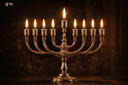
Accordingly, since Yissachar, the pillar of Torah, was conceived on the first night of Shavuos, which is the seventh of Sivan, the seventh month of that pregnancy began on the seventh of Kislev. Now, since the seventh month did not have to be a full month, the Bnei Yissachar proposes that Yissachar was born in the middle of the seventh month on the first day of Chanukah, the twenty-fifth of Kislev. That was the day on which HKB”H performed the miracle on behalf of Yisrael enabling them to light the Menorah with pure oil symbolizing the light of Torah. As it is written (Mishlei 6, 23): "כי נר מצוה ותורה אור"—for a mitzvah is a lamp and the Torah is light.

Understood in this light, the Bnei Yissachar explains the fascinating connection between the beginning and end of the passuk: “The “dudaim” have emitted fragrance; and at our doorways are all sorts of precious fruits, both new and old, which I have hidden away for You, my Beloved. Here is a translation of his sacred words:

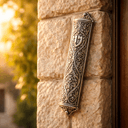
The Gemara (Shabbas 22a) rules that the mezuzah should be on the right and the Chanukah lamp on the left, so that a person is surrounded by mitzvos. Clearly, if we do the opposite, one is still surrounded by mitzvos. However, since the mitzvah of mezuzah is an older mitzvah and comes explicitly from Sinai, it already acquired its place on the right side. In contrast, the mitzvah of “ner Chanukah” is newer and was instituted by Chazal during the time of the second Beis HaMikdash; hence, its place is on the left side. Now, the right side is always called south and the left side north, as we know. (This is because when a person faces east to pray, his right aligns with south and his left with north.)

I will now elucidate the meaning of the passuk cited above. “The ‘dudaim” emitted a fragrance.” As per the exposition of Chazal, the “dudaim” gave off a good fragrance in the world, since Yissachar was born on their account. Now, his conception was on Chag HaShavuos, and his birth was on Chanukah, in Kislev. Hence, it was arranged for him to be born in Kislev—“at our doorways are all sorts of precious fruits.” It is informing us that there are all sorts of sweet things at our doorway, namely the mezuzah and “ner Chanukah”—“both new and old.” In other words, the older mezuzah with the newer “ner Chanukah.” “My beloved, צפנתי לך”—I had to place the newer one in the “tzafon” (north), because the older one acquired its place in the south. And since I desire to be surrounded by Your mitzvos; therefore, I will place it to the north. This is the implication of the (end of the) passuk: "דודי צפנתי לך".

It Was Orchestrated Magnificently for the Miracle of Chanukah to Fall on the Night that the Pillar of Torah Was Born

As a loyal servant in the presence of his master, I will latch onto the coattails of the Alshich hakadosh and the Bnei Yissaschar and expand on the reason that HKB”H orchestrated the conception of Yissachar, the pillar of the Torah, to be on the first night of Chag HaShavuos—“zman matan Toraseinu”—and his birth on the first day of Chanukah.

Let us begin by referring to the berachah bestowed by Yaakov Avinu upon Yissachar prior to his demise. It is written (ibid. 49, 14): "יששכר חמור גרם רובץ בין המשפתים, וירא מנוחה כי טוב ואת הארץ כי נעמה ויט שכמו לסבול ויהי למס עובד"—Yissachar is a strong-boned donkey, crouching between the boundaries. And he saw a resting place, that it was good, and the land that it was pleasant, and he bent his shoulder to bear, and he became an indentured laborer. The Ba’al HaTurim comments that this berachah alludes to the fact that the birth of Yissachar was associated with a donkey:

Interpret the passuk as stating that a donkey was the cause (“chamor goreim”); the sound of the donkey caused the event. Leah heard the sound of the donkey’s bray; so, she went out to greet Yaakov and brought him into her tent; that resulted in the birth of Yissachar. The source for this interpretation is found in the Midrash (B.R. 99, 10): "יששכר חמור גרם"—a donkey caused him (his birth). For, how did Leah know that Yaakov was approaching? It is because the donkey brayed, she heard its sound, and she went out to greet him.

This interpretation is also found in the Gemara (Niddah 31a) with the addendum that HKB”H arranged for Yaakov’s donkey to go to Leah’s tent. They derived this from the passuk (ibid. 30, 16): "ויבוא יעקב מן השדה בערב ותצא לאה לקראתו, ותאמר אלי תבוא כי שכר שכרתיך בדודאי בני וישכב עמה בלילה הוא, אמר רבי יוחנן, מאי דכתיב וישכב עמה בלילה הוא, מלמד שהקב"ה סייע באותו מעשה, שנאמר יששכר חמור גרם, חמור גרם לו ליששכר".

Yaakov returned from the field in the evening, and Leah went out to greet him and said, “It is to me that you must come, for I have surely hired you with my son’s ‘dudaim.’” So, he lay with her on that night. Rabbi Yochanan said: What is the implication of that which is written: “He lay with her on that night”? It teaches us that HKB”H assisted in that act, as it states: "יששכר חמור גרם"—a donkey caused the birth of Yissachar. Rashi comments: “The word ׳הוא׳ (which seems superfluous) in the passuk refers to HKB”H—He assisted her; Yaakov’s donkey veered toward Leah’s tent.

Note that Rashi’s comment suggests that HKB”H arranged for the donkey to stray toward Leah’s tent on its own. According to the Midrash cited above, however, the donkey brayed, so that Leah would be alerted. We can argue that both are correct. Originally, the donkey deviated on its own toward Leah’s tent; however, to prevent Yaakov from redirecting it to Rachel’s tent, it also brayed, so that Leah would come out to greet Yaakov.

It is now incumbent upon us to reconcile this incredible mystery. What prompted HKB”H, the One Who orchestrates everything, to arrange for the conception of Yissachar to be facilitated by the braying of a donkey? Additionally, what possessed Yaakov Avinu to mention this curious event in his berachah to Yissachar prior to his demise: "יששכר חמור גרם"? This suggests an important causal relationship. Why, indeed, was the birth of Yissachar, the pillar of Torah, associated with a braying donkey?

The Donkey Brays during the First Watch of the Night to Arouse Us to Engage in Torah-study

I would like to propose a wonderful explanation based on what we have learned in the Gemara (Eiruvin 100b): "אמר רבי יוחנן, אילמלא לא ניתנה תורה, היינו למידין צניעות מחתול, וגזל מנמלה, ועריות מיונה". Rabbi Yochanan said: If the Torah hadn’t been given, we would have learned modesty from the cat, that theft is wrong from the ant, and that adultery is wrong from the dove. This teaches us that we can learn from other living creatures how to serve Hashem—and not only from creatures that are “tahor” but also from creatures that are “tamei,” such as the cat and the ant.

We can explain the matter based on what we have learned in the Mishnah (Avos 6, 11): "כל מה שברא הקב"ה בעולמו לא ברא אלא לכבודו"--everything that HKB”H created in His world, He created solely for His own glory. Thus, we learn that every creature that HKB”H created was created to glorify His name—so that people would learn from it the proper way to serve Hashem. This indeed is the message conveyed by the following Mishnah (ibid. 5, 20): "יהודה בן תימא אומר, הוי עז כנמר, וקל כנשר, ורץ כצבי, וגיבור כארי, לעשות רצון אביך שבשמים"—Yehudah ben Teima said: Be strong like a leopard, light like an eagle, swift like a gazelle, and mighty like a lion—to perform the will of your Father in Heaven.

With this in mind, what vital lesson are we supposed to learn from the donkey? We find the answer in the Gemara (Berachos 3a): "רבי אליעזר אומר שלש משמרות הוי הלילה, ועל כל משמר ומשמר יושב הקב"ה ושואג כארי, שנאמר (ירמיה כה-ל) ה' ממרום ישאג וממעון קדשו יתן קולו שאוג ישאג על נוהו, וסימן לדבר משמרה ראשונה חמור נוער, שניה כלבים צועקים, שלישית תינוק יונק משדי אמו ואשה מספרת עם בעלה".

The Gemara teaches us that the night is divided up into three watches. HKB”H created a specific sign to identify each watch. The sign for the first watch is the braying of the donkey.

To explain the reason HKB”H chose to announce the first watch of the night with the braying of a donkey, we will refer to a Gemara (ibid. 63b): "מנין שאין דברי תורה מתקיימין אלא במי שממית עצמו עליה, שנאמר זאת התורה אדם כי ימות באהל"—from where do we learn that words of Torah are not retained except by one who sacrifices himself for her sake? For it is stated (Bamidbar 19, 14): “This is the Torah of a man who dies in a tent.”

According to the Rambam (Hilchos Talmud Torah 3, 12), this means that person should not indulge in sleep. Here is a translation of his precious words:

The words of Torah will not be retained by a person who applies himself feebly to obtain them, and not by those who study amid pleasure and an abundance of food and drink. Rather, one must give up his life for them, constantly straining his body to the point of discomfort, without granting sleep to his eyes or slumber to his eyelids. The Sages alluded to this concept: “This is the Torah, a man should he die in a tent . . .” The Torah can only be retained by a person who gives up his life in the tents of wisdom.

In the following halachah (ibid. 13), the Rambam stresses the value of nighttime Torah-study, which is an integral part of sacrificing oneself for the sake of the Torah. Here are his fiery words of inspiration:

Even though it is a mitzvah to study during the day and at night, it is only at night that a person acquires most of his wisdom. Therefore, a person who desires to merit the crown of Torah should make the most of all his nights, not wasting even one with sleep, eating, drinking, idle chatter, or the like. Rather, (they should be devoted to) the study of Torah and words of wisdom.

In fact, this is consistent with the halachic ruling in the Shulchan Aruch (Y.D. 246, 24): Whoever wants to merit the crown of Torah, should take care to make the most of all his nights and not waste even one of them sleeping, eating, drinking, conversing or the like. Rather, they should be filled with words of wisdom and the study of Torah. In a gloss, the Rama adds: Since a man acquires most of his wisdom exclusively at night.

This explains very nicely the rationale for lighting the Chanukah candles—that symbolize Torah she’b’al peh—specifically at night. This is explained in the Midrash Tanchuma (Ki Sisa36) in relation to the passuk (Shemos 34, 28) : “He was there with Hashem forty days and forty nights.” How did Moshe know when it was daytime? In this manner: When HKB"H would teach him Torah she’b’chsav, he knew that it was day; and when He would teach him orally, Mishnah and Talmud, he would know that it was night.

Yissachar Resembles a Donkey that Walks by Day and by Night

We can now begin to comprehend why HKB”H created the donkey with the natural tendency to bray during the first watch of the night. It is for the purpose of inspiring Yisrael to learn from the donkey to carry on their shoulders the heavy burden of the Torah—to devote themselves to the study of Torah not only during the day but also at night. As we learned from the Rambam, Torah is only retained by someone who sacrifices himself to also study Torah at night, and the majority of one’s wisdom comes from nighttime Torah-study.

This enlightens us and gives us cause to rejoice; for we can better appreciate the wondrous ways of Hashem. He orchestrated that a donkey would be instrumental in the conception of Yissachar, the pillar of Torah. As we have learned, when Leah heard the donkey braying, she went out to greet Yaakov Avinu, who was returning from the field during the first watch of the night. This teaches every Jew in every generation that whoever wishes to emulate Yissachar must heed the voice of the donkey, who brays during the night to arouse us to study Torah at night.

Lighting the Menorah at Night Symbolizes Studying Torah at Night

This explains magnificently the message Yaakov Avinu conveyed to Yissachar with his berachah (Bereishis 49, 14): "יששכר חמור גרם רובץ בין המשפתיים"—Yissachar is a strong-boned donkey, crouching between the boundaries. Rashi comments: Yissachar resembles a strong-boned donkey, who bears the yoke of Torah—like a strong donkey, which they load up with a heavy burden. “Crouching between the boundaries”: Like a donkey that walks by day and by night and has no lodging indoors; and when it wants to rest, it lies down between the limits, in the ‘techumim’ of the cities to which it transports merchandise.

Yaakov Avinu compared Yissachar—the pillar of Torah—to a donkey, because he possesses the unique capacity to bear the heavy burden associated with the yoke of the Torah both during the day and during the night. This relates fantastically to Chazal’s teaching: »גרם חמור יששכר«—the braying of the donkey during the first watch of the night led to the birth of Yissachar, so that he would learn the vital lesson from the donkey to carry the yoke of Torah on his back day and night. For, it is written (Yehoshua 1, 8): התורה ספר ימוש לא« »ולילה יומם בו והגית מפיך הזה—this this book of the Torah shall not depart from your mouth; rather you should contemplate it day and night.

In this manner, we will explain how the wicked Greeks planned to make Yisrael forget the Torah. We will refer to a teaching in the Gemara (Menachos 89a) related to that which is written concerning the lighting of the Menorah (Vayikra 24, 3): "יערוך אותו אהרן מערב עד בקר לפני ה', אין לך עבודה שכשרה מערב עד בקר אלא זו בלבד." “Aharon will arrange it from evening to morning before Hashem”—there is no “avodah” (religious service) that is valid from evening until morning except for this one (the lighting of the Menorah). Rashi explains: There is no service, other than the lighting of the Menorah, whose performance is valid from after sunset—after the evening korban tamid is sacrificed—until daybreak.

The brilliant author of the Ben Ish Chai explains what this means in his sefer Ben Yehoyada. He relies on the well-known fact that the lighting of the Menorah alludes to the study of Torah. As the Gemara teaches (B.B. 25b): "הרוצה שיחכים ידרים ושיעשיר יצפין וסימניך שלחן בצפון ומנורה בדרום". One who wants to become wise should face south (Rashi: He should face south while praying), while one who wants to become wealthy should face north (he should face north while praying); and your mnemonic is: The Shulchan stood in the north, while the Menorah stood in the south. Based on this, he explains the rationale for lighting the Menorah at night:

It appears to me that the reason is because the Menorah alludes to the Torah; and the essential study of Torah is at night, when a person’s mind is clear and free of his daily pursuits. In the words of our blessed Rabbis: “The night was created exclusively for learning.” Hence, in relation to it, it is written “from evening until morning.” For, if you calculate the numerical value of "ערב" (272) to the numerical value of "בקר" (302), you will find that the difference between them equals the gematria of the letter למ"ד (30), which alludes to study.

Thus, we can comprehend the Greeks’ reasoning for defiling all of the oils in the Heichal; they aimed to prevent Yisrael from kindling the Menorah in a state of purity. For, they malevolently recognized the truism that Torah is only retained by those who sacrifice on her behalf by also studying Torah at night. Now, since the kindling of the Menorah was performed from evening until morning, it symbolizes nighttime Torah-study. Therefore, the Greeks did everything within their malicious, impure power to prevent Yisrael from kindling the Menorah at night—thereby preventing them from perpetuating the Torah.

Let us now interpret the formula instituted in Ahl HaNissim in this light: "כשעמדה מלכות יון הרשעה על עמך ישראל להשכיחם תורתך"—when the wicked Greek regime rose against Your people Yisrael attempting to make them forget Your Torah. Their strategy was to prevent nighttime Torah-study by contaminating all the oils. As a consequence, Yisrael would ultimately forget the Torah, whose perpetuation depends on the self-sacrifice of study during the night. This goes hand in hand with the teaching in the Midrash (B.R. 2, 4): “Darkness” represents the exile of Greece, whose decrees thrust Yisrael into a spiritual darkness—by preventing them from illuminating the darkness of night with the light of Torah.

For this reason (Shabbas 21b): “When the Greeks entered the Heichal, they contaminated all of the oils.” For, they understood full well the vital significance of kindling the Menorah at night with pure oil; it imbued Yisrael with a spirit of taharah emanating from the light of the Torah enabling them to study Torah at night. Due to their malice, the Greeks did everything to prevent Yisrael from lighting the Menorah with pure oil—thinking that this would cause Yisrael to forget the Torah.

However, HKB”H performed a miracle for Yisrael on account of the holy, priestly Chashmonaim. Even though they were much weaker and were greatly outnumbered, they waged war against the Greeks despite the great peril (ibid.): “And when the royal Chashmonai house prevailed and defeated them, they searched and found only one flask of oil that was concealed with the seal of the Kohen Gadol; it contained only enough oil to light the menorah for one day. However, a miracle was performed with it, and they lit with it for eight days.” Thus, they prevented the Torah from being forgotten.

As explained, this miracle transpired on the twenty-fifth of Kislev, the day that Yissachar, the pillar of the Torah, was born. As we have learned, the braying of the donkey played an important role in his conception. Thus, it is incumbent upon us to follow in his footsteps and learn the following lesson from the donkey “that brays during the first watch of the night”—to study Torah during the night. In that merit, we will eliminate the klipah of Yavan—the dark influence whose decrees thrust Yisrael into spiritual darkness.

With great pleasure, we will conclude with what the Bnei Yissachar (Kislev-Teves 2, 8) brings down in the name of the esteemed Rabbi Pinchas of Koritz, zy”a:

On every Chanukah, when the candles are lit, the “ohr haganuz” is revealed; and it is the light of the Mashiach. Accordingly, the Bnei Yissaschar goes on to explain: Therefore, they named these days Chanukah; they are a preparation for the future geulah. At that time the “ohr haganuz” will be revealed to us fully, as our blessed Rabbis taught (Chagigah 12a): He concealed it for the tzaddikim le’asid la’vo. May this happen swiftly, in our times! Amen.

Family Madeb - לעילוי נשמת their dear mother Lea bat Virgini ע"ה Arthur & Randi Luxenberg לזכות of their wonderfull parents, children and grandchildren ר' יצחק יהודה בן ר' אברהם ע"ה His Father לעילוי נשמת

The Shabbas of Chanukah approaches auspiciously. Hence, we will examine the formula instituted by the holy kohanim, the Chashmonaim, in the prayer of “Ahl HaNissim,” which we add to our tefilos: "כשעמדה מלכות יון הרשעה על עמך ישראל להשכיחם תורתך"—when the wicked Greek regime rose against Your people Yisrael attempting to make them forget Your Torah and to compel them to abandon the statutes of Your will. The commentaries are puzzled by this statement. After all, memory is something that is in a person’s mind. So, how could the Greeks force a person to forget something that is ingrained in his memory?

We will begin to shed some light on the subject by introducing a sacred insight from the Bnei Yissaschar (Kislev-Teves 5, 1) related to the passuk (Shir HaShirim 7, 14): "הדודאים נתנו ריח ועל פתחינו כל מגדים חדשים גם ישנים דודי צפנתי לך"—the “dudaim” (mandrakes; jasmine; violets) have emitted fragrance; and at our doorways are all sorts of precious fruits, both new and old, which I have hidden away for You, my Beloved.

He refers to what the sages expounded in the Midrash (Shir HaShirim Rabbah 7, 20): “The “dudaim” have emitted fragrance” . . . Come and see how beloved are “dudaim” before He who spoke and the world came into being; for, as a reward for these “dudaim,” two great, distinctive shevatim emerged; and they are the shevet of Yissachar and the shevet of Zevulun.

The Midrash is referring to that which is written (Bereishis 30, 14): ... Reuven went out in the days of the wheat harvest; he found “dudaim” in the field and brought them to Leah his mother; Rachel said to Leah, “Please give me some of your son’s ‘dudaim.’” As we know, Leah agreed to share her “dudaim” with Rachel on the condition that Rachel would agree to let Yaakov come to her tent. As a result, Leah conceived and gave birth to Yissachar and then to Zevulun. This prompted the Midrash to expound: “The ‘dudaim’ have emitted fragrance”—the “dudaim” that Leah gave to Rachel produced a good fragrance in the world—on their account, Yissachar, the pillar of Torah was born, as was his partner and benefactor, Zevulun, who supported him, so that he could devote himself to the study of Torah.

But how are we to interpret the continuation of the passuk: “And at our doorways are all sorts of precious fruits, both new and old, which I have hidden away for You, my Beloved”? The Bnei Yissachar interprets this part of the passuk based on the commentary of the Targum YoNasan on the passuk: “Reuven went out in the days of the wheat harvest, and he found “dudaim” in the field”—Reuven went out during the days of (the month of) Sivan. Based on this, the Alshich hakadosh proposes an incredible chiddush: Leah conceived Zevulun, the pillar of the Torah, in the month of Sivan, on the first night of Chag HaShavuos, “the time of the giving of our Torah.”

The Bnei Yissachar Asserts that the Miracle of Chanukah Occurred on the Day that Yissachar Was Born

Based on the phenomenal chiddush of the Alshich hakadosh, the Bnei Yissaschar adds an incredible chiddush of his own. According to the Pirkei D’Rabbi Eliezer (Chapter 35), all of the shevatim were products of seven-month gestations. Additionally, we are taught in the Gemara (R.H. 11a): "יולדת לשבעה יולדת למקוטעין"—one who gives birth at seven (months) can give birth in abbreviated ones. In other words, in a seven-month gestation, the last month does not need to be a full month.

Accordingly, since Yissachar, the pillar of Torah, was conceived on the first night of Shavuos, which is the seventh of Sivan, the seventh month of that pregnancy began on the seventh of Kislev. Now, since the seventh month did not have to be a full month, the Bnei Yissachar proposes that Yissachar was born in the middle of the seventh month on the first day of Chanukah, the twenty-fifth of Kislev. That was the day on which HKB”H performed the miracle on behalf of Yisrael enabling them to light the Menorah with pure oil symbolizing the light of Torah. As it is written (Mishlei 6, 23): "כי נר מצוה ותורה אור"—for a mitzvah is a lamp and the Torah is light.

Understood in this light, the Bnei Yissachar explains the fascinating connection between the beginning and end of the passuk: “The “dudaim” have emitted fragrance; and at our doorways are all sorts of precious fruits, both new and old, which I have hidden away for You, my Beloved. Here is a translation of his sacred words:

The Gemara (Shabbas 22a) rules that the mezuzah should be on the right and the Chanukah lamp on the left, so that a person is surrounded by mitzvos. Clearly, if we do the opposite, one is still surrounded by mitzvos. However, since the mitzvah of mezuzah is an older mitzvah and comes explicitly from Sinai, it already acquired its place on the right side. In contrast, the mitzvah of “ner Chanukah” is newer and was instituted by Chazal during the time of the second Beis HaMikdash; hence, its place is on the left side. Now, the right side is always called south and the left side north, as we know. (This is because when a person faces east to pray, his right aligns with south and his left with north.)

I will now elucidate the meaning of the passuk cited above. “The ‘dudaim” emitted a fragrance.” As per the exposition of Chazal, the “dudaim” gave off a good fragrance in the world, since Yissachar was born on their account. Now, his conception was on Chag HaShavuos, and his birth was on Chanukah, in Kislev. Hence, it was arranged for him to be born in Kislev—“at our doorways are all sorts of precious fruits.” It is informing us that there are all sorts of sweet things at our doorway, namely the mezuzah and “ner Chanukah”—“both new and old.” In other words, the older mezuzah with the newer “ner Chanukah.” “My beloved, צפנתי לך”—I had to place the newer one in the “tzafon” (north), because the older one acquired its place in the south. And since I desire to be surrounded by Your mitzvos; therefore, I will place it to the north. This is the implication of the (end of the) passuk: "דודי צפנתי לך".

It Was Orchestrated Magnificently for the Miracle of Chanukah to Fall on the Night that the Pillar of Torah Was Born

As a loyal servant in the presence of his master, I will latch onto the coattails of the Alshich hakadosh and the Bnei Yissaschar and expand on the reason that HKB”H orchestrated the conception of Yissachar, the pillar of the Torah, to be on the first night of Chag HaShavuos—“zman matan Toraseinu”—and his birth on the first day of Chanukah.

Let us begin by referring to the berachah bestowed by Yaakov Avinu upon Yissachar prior to his demise. It is written (ibid. 49, 14): "יששכר חמור גרם רובץ בין המשפתים, וירא מנוחה כי טוב ואת הארץ כי נעמה ויט שכמו לסבול ויהי למס עובד"—Yissachar is a strong-boned donkey, crouching between the boundaries. And he saw a resting place, that it was good, and the land that it was pleasant, and he bent his shoulder to bear, and he became an indentured laborer. The Ba’al HaTurim comments that this berachah alludes to the fact that the birth of Yissachar was associated with a donkey:

Interpret the passuk as stating that a donkey was the cause (“chamor goreim”); the sound of the donkey caused the event. Leah heard the sound of the donkey’s bray; so, she went out to greet Yaakov and brought him into her tent; that resulted in the birth of Yissachar. The source for this interpretation is found in the Midrash (B.R. 99, 10): "יששכר חמור גרם"—a donkey caused him (his birth). For, how did Leah know that Yaakov was approaching? It is because the donkey brayed, she heard its sound, and she went out to greet him.

This interpretation is also found in the Gemara (Niddah 31a) with the addendum that HKB”H arranged for Yaakov’s donkey to go to Leah’s tent. They derived this from the passuk (ibid. 30, 16): "ויבוא יעקב מן השדה בערב ותצא לאה לקראתו, ותאמר אלי תבוא כי שכר שכרתיך בדודאי בני וישכב עמה בלילה הוא, אמר רבי יוחנן, מאי דכתיב וישכב עמה בלילה הוא, מלמד שהקב"ה סייע באותו מעשה, שנאמר יששכר חמור גרם, חמור גרם לו ליששכר".

Yaakov returned from the field in the evening, and Leah went out to greet him and said, “It is to me that you must come, for I have surely hired you with my son’s ‘dudaim.’” So, he lay with her on that night. Rabbi Yochanan said: What is the implication of that which is written: “He lay with her on that night”? It teaches us that HKB”H assisted in that act, as it states: "יששכר חמור גרם"—a donkey caused the birth of Yissachar. Rashi comments: “The word ׳הוא׳ (which seems superfluous) in the passuk refers to HKB”H—He assisted her; Yaakov’s donkey veered toward Leah’s tent.

Note that Rashi’s comment suggests that HKB”H arranged for the donkey to stray toward Leah’s tent on its own. According to the Midrash cited above, however, the donkey brayed, so that Leah would be alerted. We can argue that both are correct. Originally, the donkey deviated on its own toward Leah’s tent; however, to prevent Yaakov from redirecting it to Rachel’s tent, it also brayed, so that Leah would come out to greet Yaakov.

It is now incumbent upon us to reconcile this incredible mystery. What prompted HKB”H, the One Who orchestrates everything, to arrange for the conception of Yissachar to be facilitated by the braying of a donkey? Additionally, what possessed Yaakov Avinu to mention this curious event in his berachah to Yissachar prior to his demise: "יששכר חמור גרם"? This suggests an important causal relationship. Why, indeed, was the birth of Yissachar, the pillar of Torah, associated with a braying donkey?

The Donkey Brays during the First Watch of the Night to Arouse Us to Engage in Torah-study

I would like to propose a wonderful explanation based on what we have learned in the Gemara (Eiruvin 100b): "אמר רבי יוחנן, אילמלא לא ניתנה תורה, היינו למידין צניעות מחתול, וגזל מנמלה, ועריות מיונה". Rabbi Yochanan said: If the Torah hadn’t been given, we would have learned modesty from the cat, that theft is wrong from the ant, and that adultery is wrong from the dove. This teaches us that we can learn from other living creatures how to serve Hashem—and not only from creatures that are “tahor” but also from creatures that are “tamei,” such as the cat and the ant.

We can explain the matter based on what we have learned in the Mishnah (Avos 6, 11): "כל מה שברא הקב"ה בעולמו לא ברא אלא לכבודו"--everything that HKB”H created in His world, He created solely for His own glory. Thus, we learn that every creature that HKB”H created was created to glorify His name—so that people would learn from it the proper way to serve Hashem. This indeed is the message conveyed by the following Mishnah (ibid. 5, 20): "יהודה בן תימא אומר, הוי עז כנמר, וקל כנשר, ורץ כצבי, וגיבור כארי, לעשות רצון אביך שבשמים"—Yehudah ben Teima said: Be strong like a leopard, light like an eagle, swift like a gazelle, and mighty like a lion—to perform the will of your Father in Heaven.

With this in mind, what vital lesson are we supposed to learn from the donkey? We find the answer in the Gemara (Berachos 3a): "רבי אליעזר אומר שלש משמרות הוי הלילה, ועל כל משמר ומשמר יושב הקב"ה ושואג כארי, שנאמר (ירמיה כה-ל) ה' ממרום ישאג וממעון קדשו יתן קולו שאוג ישאג על נוהו, וסימן לדבר משמרה ראשונה חמור נוער, שניה כלבים צועקים, שלישית תינוק יונק משדי אמו ואשה מספרת עם בעלה".

The Gemara teaches us that the night is divided up into three watches. HKB”H created a specific sign to identify each watch. The sign for the first watch is the braying of the donkey.

To explain the reason HKB”H chose to announce the first watch of the night with the braying of a donkey, we will refer to a Gemara (ibid. 63b): "מנין שאין דברי תורה מתקיימין אלא במי שממית עצמו עליה, שנאמר זאת התורה אדם כי ימות באהל"—from where do we learn that words of Torah are not retained except by one who sacrifices himself for her sake? For it is stated (Bamidbar 19, 14): “This is the Torah of a man who dies in a tent.”

According to the Rambam (Hilchos Talmud Torah 3, 12), this means that person should not indulge in sleep. Here is a translation of his precious words:

The words of Torah will not be retained by a person who applies himself feebly to obtain them, and not by those who study amid pleasure and an abundance of food and drink. Rather, one must give up his life for them, constantly straining his body to the point of discomfort, without granting sleep to his eyes or slumber to his eyelids. The Sages alluded to this concept: “This is the Torah, a man should he die in a tent . . .” The Torah can only be retained by a person who gives up his life in the tents of wisdom.

In the following halachah (ibid. 13), the Rambam stresses the value of nighttime Torah-study, which is an integral part of sacrificing oneself for the sake of the Torah. Here are his fiery words of inspiration:

Even though it is a mitzvah to study during the day and at night, it is only at night that a person acquires most of his wisdom. Therefore, a person who desires to merit the crown of Torah should make the most of all his nights, not wasting even one with sleep, eating, drinking, idle chatter, or the like. Rather, (they should be devoted to) the study of Torah and words of wisdom.

In fact, this is consistent with the halachic ruling in the Shulchan Aruch (Y.D. 246, 24): Whoever wants to merit the crown of Torah, should take care to make the most of all his nights and not waste even one of them sleeping, eating, drinking, conversing or the like. Rather, they should be filled with words of wisdom and the study of Torah. In a gloss, the Rama adds: Since a man acquires most of his wisdom exclusively at night.

This explains very nicely the rationale for lighting the Chanukah candles—that symbolize Torah she’b’al peh—specifically at night. This is explained in the Midrash Tanchuma (Ki Sisa36) in relation to the passuk (Shemos 34, 28) : “He was there with Hashem forty days and forty nights.” How did Moshe know when it was daytime? In this manner: When HKB"H would teach him Torah she’b’chsav, he knew that it was day; and when He would teach him orally, Mishnah and Talmud, he would know that it was night.

Yissachar Resembles a Donkey that Walks by Day and by Night

We can now begin to comprehend why HKB”H created the donkey with the natural tendency to bray during the first watch of the night. It is for the purpose of inspiring Yisrael to learn from the donkey to carry on their shoulders the heavy burden of the Torah—to devote themselves to the study of Torah not only during the day but also at night. As we learned from the Rambam, Torah is only retained by someone who sacrifices himself to also study Torah at night, and the majority of one’s wisdom comes from nighttime Torah-study.

This enlightens us and gives us cause to rejoice; for we can better appreciate the wondrous ways of Hashem. He orchestrated that a donkey would be instrumental in the conception of Yissachar, the pillar of Torah. As we have learned, when Leah heard the donkey braying, she went out to greet Yaakov Avinu, who was returning from the field during the first watch of the night. This teaches every Jew in every generation that whoever wishes to emulate Yissachar must heed the voice of the donkey, who brays during the night to arouse us to study Torah at night.

Lighting the Menorah at Night Symbolizes Studying Torah at Night

This explains magnificently the message Yaakov Avinu conveyed to Yissachar with his berachah (Bereishis 49, 14): "יששכר חמור גרם רובץ בין המשפתיים"—Yissachar is a strong-boned donkey, crouching between the boundaries. Rashi comments: Yissachar resembles a strong-boned donkey, who bears the yoke of Torah—like a strong donkey, which they load up with a heavy burden. “Crouching between the boundaries”: Like a donkey that walks by day and by night and has no lodging indoors; and when it wants to rest, it lies down between the limits, in the ‘techumim’ of the cities to which it transports merchandise.

Yaakov Avinu compared Yissachar—the pillar of Torah—to a donkey, because he possesses the unique capacity to bear the heavy burden associated with the yoke of the Torah both during the day and during the night. This relates fantastically to Chazal’s teaching: »גרם חמור יששכר«—the braying of the donkey during the first watch of the night led to the birth of Yissachar, so that he would learn the vital lesson from the donkey to carry the yoke of Torah on his back day and night. For, it is written (Yehoshua 1, 8): התורה ספר ימוש לא« »ולילה יומם בו והגית מפיך הזה—this this book of the Torah shall not depart from your mouth; rather you should contemplate it day and night.

In this manner, we will explain how the wicked Greeks planned to make Yisrael forget the Torah. We will refer to a teaching in the Gemara (Menachos 89a) related to that which is written concerning the lighting of the Menorah (Vayikra 24, 3): "יערוך אותו אהרן מערב עד בקר לפני ה', אין לך עבודה שכשרה מערב עד בקר אלא זו בלבד." “Aharon will arrange it from evening to morning before Hashem”—there is no “avodah” (religious service) that is valid from evening until morning except for this one (the lighting of the Menorah). Rashi explains: There is no service, other than the lighting of the Menorah, whose performance is valid from after sunset—after the evening korban tamid is sacrificed—until daybreak.

The brilliant author of the Ben Ish Chai explains what this means in his sefer Ben Yehoyada. He relies on the well-known fact that the lighting of the Menorah alludes to the study of Torah. As the Gemara teaches (B.B. 25b): "הרוצה שיחכים ידרים ושיעשיר יצפין וסימניך שלחן בצפון ומנורה בדרום". One who wants to become wise should face south (Rashi: He should face south while praying), while one who wants to become wealthy should face north (he should face north while praying); and your mnemonic is: The Shulchan stood in the north, while the Menorah stood in the south. Based on this, he explains the rationale for lighting the Menorah at night:

It appears to me that the reason is because the Menorah alludes to the Torah; and the essential study of Torah is at night, when a person’s mind is clear and free of his daily pursuits. In the words of our blessed Rabbis: “The night was created exclusively for learning.” Hence, in relation to it, it is written “from evening until morning.” For, if you calculate the numerical value of "ערב" (272) to the numerical value of "בקר" (302), you will find that the difference between them equals the gematria of the letter למ"ד (30), which alludes to study.

Thus, we can comprehend the Greeks’ reasoning for defiling all of the oils in the Heichal; they aimed to prevent Yisrael from kindling the Menorah in a state of purity. For, they malevolently recognized the truism that Torah is only retained by those who sacrifice on her behalf by also studying Torah at night. Now, since the kindling of the Menorah was performed from evening until morning, it symbolizes nighttime Torah-study. Therefore, the Greeks did everything within their malicious, impure power to prevent Yisrael from kindling the Menorah at night—thereby preventing them from perpetuating the Torah.

Let us now interpret the formula instituted in Ahl HaNissim in this light: "כשעמדה מלכות יון הרשעה על עמך ישראל להשכיחם תורתך"—when the wicked Greek regime rose against Your people Yisrael attempting to make them forget Your Torah. Their strategy was to prevent nighttime Torah-study by contaminating all the oils. As a consequence, Yisrael would ultimately forget the Torah, whose perpetuation depends on the self-sacrifice of study during the night. This goes hand in hand with the teaching in the Midrash (B.R. 2, 4): “Darkness” represents the exile of Greece, whose decrees thrust Yisrael into a spiritual darkness—by preventing them from illuminating the darkness of night with the light of Torah.

For this reason (Shabbas 21b): “When the Greeks entered the Heichal, they contaminated all of the oils.” For, they understood full well the vital significance of kindling the Menorah at night with pure oil; it imbued Yisrael with a spirit of taharah emanating from the light of the Torah enabling them to study Torah at night. Due to their malice, the Greeks did everything to prevent Yisrael from lighting the Menorah with pure oil—thinking that this would cause Yisrael to forget the Torah.

However, HKB”H performed a miracle for Yisrael on account of the holy, priestly Chashmonaim. Even though they were much weaker and were greatly outnumbered, they waged war against the Greeks despite the great peril (ibid.): “And when the royal Chashmonai house prevailed and defeated them, they searched and found only one flask of oil that was concealed with the seal of the Kohen Gadol; it contained only enough oil to light the menorah for one day. However, a miracle was performed with it, and they lit with it for eight days.” Thus, they prevented the Torah from being forgotten.

As explained, this miracle transpired on the twenty-fifth of Kislev, the day that Yissachar, the pillar of the Torah, was born. As we have learned, the braying of the donkey played an important role in his conception. Thus, it is incumbent upon us to follow in his footsteps and learn the following lesson from the donkey “that brays during the first watch of the night”—to study Torah during the night. In that merit, we will eliminate the klipah of Yavan—the dark influence whose decrees thrust Yisrael into spiritual darkness.

With great pleasure, we will conclude with what the Bnei Yissachar (Kislev-Teves 2, 8) brings down in the name of the esteemed Rabbi Pinchas of Koritz, zy”a:

On every Chanukah, when the candles are lit, the “ohr haganuz” is revealed; and it is the light of the Mashiach. Accordingly, the Bnei Yissaschar goes on to explain: Therefore, they named these days Chanukah; they are a preparation for the future geulah. At that time the “ohr haganuz” will be revealed to us fully, as our blessed Rabbis taught (Chagigah 12a): He concealed it for the tzaddikim le’asid la’vo. May this happen swiftly, in our times! Amen.

Family Madeb - לעילוי נשמת their dear mother Lea bat Virgini ע"ה Arthur & Randi Luxenberg לזכות of their wonderfull parents, children and grandchildren ר' יצחק יהודה בן ר' אברהם ע"ה His Father לעילוי נשמת

PDF Preview