Hidden Things
OHRNET | February 20, 2025
Print This Article
View Original PDF

Hidden Things

OHRNET | June 27, 2025

While the Torah makes it clear that a person who lights a fire has personal liability for anything that that fire might end up consuming (Ex. 22:5), the rabbis (Mechilta there and Bava Kamma 60a–62a) adds that if the fire burnt up something that was “concealed” (i.e., not readily visible to the one kindling the flame), then one’s liability is more limited. The Hebrew word that the rabbis used in reference to something “hidden” is tamun. Other words that mean essentially the same thing in Hebrew include safun, tzafun, ganuz, mustar, and ne'elam. In this essay we look at those various Hebrew words for “hidden” things and discuss whether or not these words are truly synonymous. In doing so, we trace these words to their etymological roots and highlight some of their close linguistic relatives.

The word tamun is an inflection of the Biblical Hebrew TET-MEM-NUN, which refers to “hiding/concealing.” In at least eight of the thirty-one instances of this root in the Bible, it refers to laying a “hidden” trap that is unbeknownst to one’s victim (Jer. 18:22, Ps. 9:16, 31:5, 35:7–8, 64:6, 140:6, 142:4). In some instances, this root is used when referring to “burying” (i.e., concealing something in dirt or sand), like when Jacob “buried” idolatrous contraband from Shechem (Gen. 35:4), when Moses “buried” the Egyptian man that he had killed (Ex. 2:12), or when the two spies dispatched by Joshua “buried” themselves in flax (Josh. 2:6). The term hatmanah in Mishnaic Hebrew refers to “embedding” food within a heat source or insulator to keep it warm (see Shabbat 2:7, 4:1–2, Beitzah 2:6, and Eduyot 3:10). Given this view of how declensions of TET-MEM-NUN are used in Hebrew, it seems that tamun in reference to something “hidden” refers simply to anything which is placed within another material that covers it and conceals it from view.

Rabbi Shlomo Pappenheim traces tamun to the biliteral root TET-MEM, whose core meaning he explains as “blocking/impeding.” In Rabbi Pappenheim’s estimation, the main derivative of that two-letter root includes a radical ALEPH to form the word tumah (“impurity”). That term refers specifically to a certain legal “blockage” that stops or forbids a person from taking certain courses of action. In other words, the main ramification of ritual impurity from the Torah’s perspective pertains to what is permitted and what is forbidden. For that reason, eating forbidden foods or engaging in forbidden fornications are branded forms of tumah because they are actions from which one is legally enjoined. Likewise, a state of “ritual impurity” — no matter how it came about — serves to prohibit a person from entering the Temple and eating holy foodstuff. Basically, an impure person is “blocked” from doing things that pure people are open to doing. In this way, Rabbi Pappenheim even writes that the Biblical Hebrew word tameh (“impure”) is essentially synonymous with the Mishnaic Hebrew word assur (“forbidden”).

The word tamun in the sense of “hiding” relates to this root because when something is hidden, people are “blocked” from being able to reach it or otherwise access it. Other words that Rabbi Pappenheim sees as related to this two-letter root include the Biblical Hebrew atum (“closed/sealed”) and the Mishnaic Hebrew tumtum (that is, a person of ambiguous gender whose genitals are “hidden”). Rabbi Pappenheim also writes that tamun differs from its apparent synonyms in that it usually implies “hiding” something in the ground, which the others words do not.

The term ganuz (“hidden”) is an inflection of the Biblical Hebrew ginzei (Ezek. 27:24, Est. 3:9, 4:7) or ganzach (I Chron. 28:11), and the Biblical Aramaic ginzaya (Ezra 5:17, 6:1, 7:20). All of those words refer to royal “storehouses,” where the king might “hide” some of his most treasured items. Aramaic inflections of this term also appear in Targum when rendering various Biblical Hebrew words that refer to “storage” like otzar (Isa. 39:6), tzrurah (I Sam. 25:29), and pikadon (Gen. 41:36).

In Mishnaic Hebrew, the root GIMMEL-NUN-ZAYIN not only refers to a noun for “storage/treasure,” but is also used in the verb form to refer to the act of "hiding" something. Thus, when Hezekiah was said to "hide" the Book of Remedies (Pesachim 4:9), the Hasmonean were said to "hide" the stones of the altar that the gentiles defiled (Middot 1:6), and the Ark of the covenant was said to have been hidden "hidden" (Shekalim 6:1-2), verb forms of ganaz are used.

*To access the full version of this essay and learn more about Hebrew words for “hidden things,” visit us online at: http://ohr.edu/this_week/whats_in_a_word/
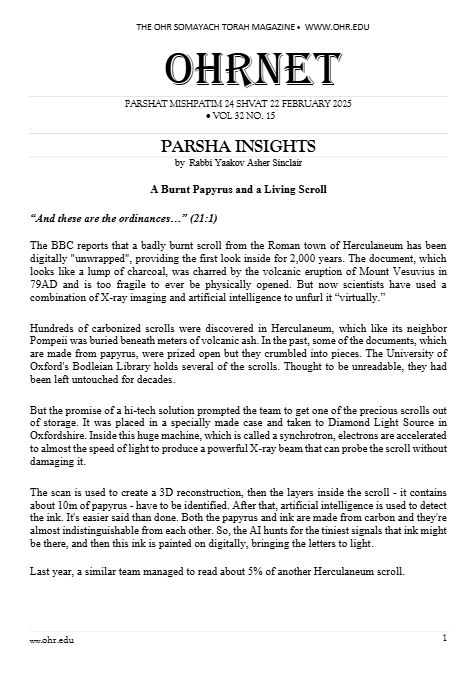
While the Torah makes it clear that a person who lights a fire has personal liability for anything that that fire might end up consuming (Ex. 22:5), the rabbis (Mechilta there and Bava Kamma 60a–62a) adds that if the fire burnt up something that was “concealed” (i.e., not readily visible to the one kindling the flame), then one’s liability is more limited. The Hebrew word that the rabbis used in reference to something “hidden” is tamun. Other words that mean essentially the same thing in Hebrew include safun, tzafun, ganuz, mustar, and ne'elam. In this essay we look at those various Hebrew words for “hidden” things and discuss whether or not these words are truly synonymous. In doing so, we trace these words to their etymological roots and highlight some of their close linguistic relatives.

The word tamun is an inflection of the Biblical Hebrew TET-MEM-NUN, which refers to “hiding/concealing.” In at least eight of the thirty-one instances of this root in the Bible, it refers to laying a “hidden” trap that is unbeknownst to one’s victim (Jer. 18:22, Ps. 9:16, 31:5, 35:7–8, 64:6, 140:6, 142:4). In some instances, this root is used when referring to “burying” (i.e., concealing something in dirt or sand), like when Jacob “buried” idolatrous contraband from Shechem (Gen. 35:4), when Moses “buried” the Egyptian man that he had killed (Ex. 2:12), or when the two spies dispatched by Joshua “buried” themselves in flax (Josh. 2:6). The term hatmanah in Mishnaic Hebrew refers to “embedding” food within a heat source or insulator to keep it warm (see Shabbat 2:7, 4:1–2, Beitzah 2:6, and Eduyot 3:10). Given this view of how declensions of TET-MEM-NUN are used in Hebrew, it seems that tamun in reference to something “hidden” refers simply to anything which is placed within another material that covers it and conceals it from view.

Rabbi Shlomo Pappenheim traces tamun to the biliteral root TET-MEM, whose core meaning he explains as “blocking/impeding.” In Rabbi Pappenheim’s estimation, the main derivative of that two-letter root includes a radical ALEPH to form the word tumah (“impurity”). That term refers specifically to a certain legal “blockage” that stops or forbids a person from taking certain courses of action. In other words, the main ramification of ritual impurity from the Torah’s perspective pertains to what is permitted and what is forbidden. For that reason, eating forbidden foods or engaging in forbidden fornications are branded forms of tumah because they are actions from which one is legally enjoined. Likewise, a state of “ritual impurity” — no matter how it came about — serves to prohibit a person from entering the Temple and eating holy foodstuff. Basically, an impure person is “blocked” from doing things that pure people are open to doing. In this way, Rabbi Pappenheim even writes that the Biblical Hebrew word tameh (“impure”) is essentially synonymous with the Mishnaic Hebrew word assur (“forbidden”).

The word tamun in the sense of “hiding” relates to this root because when something is hidden, people are “blocked” from being able to reach it or otherwise access it. Other words that Rabbi Pappenheim sees as related to this two-letter root include the Biblical Hebrew atum (“closed/sealed”) and the Mishnaic Hebrew tumtum (that is, a person of ambiguous gender whose genitals are “hidden”). Rabbi Pappenheim also writes that tamun differs from its apparent synonyms in that it usually implies “hiding” something in the ground, which the others words do not.

The term ganuz (“hidden”) is an inflection of the Biblical Hebrew ginzei (Ezek. 27:24, Est. 3:9, 4:7) or ganzach (I Chron. 28:11), and the Biblical Aramaic ginzaya (Ezra 5:17, 6:1, 7:20). All of those words refer to royal “storehouses,” where the king might “hide” some of his most treasured items. Aramaic inflections of this term also appear in Targum when rendering various Biblical Hebrew words that refer to “storage” like otzar (Isa. 39:6), tzrurah (I Sam. 25:29), and pikadon (Gen. 41:36).

In Mishnaic Hebrew, the root GIMMEL-NUN-ZAYIN not only refers to a noun for “storage/treasure,” but is also used in the verb form to refer to the act of "hiding" something. Thus, when Hezekiah was said to "hide" the Book of Remedies (Pesachim 4:9), the Hasmonean were said to "hide" the stones of the altar that the gentiles defiled (Middot 1:6), and the Ark of the covenant was said to have been hidden "hidden" (Shekalim 6:1-2), verb forms of ganaz are used.

*To access the full version of this essay and learn more about Hebrew words for “hidden things,” visit us online at: http://ohr.edu/this_week/whats_in_a_word/

PDF Preview