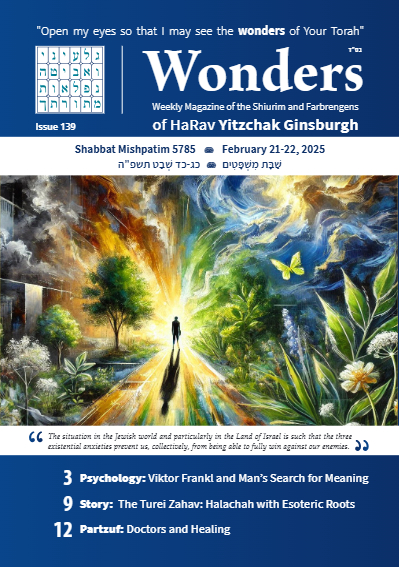
The Taz and the Shach
Wonders | February 21, 2025
Print This Article
View Original PDF

The Taz and the Shach

Wonders | June 27, 2025

THE TAZ AND THE SHACH

It is written in Hayom Yom in the name of the Alter Rebbe: “All the authors up to and including the Ta z and the Shach, composed their works with ru’ach hakodesh (holy spirit), and the matter of r u ’a c h hakodesh... is that they revealed to him the secrets of the Torah, which is from the hidden wisdom.”

Ru’ach Hakodesh refers to the ability to precisely rule in halachah as well as the revelation of the secrets of the Torah hidden within the revealed Torah’s teachings. This is particularly noticeable in the work of the Ta z.

The relationship between the Ta z and the Shach provides for an amazing story. The two works were printed in the same year, when the Ta z was sixty and the Shach was twenty-four. Afterwards, the Shach wrote annotations critiquing the Ta z, called Nekudot HaKesef, and the back and forth regarding the opinions of these two giants continues to this day. The two also met in person, as the Shach relates: "Let it not enter the reader's mind that since I, Heaven forbid, had a dispute with the author of the Turei Zahav, or that I have some resentment towards him, that I composed excurses on his work. For it is known to all that the sages’ explanation of the verse, “And in the end, Va h e b [בֵהָו, a place-name whose value is 13, the same as “love” (הָבֲהַא)] was fulfilled at the end of our interaction. The Torah always seeks to dwell in its natural habitat, and I hosted the Turei Zahav for three days, and I honored him greatly beyond what can be told. And he too was greatly honored by me to the point that he kissed me on the head and rejoiced in me truly like the rejoicing found at the water-libations celebration on Sukkot."

There are different traditions regarding which halachic authority, the Ta z or the Shach, is more authoritative and thus should be followed. From the words of the Alter Rebbe, it seems there is no uniform approach here, and it depends on the context.

The aspiration to arrive at a "clear halachic ruling, all in one place" is a Messianic one. It is akin to the blessing, “Return our judges as they were” (in the Great Sanhedrin which will have the final word in halachic rulings for the entire Jewish people). The Maggid of Mezritch instructed the Alter Rebbe to compose his Shulchan Aruch for this purpose.

The Ta z had a special fondness for Rashi's commentary on the Torah, on which he composed his work Divrei David. This is similar to Lubavitcher Rebbe, who extensively engaged in explaining Rashi's commentary on the Torah (and of course cited the Taz's Divrei David).

The Turei Zahav would pray in a tallit (prayer shawl) that was very worn and tattered, which he had used for many years. When the women of his community saw him praying in this torn and old tallit, they purchased a beautiful and elegant tallit and brought it to him. When he saw the new tallit, the Ta z said to the women, "Many thanks to you for your precious donation, but I do not want to wrap myself in a new tallit, for the old one will testify for me in the World to Come that I never had any improper thoughts while praying the Amidah."

It is said that in the days of the halachic authority the Shoel uMeishiv, they needed to exhume the grave of the Turei Zahav (by order of the authorities). When his grave was opened, his body and clothing were intact. Evidently, he was wrapped in the same tallit in which he had prayed his entire life... However, tragically, the Jewish cemetery in Lvov was eventually desecrated by the Soviet authorities, and a central market was established on its grounds. Efforts to save the burial grounds of the tzaddikim did not succeed. Blessed are those who will redeem the site of their sacred resting place.

  1. Megillah 6b.
  2. Ecclesiastes 2:13.
  3. Lamentations 3:6.
  4. Sanhedrin 24a.
  5. Sefer HaMa’amarim 5649, pp. 243-244.
  6. Hayom Yom for 6 Shevat.
  7. Numbers 21:13.

THE TAZ AND THE SHACH

It is written in Hayom Yom in the name of the Alter Rebbe: “All the authors up to and including the Ta z and the Shach, composed their works with ru’ach hakodesh (holy spirit), and the matter of r u ’a c h hakodesh... is that they revealed to him the secrets of the Torah, which is from the hidden wisdom.”

Ru’ach Hakodesh refers to the ability to precisely rule in halachah as well as the revelation of the secrets of the Torah hidden within the revealed Torah’s teachings. This is particularly noticeable in the work of the Ta z.

The relationship between the Ta z and the Shach provides for an amazing story. The two works were printed in the same year, when the Ta z was sixty and the Shach was twenty-four. Afterwards, the Shach wrote annotations critiquing the Ta z, called Nekudot HaKesef, and the back and forth regarding the opinions of these two giants continues to this day. The two also met in person, as the Shach relates: "Let it not enter the reader's mind that since I, Heaven forbid, had a dispute with the author of the Turei Zahav, or that I have some resentment towards him, that I composed excurses on his work. For it is known to all that the sages’ explanation of the verse, “And in the end, Va h e b [בֵהָו, a place-name whose value is 13, the same as “love” (הָבֲהַא)] was fulfilled at the end of our interaction. The Torah always seeks to dwell in its natural habitat, and I hosted the Turei Zahav for three days, and I honored him greatly beyond what can be told. And he too was greatly honored by me to the point that he kissed me on the head and rejoiced in me truly like the rejoicing found at the water-libations celebration on Sukkot."

There are different traditions regarding which halachic authority, the Ta z or the Shach, is more authoritative and thus should be followed. From the words of the Alter Rebbe, it seems there is no uniform approach here, and it depends on the context.

The aspiration to arrive at a "clear halachic ruling, all in one place" is a Messianic one. It is akin to the blessing, “Return our judges as they were” (in the Great Sanhedrin which will have the final word in halachic rulings for the entire Jewish people). The Maggid of Mezritch instructed the Alter Rebbe to compose his Shulchan Aruch for this purpose.

The Ta z had a special fondness for Rashi's commentary on the Torah, on which he composed his work Divrei David. This is similar to Lubavitcher Rebbe, who extensively engaged in explaining Rashi's commentary on the Torah (and of course cited the Taz's Divrei David).

The Turei Zahav would pray in a tallit (prayer shawl) that was very worn and tattered, which he had used for many years. When the women of his community saw him praying in this torn and old tallit, they purchased a beautiful and elegant tallit and brought it to him. When he saw the new tallit, the Ta z said to the women, "Many thanks to you for your precious donation, but I do not want to wrap myself in a new tallit, for the old one will testify for me in the World to Come that I never had any improper thoughts while praying the Amidah."

It is said that in the days of the halachic authority the Shoel uMeishiv, they needed to exhume the grave of the Turei Zahav (by order of the authorities). When his grave was opened, his body and clothing were intact. Evidently, he was wrapped in the same tallit in which he had prayed his entire life... However, tragically, the Jewish cemetery in Lvov was eventually desecrated by the Soviet authorities, and a central market was established on its grounds. Efforts to save the burial grounds of the tzaddikim did not succeed. Blessed are those who will redeem the site of their sacred resting place.

  1. Megillah 6b.
  2. Ecclesiastes 2:13.
  3. Lamentations 3:6.
  4. Sanhedrin 24a.
  5. Sefer HaMa’amarim 5649, pp. 243-244.
  6. Hayom Yom for 6 Shevat.
  7. Numbers 21:13.
PDF Preview