The Beauty of Our Submissiveness When We Blow Shofar
Havineini | September 19, 2025
Print This Article
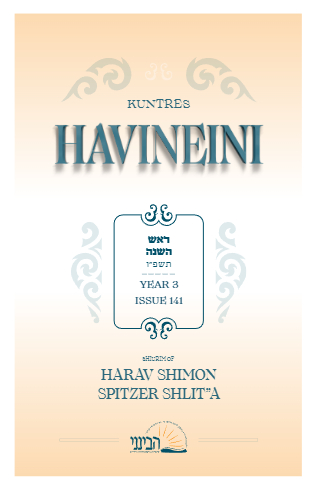
View Original PDF

The Beauty of Our Submissiveness When We Blow Shofar

Havineini | December 10, 2025

The Meaning of Shofar According to the Rambam

Now, we must know that every mitzvah has a method as to how it accomplishes the important task of connecting us with the Ribbono shel Olam. Regarding shofar, the Rambam tells us in Hilchos Teshuvah (3:4): Although the mitzvah of shofar is a הכתוב גזירת, a decree from the Torah, yet there’s a hint within this mitzvah—as if to say to those sleeping, “Awake from your sleep...arise from your slumber. Search your ways, do teshuvah, and remember your Creator.”

Those who forget the truth due to the frivolities of the times, and who err all their years with nothingness and emptiness which does nothing for them.... Look into your souls, improve your ways and actions.... Abandon your evil ways and wayward thoughts.

The Rambam didn’t invent this message—he derived it from the pesukim in the Torah that discuss the mitzvah of shofar. The Midrash explains regarding the pasuk שופר בחודש תקעו (Tehillim 81:4): חודש is an expression of renewal of our deeds, and the word שופר conveys improvement of our ways מעשיכם) שפרו מעשיכם (חדשו. The shofar awakens our heart to change our ways.

The Primary Measure of a Mitzvah Is Its Outcome

This awakening is a direct outcome of the mitzvah of shofar, and the sefarim hakedoshim explain that the shofar has a unique ability to shake up and awaken the innermost aspects of our neshamah... inspiring a person to regret his past ways and resolve to chart a new path in his life—a path of kirvas Elokim, of closeness to Hashem.

Here, the Rambam and the sefarim hakedoshim are teaching us that the most important aspect and measure of a mitzvah is the effect that it has on our souls—to awaken our hearts!

The Shofar Restores Us to our “Original Settings”

The Ribbono shel Olam has commanded us that on this exalted day, the day of Creation—מעשיך תחילת היום זה—to return to the way we were created.

We were all created by Hashem to be straight—with a straight and proper way of thinking and behaving. Shlomo HaMelech tells us (Koheles 7:29), ישר האדם את עשה האלוקים, Hashem created man to be straight, without any thoughts of deception, lies, and crookedness... without the need to speak ill of others, without jealousies and lusts. Because when a person is ישר, he has no jealousy of another person... and the entire root of lust stems from a feeling that we’re lacking something, and thus we seek pleasure elsewhere. A person who’s straight and whole is filled with joy and light and contentedness.

Throughout the year, a person tends to stray from the straightness with which he was created, and it is difficult to find a way to shake him awake—to get him to return to the path of straightness. This state is called ישנים, slumber, because when the mind isn’t working properly, it is essentially asleep. He is asleep, and he must wake up. He must acknowledge and realize that he has strayed onto a path that isn’t good for him. Even if he hasn’t transgressed any major aveiros, he nevertheless realizes that he hasn’t lived up to the command of תהיו קדושים, to live a life of holiness and connection to Hashem.

The Wholeness of a Broken Heart

The shofar has this ability to awaken us—to enable us to realize and internalize that our current path isn’t right for us. It enables us to become healthy once again, the way we were fashioned on the day of Creation. At שופר תקיעת we say תרועה יודעי העם אשרי, and tzaddikim explained the pasuk this way: תרועה is an expression of brokenness, as it says in Tehillim (2:9) ברזל בשבט תרועם, You will smash them with an iron rod. Dovid HaMelech is telling us: תרועה יודעי העם אשרי, blessed is the nation that understands that the most important aspect of this mitzvah is to have a broken heart, and they’re ashamed and humbled. They admit that things weren’t as they should be. This is the central point of blowing shofar!

The shofar has the ability to shake us awake from our slumber—not for just one moment, and then to return to the old, but a permanent awakening that will place us back on the right path; original, the way we were created.

Every Yid Has an Innate Submission to Hashem

The pasuk makes a statement regarding our entire nation. Every individual Yid has an innate knowledge of how to be broken, and of how to return to the straight path on which he was created.

We are, after all, the children of Avraham, Yitzchak, and Yaakov. We possess innate qualities in our very DNA. We’re built properly. Yes, we’re prone to some ga’avah here... some ta’avah there... but these are superficial—they aren’t who we really are. Our neshamah is rooted in kedushah. The root of every Yid is planted in holiness, and for this reason, when we’re awakened at our core, we’re able to transform ourselves completely.

We’re built to accept this awakening—and to realize where we have strayed. We’re uniquely positioned to return to our original exalted state.

The Shofar Can Affect Only a Jewish Soul

The Gemara tells us (Chagigah 9b): Poverty is beautiful for Yidden the way a red band is beautiful on a white horse.

The depth of this Gemara is that “poverty” is a type of mindset, an attitude of feeling “I don’t have everything... I can attain more and better...” that we possess innately. A Yid naturally has the proclivity to brokenness and reconciliation. The beauty of a Yid is that he possesses this feeling. He accepts rebuke, he’s humble and submissive.

If we were to blow a thousand blasts of shofar for a non-Jew, it wouldn’t penetrate... it won’t do anything to arouse humility and brokenness within him. In fact, it would have the opposite effect. For if the shofar were to awaken his essence, it would bring to the fore his essence, which is the opposite of humility and brokenness that is unique to a Yid.

A Yid possesses a pure, inner essence—and so, when he hears the blast of the shofar, he is aroused to be pure and humble and holy... to live a life of elevation, exaltedness, and closeness to Hashem.

The Shofar Arouses Bashfulness Before Hashem

The sefarim bring in the name of the Arizal that the face of the בעל תוקע turns red as he blows the shofar, for one of the important aspects of the shofar is to be ashamed and humbled—and this brings about a transformation from red (the measure of judgment) to white (the measure of mercy) in the Upper Worlds.

These important effects cannot be accomplished by even the most rousing derashah or the most heartfelt and emotional niggun. The Ribbono shel Olam has placed this ability to awaken our inner essence—to infuse us with feelings of regret and a desire for return—into the shofar blast.

This is one of the most important aspects of mitzvah of shofar, in the teachings of the Rambam—and the many other great inyanim are deeper levels that follow this original and important element of shofar.

The Meaning of Shofar According to the Rambam

Now, we must know that every mitzvah has a method as to how it accomplishes the important task of connecting us with the Ribbono shel Olam. Regarding shofar, the Rambam tells us in Hilchos Teshuvah (3:4): Although the mitzvah of shofar is a הכתוב גזירת, a decree from the Torah, yet there’s a hint within this mitzvah—as if to say to those sleeping, “Awake from your sleep...arise from your slumber. Search your ways, do teshuvah, and remember your Creator.”

Those who forget the truth due to the frivolities of the times, and who err all their years with nothingness and emptiness which does nothing for them.... Look into your souls, improve your ways and actions.... Abandon your evil ways and wayward thoughts.

The Rambam didn’t invent this message—he derived it from the pesukim in the Torah that discuss the mitzvah of shofar. The Midrash explains regarding the pasuk שופר בחודש תקעו (Tehillim 81:4): חודש is an expression of renewal of our deeds, and the word שופר conveys improvement of our ways מעשיכם) שפרו מעשיכם (חדשו. The shofar awakens our heart to change our ways.

The Primary Measure of a Mitzvah Is Its Outcome

This awakening is a direct outcome of the mitzvah of shofar, and the sefarim hakedoshim explain that the shofar has a unique ability to shake up and awaken the innermost aspects of our neshamah... inspiring a person to regret his past ways and resolve to chart a new path in his life—a path of kirvas Elokim, of closeness to Hashem.

Here, the Rambam and the sefarim hakedoshim are teaching us that the most important aspect and measure of a mitzvah is the effect that it has on our souls—to awaken our hearts!

The Shofar Restores Us to our “Original Settings”

The Ribbono shel Olam has commanded us that on this exalted day, the day of Creation—מעשיך תחילת היום זה—to return to the way we were created.

We were all created by Hashem to be straight—with a straight and proper way of thinking and behaving. Shlomo HaMelech tells us (Koheles 7:29), ישר האדם את עשה האלוקים, Hashem created man to be straight, without any thoughts of deception, lies, and crookedness... without the need to speak ill of others, without jealousies and lusts. Because when a person is ישר, he has no jealousy of another person... and the entire root of lust stems from a feeling that we’re lacking something, and thus we seek pleasure elsewhere. A person who’s straight and whole is filled with joy and light and contentedness.

Throughout the year, a person tends to stray from the straightness with which he was created, and it is difficult to find a way to shake him awake—to get him to return to the path of straightness. This state is called ישנים, slumber, because when the mind isn’t working properly, it is essentially asleep. He is asleep, and he must wake up. He must acknowledge and realize that he has strayed onto a path that isn’t good for him. Even if he hasn’t transgressed any major aveiros, he nevertheless realizes that he hasn’t lived up to the command of תהיו קדושים, to live a life of holiness and connection to Hashem.

The Wholeness of a Broken Heart

The shofar has this ability to awaken us—to enable us to realize and internalize that our current path isn’t right for us. It enables us to become healthy once again, the way we were fashioned on the day of Creation. At שופר תקיעת we say תרועה יודעי העם אשרי, and tzaddikim explained the pasuk this way: תרועה is an expression of brokenness, as it says in Tehillim (2:9) ברזל בשבט תרועם, You will smash them with an iron rod. Dovid HaMelech is telling us: תרועה יודעי העם אשרי, blessed is the nation that understands that the most important aspect of this mitzvah is to have a broken heart, and they’re ashamed and humbled. They admit that things weren’t as they should be. This is the central point of blowing shofar!

The shofar has the ability to shake us awake from our slumber—not for just one moment, and then to return to the old, but a permanent awakening that will place us back on the right path; original, the way we were created.

Every Yid Has an Innate Submission to Hashem

The pasuk makes a statement regarding our entire nation. Every individual Yid has an innate knowledge of how to be broken, and of how to return to the straight path on which he was created.

We are, after all, the children of Avraham, Yitzchak, and Yaakov. We possess innate qualities in our very DNA. We’re built properly. Yes, we’re prone to some ga’avah here... some ta’avah there... but these are superficial—they aren’t who we really are. Our neshamah is rooted in kedushah. The root of every Yid is planted in holiness, and for this reason, when we’re awakened at our core, we’re able to transform ourselves completely.

We’re built to accept this awakening—and to realize where we have strayed. We’re uniquely positioned to return to our original exalted state.

The Shofar Can Affect Only a Jewish Soul

The Gemara tells us (Chagigah 9b): Poverty is beautiful for Yidden the way a red band is beautiful on a white horse.

The depth of this Gemara is that “poverty” is a type of mindset, an attitude of feeling “I don’t have everything... I can attain more and better...” that we possess innately. A Yid naturally has the proclivity to brokenness and reconciliation. The beauty of a Yid is that he possesses this feeling. He accepts rebuke, he’s humble and submissive.

If we were to blow a thousand blasts of shofar for a non-Jew, it wouldn’t penetrate... it won’t do anything to arouse humility and brokenness within him. In fact, it would have the opposite effect. For if the shofar were to awaken his essence, it would bring to the fore his essence, which is the opposite of humility and brokenness that is unique to a Yid.

A Yid possesses a pure, inner essence—and so, when he hears the blast of the shofar, he is aroused to be pure and humble and holy... to live a life of elevation, exaltedness, and closeness to Hashem.

The Shofar Arouses Bashfulness Before Hashem

The sefarim bring in the name of the Arizal that the face of the בעל תוקע turns red as he blows the shofar, for one of the important aspects of the shofar is to be ashamed and humbled—and this brings about a transformation from red (the measure of judgment) to white (the measure of mercy) in the Upper Worlds.

These important effects cannot be accomplished by even the most rousing derashah or the most heartfelt and emotional niggun. The Ribbono shel Olam has placed this ability to awaken our inner essence—to infuse us with feelings of regret and a desire for return—into the shofar blast.

This is one of the most important aspects of mitzvah of shofar, in the teachings of the Rambam—and the many other great inyanim are deeper levels that follow this original and important element of shofar.

PDF Preview