Haftorah of Sidra Vayelech
Questions on the Sidra | September 25, 2024
Print This Article
View Original PDF

Haftorah of Sidra Vayelech

Questions on the Sidra | December 31, 2025

When נצבים and וילך are separate, Sidra נצבים will have been read on the Shabbos before Rosh HaShonnoh and Sidra וילך will be read on the Shabbos between Rosh HaShonnoh and Yom Kippur. Shabbos וילך is then known as “Shabbos ‘Shuvoh’” )שבת"שובה(" taking its name from the first word of the Haftorah.

The first part of this Haftorah is taken from Sefer Hoshe’a, the second part (omitted in some communities) is from Sefer Michoh and the Haftorah finishes with a section from Sefer Yoel. These three Books are of the shorter Books of the Prophets which together make up “The Twelve.”

1. The Novvi Hoshe’a

A contemporary of Amos and Yonah, lived in the last years of the Northern Kingdom of Israel. The king, Yerav’am II son of Yeho’ash, brought economic prosperity and even luxury to his land but with these came a false sense of security. The people, led by their king, turned away from HaShem and His Torah and Mitzvos and the result was moral collapse. After Yerav’am came a series of usurpers and opportunists and the country declined further into a downward spiral of decadence and idolatry. When the new threat of Assyria loomed, instead of returning to HaShem, the leaders of the nation tried to form alliances with their neighbours and thought that in this way they would be safe.

2. Hoshe’a’s Message

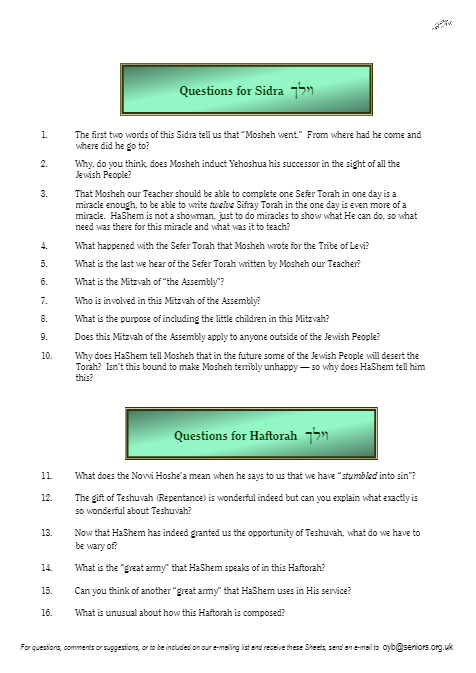
Hoshe’a continually proclaimed to the people that if they would but return to HaShem and His Torah, HaShem would take them back again and protect them from all danger. His exhortation to the people to Teshuvah, repentance — “Return, Jewish People, to HaShem your L-rd for you have stumbled in your sins!” — is the opening appeal of this Haftorah and is eminently suited to this Shabbos which falls in the Ten Days of Penitence which are from the Day of Judgement, Rosh HaShonnoh, till the Day of Atonement, Yom Kippur. In his plea to the people to repent, the Novvi maintains that it is not as if the Jewish People have made a conscious, deliberate decision to desert HaShem and His Torah and Mitzvos. Not so! Hoshe’a says that they have only stumbled into sin and he calls to them to cease their stumbling and instead repent of their evil ways. Let them return to HaShem Who is always merciful and ready to take them back.

3. The Importance of Sincere Repentance

But they must take care not to see HaShem’s patience as if He is willing to overlook their wrongdoing and that all is well. Those who are righteous understand the ways of HaShem and that repentance is the prerequisite to being taken back again. But the wicked who resist HaShem’s call to them to genuinely repent of their sinful ways, deliberately misunderstand HaShem’s ways and they will indeed stumble because of that very mercy.

4. The Novvi Michoh

The second part of the Haftorah comes from Sefer Michoh. (This brief passage of three Pessukim is also the conclusion of the Haftorah on Yom Kippur afternoon.) The Novvi Michoh, a much younger contemporary of Yeshayohu, was appointed by HaShem to proclaim His message of criticism of those who exploited the poor and he was fearless in warning the selfish and over-confident rich of the calamity that will come upon them all if they persisted in their heartless behaviour towards the poor. Michoh often speaks of the mission of the Jewish People and of HaShem’s forgiveness of those who return to HaShem and His Torah.

5. The Novvi Yoel

The third part of the Haftorah comes from Sefer Yoel. In this passage, the Novvi Yoel warns the people of a terrible plague of locusts which is about to come upon the Land of Israel as punishment for the Nation’s backsliding. The vast cloud of destruction, “My great army that I send against you” indeed devastated the whole country and brought in its wake starvation and ruin.

6. A Call for Communal Repentance

At the same time, in the words of Yoel are intended also a warning to the people about the coming invasion by the “swarming and strong” armies of the enemies, first Asshur and then Babylon, who were to threaten the Jewish Kingdom. Yoel calls for a great communal effort of repentance: “Blow the Shofar in Tsiyyon, announce a national fast day, call a great assembly!” Everybody, young and old, man and boy, woman and girl; Kohannim and Torah scholars and commoners — let them all cry out to HaShem in sincere repentance that He should save them from the devastating plague and national calamity.

7. HaShem’s Response

In response to their genuine Teshuvah, HaShem relents and indeed bestows His blessing upon the land. HaShem answers the supplications of His People. He promises to bring rain and that the granaries will be full again with wheat as will the storage vats be full with wine and oil. Indeed, HaShem will compensate the people for the ruin and destruction brought by “His great army” and “you will eat and be satisfied and you will praise the Name of HaShem your L-rd who has dealt wondrously with you and My People will no more be ashamed or embarrassed because of their sins.” Such is the power of genuine Teshuvah.

When נצבים and וילך are separate, Sidra נצבים will have been read on the Shabbos before Rosh HaShonnoh and Sidra וילך will be read on the Shabbos between Rosh HaShonnoh and Yom Kippur. Shabbos וילך is then known as “Shabbos ‘Shuvoh’” )שבת"שובה(" taking its name from the first word of the Haftorah.

The first part of this Haftorah is taken from Sefer Hoshe’a, the second part (omitted in some communities) is from Sefer Michoh and the Haftorah finishes with a section from Sefer Yoel. These three Books are of the shorter Books of the Prophets which together make up “The Twelve.”

1. The Novvi Hoshe’a

A contemporary of Amos and Yonah, lived in the last years of the Northern Kingdom of Israel. The king, Yerav’am II son of Yeho’ash, brought economic prosperity and even luxury to his land but with these came a false sense of security. The people, led by their king, turned away from HaShem and His Torah and Mitzvos and the result was moral collapse. After Yerav’am came a series of usurpers and opportunists and the country declined further into a downward spiral of decadence and idolatry. When the new threat of Assyria loomed, instead of returning to HaShem, the leaders of the nation tried to form alliances with their neighbours and thought that in this way they would be safe.

2. Hoshe’a’s Message

Hoshe’a continually proclaimed to the people that if they would but return to HaShem and His Torah, HaShem would take them back again and protect them from all danger. His exhortation to the people to Teshuvah, repentance — “Return, Jewish People, to HaShem your L-rd for you have stumbled in your sins!” — is the opening appeal of this Haftorah and is eminently suited to this Shabbos which falls in the Ten Days of Penitence which are from the Day of Judgement, Rosh HaShonnoh, till the Day of Atonement, Yom Kippur. In his plea to the people to repent, the Novvi maintains that it is not as if the Jewish People have made a conscious, deliberate decision to desert HaShem and His Torah and Mitzvos. Not so! Hoshe’a says that they have only stumbled into sin and he calls to them to cease their stumbling and instead repent of their evil ways. Let them return to HaShem Who is always merciful and ready to take them back.

3. The Importance of Sincere Repentance

But they must take care not to see HaShem’s patience as if He is willing to overlook their wrongdoing and that all is well. Those who are righteous understand the ways of HaShem and that repentance is the prerequisite to being taken back again. But the wicked who resist HaShem’s call to them to genuinely repent of their sinful ways, deliberately misunderstand HaShem’s ways and they will indeed stumble because of that very mercy.

4. The Novvi Michoh

The second part of the Haftorah comes from Sefer Michoh. (This brief passage of three Pessukim is also the conclusion of the Haftorah on Yom Kippur afternoon.) The Novvi Michoh, a much younger contemporary of Yeshayohu, was appointed by HaShem to proclaim His message of criticism of those who exploited the poor and he was fearless in warning the selfish and over-confident rich of the calamity that will come upon them all if they persisted in their heartless behaviour towards the poor. Michoh often speaks of the mission of the Jewish People and of HaShem’s forgiveness of those who return to HaShem and His Torah.

5. The Novvi Yoel

The third part of the Haftorah comes from Sefer Yoel. In this passage, the Novvi Yoel warns the people of a terrible plague of locusts which is about to come upon the Land of Israel as punishment for the Nation’s backsliding. The vast cloud of destruction, “My great army that I send against you” indeed devastated the whole country and brought in its wake starvation and ruin.

6. A Call for Communal Repentance

At the same time, in the words of Yoel are intended also a warning to the people about the coming invasion by the “swarming and strong” armies of the enemies, first Asshur and then Babylon, who were to threaten the Jewish Kingdom. Yoel calls for a great communal effort of repentance: “Blow the Shofar in Tsiyyon, announce a national fast day, call a great assembly!” Everybody, young and old, man and boy, woman and girl; Kohannim and Torah scholars and commoners — let them all cry out to HaShem in sincere repentance that He should save them from the devastating plague and national calamity.

7. HaShem’s Response

In response to their genuine Teshuvah, HaShem relents and indeed bestows His blessing upon the land. HaShem answers the supplications of His People. He promises to bring rain and that the granaries will be full again with wheat as will the storage vats be full with wine and oil. Indeed, HaShem will compensate the people for the ruin and destruction brought by “His great army” and “you will eat and be satisfied and you will praise the Name of HaShem your L-rd who has dealt wondrously with you and My People will no more be ashamed or embarrassed because of their sins.” Such is the power of genuine Teshuvah.

PDF Preview