Classic Concepts: The Waters of the Flood
Classic Concepts
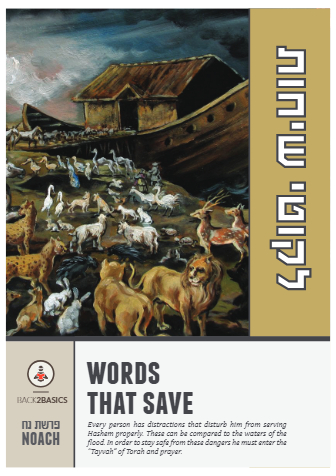
This week’s Parsha tells the story of the flood that covered the entire world in the times of Noach. As we have discussed on many occasions, the stories recounted in the Torah are not merely a description of our history, but are rather are coming to teach us valuable and practical lessons to incorporate into our daily lives. The waters that flooded the world, represent worries that may disturb us from serving Hashem properly, and the תיבה - ark is the means of protection which will ensure our safety, as will be explained further on.
The waters of the flood came from two places, the depths of the earth bellow, and the heavens above. Both of these waters represent different types of struggles that could disrupt a person’s service of Hashem. The water which arose from the depths symbolizes the struggles which come from “low,” physical places, such as the worry of providing for one’s family. The waters which descended from on high symbolize a more refined and “spiritual” disturbance, such as community work which comes in the way of a person’s personal Avoda. Obviously we cannot negate the importance of serving the community, but if it is coming in the way of proper performance of Torah and Mitzvos, and it does not follow the laws of Shulchan Aruch, it obviously is not the correct thing. Failure to recognize the proper time and place for such work may eventually bring a person to confuse physical pursuits for spiritual ones.
The way to ensure one remains spiritually safe and secure amidst the previously mentioned unsettling “waters”, is to enter the תיבה. The Baal Shem Tov explains the תיבה (which can also be translated as “word” in Hebrew) to mean the words of Davening and the words of Torah. Through one immersing himself in these words, he will ensure that none of the surrounding waters will affect him negatively.
לקוטי שיחות פרשת נח
ד. די "מים הזדונים" (בייזע וואסערן) פון מבול ווערן איינגעטיילט אין צוויי טיילן: א. תהום רבה, ב. ארובות השמים. אזוי אויך ווערן די מענטשלעכע טירדות און שטערונגען איינגעטיילט אויף די זעלבע צוויי טיילן:
"תהום רבה" (א גרויסער אפגרונט) מיינט די טירדות פון גשמיות'דיקע, נידעריקע ענינים. טירדות הפרנסה א. א. וו. "ארובות השמים" מיינט טירדות וועלכע קומען פון רוחניות'דיקע, הויכע ענינים, אזוי ווי עסקנות ציבורית וכדומה, וועלכע שטערן אבער דעם מענטשן צו לערנען און מקיים זיין מצוות.
אמת טאקע, מען דארף טאן אין עסקנות ציבורית, אבער דאס דארף ניט שטערן צו לערנען תורה און מקיים זיין מצוות. ווארום דער ענין פון מצוות איז, אז דורך זיי ווערט "ואתם הדבקים בד' אלקיכם חיים כולכם היום" — זיי פארבינדן דעם מענטשן וועלכער איז מקיים די מצוה מיט דעם אויבערשטן, און דורך דעם ווערט נמשך צו אים ג-טלעכע חיות. אבער אויב עס פעלט אין דעם — איז וואס איז דער אויפטו פון זיין פארנעמען זיך אין די אלע זאכן, בשעת ער טוט ניט דאס וואס עס שטייט אין שולחן ערוך.
דאס וואס ער טענה'ט, אז ער איז פארנומען מיט "ארובות השמים" — מיט רוחניות'דיקע ענינים — איז א טעות. די דאזיקע טענה קומט ניט פון נפש האלקית נאר פון נפש הבהמית. די בעסטע ראי' אויף דעם איז, אז וויבאלד אז דאס איז א שטער צו לימוד התורה און קיום המצוות לויט דיין פון שולחן ערוך — איז דאס זיכער אן ענין וואס איז היפך פון קדושה.
און וויבאלד אז עס איז היפך פון קדושה, איז כאטש ער איז דאך דערווייל פארנומען מיט "ארובות השמים", אבער סוף כל סוף גייט ער ר"ל נידעריקער און נידעריקער, ביז אז פון "ארובות השמים" ווערט "תהום רבה".
ה. די עצה צו די מי המבול (די וואסערן פון מבול), — סיי פון תהום רבה און סיי פון ארובות השמים — איז "בא אל התיבה" (קום אריין אין דער תיבה). "תיבה" — טייטשט דער בעל שם טוב — מיינט די תיבות (ווערטער) פון תורה און תפילה. אריינקומען אין "תיבה" מיינט, אז מען דארף אריינגיין אין די אותיות פון תורה און תפילה — זיין ארומגערינגלט פון זיי, וואס דעמאלט איז זיכער אז קיין זאך וועט אים נישט פארפלייצן, און דער "נח איש צדיק" מיט זיינע בני בית וועלן בלייבן גאנץ.