A Call to Action
Hama'aseh Hu Haikar | March 28, 2025
Print This Article
View Original PDF

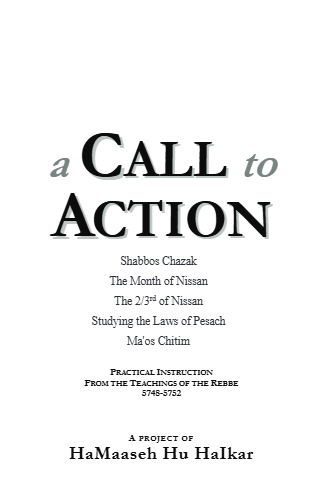
A Call to Action

Hama'aseh Hu Haikar | December 10, 2025

Unfortunately, there has been widespread neglect of the custom to recite the daily “Nasi” and even more so regarding the subsequent Yehi Ratzon prayer. It is a mitzvah to bolster this custom.

Counting the descendants of the two sons of Yosef, Menasheh and Ephraim, as two tribes, and excluding the priestly tribe of Levi, whose duty it was to perform the actual services in the Mishkan.

Orach Chayim 429:14

How did reciting the Nasi fall into neglect?

Note that the Alter Rebbe does not mention this custom in his Siddur. There are, of course, additional matters that the Alter Rebbe omits from his Siddur, despite the fact that they are indeed our custom. However, even when this custom was subsequently added to Siddur Torah Or and Tehillat Hashem, it was merely appended to the end of the Siddur, following all the other prayers. Further, it was merely mentioned in a footnote to the Torah reading for Chanukah (for that reading was likewise belatedly appended to the Siddur), which is also followed by the Yehi Ratzon prayer recited after the daily Nasi.

This, perhaps, is the reason for the unfortunate neglect of the custom to recite the Nasi, and even greater neglect of the Yehi Ratzon, which, although mentioned in works of foremost Torah authorities, is not mentioned in the Shulchan Aruch’s discussion on reciting the Nasi…

It is a mitzvah to bolster this custom. Parshas Tazria 5747, fn. 27. Hisvaaduyos, p. 134.

Reminders are essential

On Chanukah, these same portions are read to the congregation from the Torah and therefore do not require further promoting. Conversely, during Nissan, each person reads the Nasi to themselves, which is why we need to actively promote and remind everyone to recite it.

The essential point is that through promoting and observing this custom, we hasten the dedication of the Third Beis HaMikdash (ibid., p. 134).

A Jewish custom is precious

It is a mitzvah to bolster this custom, and to do so in a manner befitting the activity of carrying out a custom described by G-d as “the practices instituted by the Sages are more important and cherished to Me than My own commandments,” as befits the preciousness of a custom established by Jewry.

In this regard, reciting the Nasi may be compared to the custom of Hakafos on Simchas Torah (ibid., p. 134).

In addition to similar propitious dates, e.g., the 18th of Elul, when the Yeshivah officially opened for study. Parshas Tazria, 2 Nissan, 5747. Hisvaaduyos, p. 134.
Unfortunately, there has been widespread neglect of the custom to recite the daily “Nasi” and even more so regarding the subsequent Yehi Ratzon prayer. It is a mitzvah to bolster this custom.

Counting the descendants of the two sons of Yosef, Menasheh and Ephraim, as two tribes, and excluding the priestly tribe of Levi, whose duty it was to perform the actual services in the Mishkan.

Orach Chayim 429:14

How did reciting the Nasi fall into neglect?

Note that the Alter Rebbe does not mention this custom in his Siddur. There are, of course, additional matters that the Alter Rebbe omits from his Siddur, despite the fact that they are indeed our custom. However, even when this custom was subsequently added to Siddur Torah Or and Tehillat Hashem, it was merely appended to the end of the Siddur, following all the other prayers. Further, it was merely mentioned in a footnote to the Torah reading for Chanukah (for that reading was likewise belatedly appended to the Siddur), which is also followed by the Yehi Ratzon prayer recited after the daily Nasi.

This, perhaps, is the reason for the unfortunate neglect of the custom to recite the Nasi, and even greater neglect of the Yehi Ratzon, which, although mentioned in works of foremost Torah authorities, is not mentioned in the Shulchan Aruch’s discussion on reciting the Nasi…

It is a mitzvah to bolster this custom. Parshas Tazria 5747, fn. 27. Hisvaaduyos, p. 134.

Reminders are essential

On Chanukah, these same portions are read to the congregation from the Torah and therefore do not require further promoting. Conversely, during Nissan, each person reads the Nasi to themselves, which is why we need to actively promote and remind everyone to recite it.

The essential point is that through promoting and observing this custom, we hasten the dedication of the Third Beis HaMikdash (ibid., p. 134).

A Jewish custom is precious

It is a mitzvah to bolster this custom, and to do so in a manner befitting the activity of carrying out a custom described by G-d as “the practices instituted by the Sages are more important and cherished to Me than My own commandments,” as befits the preciousness of a custom established by Jewry.

In this regard, reciting the Nasi may be compared to the custom of Hakafos on Simchas Torah (ibid., p. 134).

In addition to similar propitious dates, e.g., the 18th of Elul, when the Yeshivah officially opened for study. Parshas Tazria, 2 Nissan, 5747. Hisvaaduyos, p. 134.

PDF Preview