Each son has an Echod
Print This Article
View Original PDF

Each son has an Echod

MAOR CENTRE publications | June 27, 2025

It was said in the name of Rebbe Rashab that the reason the Haggadah writes “...אחד חכם אחד רשע”, writing אחד (One) by each son, is to show that they each have an Echod, a Neshama that is one with Hashem.

However, he would “put-down” the Chochom (wise son), saying: that the Chochom is placed next to and likened to the Rasha (wicked son).

He would also explain that the תם (simple son) is the concept of תמימות (simple sincerity and completeness in the service of Hashem).

The son that he praised the most was the שאינו יודע לשאול (the one who doesn't know how to ask). When the Neshama is Above, G-dliness is the obvious reality and it has no questions or doubts. But when the Neshama comes down below, G-dliness becomes like a novel idea and it may even question it. The שאינו יודע לשאול is on such a high level that even though his Neshama is down here in the physical world, he doesn’t have questions about G-dliness.

~ First night Seder 5698
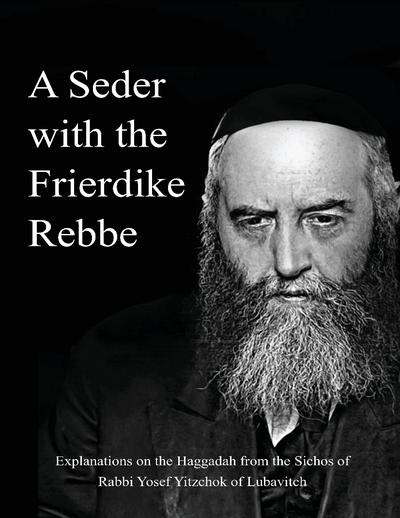
It was said in the name of Rebbe Rashab that the reason the Haggadah writes “...אחד חכם אחד רשע”, writing אחד (One) by each son, is to show that they each have an Echod, a Neshama that is one with Hashem.

However, he would “put-down” the Chochom (wise son), saying: that the Chochom is placed next to and likened to the Rasha (wicked son).

He would also explain that the תם (simple son) is the concept of תמימות (simple sincerity and completeness in the service of Hashem).

The son that he praised the most was the שאינו יודע לשאול (the one who doesn't know how to ask). When the Neshama is Above, G-dliness is the obvious reality and it has no questions or doubts. But when the Neshama comes down below, G-dliness becomes like a novel idea and it may even question it. The שאינו יודע לשאול is on such a high level that even though his Neshama is down here in the physical world, he doesn’t have questions about G-dliness.

~ First night Seder 5698

PDF Preview