The Kedusha of Shabbos and the Essence of the Jewish Soul
Print This Article
View Original PDF

The Kedusha of Shabbos and the Essence of the Jewish Soul

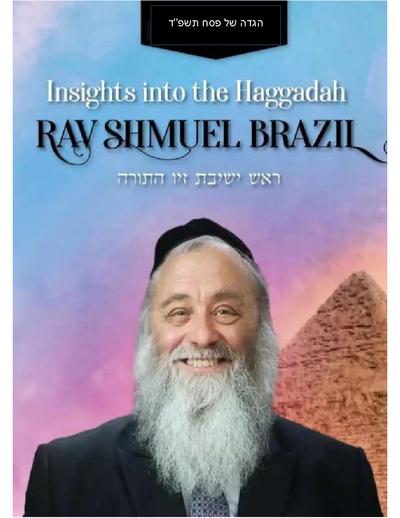
Parsha with Rabbi Shmuel Brazil | June 27, 2025

With this we can understand why Pesach is called Shabbos (Vayikrah 23,15). It is the kedusha of Shabbos that subdues all the evil because it is מעין עולם הבא. Instead of the Aitz Tov Verah which we experience during the week as we make choices with uncertainty, on Shabbos there is clarity because of our neshamah yesairah as we taste from the Aitz Hachayim.

On Shabbos we are left with the two letter שן of נחש שטן as it is much easier to discipline ourselves not to fall into chait. That is why two time ןש including the words add up to שבת. On Shabbos the שחנ ןטש team are weakened and easily conquered as their gematriah of ביום שבת equals בלי ןטש נחש.

One added note to this is that the acronym of נחש and שטן is נש which means to forget as the passuk says כי נשני אלקים. They strive to make a Yid forget his תכלית and mission in the world. Shabbos is the mitzvah of זכור את יום השבת that remembering one's purpose comes with the Shabbos. The Imrei Emes said יום שבתון אין לשכוח that Shabbos doesn't let one forget!

Now we can understand the response that the Baal Haggadah conveys to the father of the Rasha son ויניש תא ההקה. What seems that this son earns the title of רשע is because he excluded himself from Hashem as he says מה העבודה הזאת םכל and unlike the Chacham he totally omits the mentioning of Hashem's name (Chizkuni). At first this sounds like a violent response. Angriness and rejection to this degree towards a child when trying to bring him into your circle, is not a suggested option and is doomed to be unsuccessful.

We therefore suggest that the word קהה is from the lashon of כהה which means weak. Obviously this rasha child feels convinced that he has no connection with Hashem maybe because he feels that Hashem severed this relationship with him because of his many spiritual failures. Therefore he doesn't mention Hashem's name because he looks at himself being rejected from Hashem and believes that he has no relationship with him.

That is why the Baal Haggadah says "ולפי שהוציא את עצמו מן הכלל " According to the way his mouth talks ולפי, he removed himself from the כלל. What כלל? ואהבת לרעך כמוך as Rabbe Akiva said זה ללכ גדול בתורה. Why? We can answer that the word לרעך in the passuk goes on Hashem as Rashi comments in the passuk (Mishlei 6) .אם ערבת לרעך Therefore the passuk is saying that you should love Hashem because He is like you that you are a part of Him for His neshama resides in you. That Pinteleh Yid is called כמוך which is gematriah the Name םיהלא. When a Yid realizes כי חלק ה' עמו that Hashem never leaves us totally, then it is easier to do teshuvah and restart the engine of avodas Hashem. This is what the passuk is saying ואהבת לרעך כמוך that you can love Hashem when one realizes that כמוך.

You possess divineness in your essence. This was proven in Mitzrayim by the fact that Hashem did not allow us to sink into the 50th level.

That is why the Torah commanded not to break a bone while eating the korban Pesach. The Korban represents Yisrael who are compared to a sheep . הש פזורה ישראל Sometimes we are in a state of פזורה spread out and have distanced ourselves far away from our source, by our actions and way of thinking. At this station we are מחרן which causes ףא ןורח angriness from Hashem (Rashi Bereishis 11,32), the gematriah of פזורה. Nevertheless, עצם לא תשברו בו even when one is in this matzav nevertheless don't break and separate from yourself םצע your essence of כמוך which still remains intact.

The passuk says (Vayikra 25,55) םה ידבע יכ םירצמ ץראמ םתוא יתאצוה רשא. Rashi says שטרי קודם my document of ownership preceded anyone else. כל המשעבדם מלמטה כאילו משעבדן מלמעלה. Whoever enslaves them down on earth is considered as if they are enslaved in shmayim as well. Yisrael are called עבדי Hashem's servants. The reason being because of כמוך they have a neshamah. This is hinted in the gematria that כמוך and עבדי are the same gematriah. This relationship declares that even if one, which includes the yetzer hara, enslaves a Yid on earth for the pursuit of earthly things, nevertheless his essence which is the Pinteleh Yid in heaven is still attached to him. It might look כאילו as if it is detached but that is not the truth.

Rashi wrote on כי עבדי הם the words שטרי קודם. If one takes the gematriah of םדוק ירטש יכ (including the three words) it adds up to שבת. The Kedusha of Shabbos is automatic and our hands are off limits to make it happen or not. So too, our relationship of עבדי ה' it will be our core essence no matter how far we drift away from our source.

The father realizes that his son mistakenly הוציא עצמו removed even his essence away from himself. כפר בעיקר He denies the ownership of his essence the Pinteleh Yid. The father penetrates through the surface of his son's inquiry, and he perceives the nature of his son's question as a masqueraded call for help and acceptance, for otherwise he would not even have showed up at the Seder. Even though he didn't say it explicitly the perceptive parent will read between the lines and understand that what is really bothering him is אילו היה שם לא היה נגאל the way he is now he never would have been redeemed so why bother with this Pesach ritual at all.

The father looks at him with kind embracing warm eyes and says my dear son. I know what you are thinking that if you were there in Mitzrayim you would have been finished. But that is not true. The Ari writes that Am Yisrael in Mitzrayim were standing at the edge of the 50th level of tumah and would it have not been for Hashem's revelation at the night of the Pesach our entire nation would have sunken into the 50th level of no return. What happened? That night of the Seder Hashem's revelation in Mitzrayim removed the Satan yetzer harah and the tumas Hanachash from our midst which did not allow us to sink any further. This night of Pesach at our holy Seder the same thing occurs to every Yid because the Satan and Nachash are not sitting with us. In these holy hours there is no focus on past deeds and חט but rather the שן שן of tikkun and our renewed commitment. On the night of Pesach Am Yisrael was born into a holy nation to Hashem and every Pesach night we are born again and that includes you too right now. The term הקהה את שיניו means weaken his argument with ()את the explanation of the two shins which tonight stand alone, without the influence of the Nachash and the Satan. Don't be רפוכ רקיעב

Now we can appreciate an insight from the Haggadah שערי ליל הסדר the author gives an elaborates on an answer given to why didn't our Chachamim make a תקנה to manifest one of the aspects of Yetzias Mitzrayim which was רכוש גדול leaving with a great wealth. After all matzah maror charoses korban pesach all symbolize parts of the geulah and servitude. The Magen Avraham brings that the Maharil who was rich and lent money to goyim by taking collateral in gold and silver vessels, would display and even use these collateral at the night of the Seder in order to demonstrate the part of geulah from Mitzrayim with a great wealth. The Chasam Sofer however asks how could the Maharil use these goyish vessels when they were tamei and have to be tovailed? He answers that the kedusha of the Night of the Seder is so holy that the tumah of these goyish vessels were automatically blasted away ak"d.

Chazal tell us רצוננו לראות את מלכנו ומה שמעכב שאור שבעיסה ושעבוד גלויות every Yid deep inside desires fervently to serve Hashem. It is his yetzer harah and the evil influence of the culture and his surroundings that turn him away from Hashem. So if the night of the Seder can remove all the tumah from the goyim that lie in their vessels, how much more so can it blast out tumah of the goyim and galus from an alienated child from Torah who even possesses a Pinteleh Yid that never gets defiled. This is the encouraging message that the father must give to his self perceived rasha son on the night of the Seder.

That is reason why throughout the Seder we drink כוסות of wine. The gematriah of סוכ is the same as כמוך which symbolizes the Pintelleh Yid through which we merited to have the geulah. The כוס with wine brings out the דוס this eternal secret of the Yid that never was in galus or defiled. As Chazal say נכנס יין יצא סוד as they share the same gematriah.
With this we can understand why Pesach is called Shabbos (Vayikrah 23,15). It is the kedusha of Shabbos that subdues all the evil because it is מעין עולם הבא. Instead of the Aitz Tov Verah which we experience during the week as we make choices with uncertainty, on Shabbos there is clarity because of our neshamah yesairah as we taste from the Aitz Hachayim.

On Shabbos we are left with the two letter שן of נחש שטן as it is much easier to discipline ourselves not to fall into chait. That is why two time ןש including the words add up to שבת. On Shabbos the שחנ ןטש team are weakened and easily conquered as their gematriah of ביום שבת equals בלי ןטש נחש.

One added note to this is that the acronym of נחש and שטן is נש which means to forget as the passuk says כי נשני אלקים. They strive to make a Yid forget his תכלית and mission in the world. Shabbos is the mitzvah of זכור את יום השבת that remembering one's purpose comes with the Shabbos. The Imrei Emes said יום שבתון אין לשכוח that Shabbos doesn't let one forget!

Now we can understand the response that the Baal Haggadah conveys to the father of the Rasha son ויניש תא ההקה. What seems that this son earns the title of רשע is because he excluded himself from Hashem as he says מה העבודה הזאת םכל and unlike the Chacham he totally omits the mentioning of Hashem's name (Chizkuni). At first this sounds like a violent response. Angriness and rejection to this degree towards a child when trying to bring him into your circle, is not a suggested option and is doomed to be unsuccessful.

We therefore suggest that the word קהה is from the lashon of כהה which means weak. Obviously this rasha child feels convinced that he has no connection with Hashem maybe because he feels that Hashem severed this relationship with him because of his many spiritual failures. Therefore he doesn't mention Hashem's name because he looks at himself being rejected from Hashem and believes that he has no relationship with him.

That is why the Baal Haggadah says "ולפי שהוציא את עצמו מן הכלל " According to the way his mouth talks ולפי, he removed himself from the כלל. What כלל? ואהבת לרעך כמוך as Rabbe Akiva said זה ללכ גדול בתורה. Why? We can answer that the word לרעך in the passuk goes on Hashem as Rashi comments in the passuk (Mishlei 6) .אם ערבת לרעך Therefore the passuk is saying that you should love Hashem because He is like you that you are a part of Him for His neshama resides in you. That Pinteleh Yid is called כמוך which is gematriah the Name םיהלא. When a Yid realizes כי חלק ה' עמו that Hashem never leaves us totally, then it is easier to do teshuvah and restart the engine of avodas Hashem. This is what the passuk is saying ואהבת לרעך כמוך that you can love Hashem when one realizes that כמוך.

You possess divineness in your essence. This was proven in Mitzrayim by the fact that Hashem did not allow us to sink into the 50th level.

That is why the Torah commanded not to break a bone while eating the korban Pesach. The Korban represents Yisrael who are compared to a sheep . הש פזורה ישראל Sometimes we are in a state of פזורה spread out and have distanced ourselves far away from our source, by our actions and way of thinking. At this station we are מחרן which causes ףא ןורח angriness from Hashem (Rashi Bereishis 11,32), the gematriah of פזורה. Nevertheless, עצם לא תשברו בו even when one is in this matzav nevertheless don't break and separate from yourself םצע your essence of כמוך which still remains intact.

The passuk says (Vayikra 25,55) םה ידבע יכ םירצמ ץראמ םתוא יתאצוה רשא. Rashi says שטרי קודם my document of ownership preceded anyone else. כל המשעבדם מלמטה כאילו משעבדן מלמעלה. Whoever enslaves them down on earth is considered as if they are enslaved in shmayim as well. Yisrael are called עבדי Hashem's servants. The reason being because of כמוך they have a neshamah. This is hinted in the gematria that כמוך and עבדי are the same gematriah. This relationship declares that even if one, which includes the yetzer hara, enslaves a Yid on earth for the pursuit of earthly things, nevertheless his essence which is the Pinteleh Yid in heaven is still attached to him. It might look כאילו as if it is detached but that is not the truth.

Rashi wrote on כי עבדי הם the words שטרי קודם. If one takes the gematriah of םדוק ירטש יכ (including the three words) it adds up to שבת. The Kedusha of Shabbos is automatic and our hands are off limits to make it happen or not. So too, our relationship of עבדי ה' it will be our core essence no matter how far we drift away from our source.

The father realizes that his son mistakenly הוציא עצמו removed even his essence away from himself. כפר בעיקר He denies the ownership of his essence the Pinteleh Yid. The father penetrates through the surface of his son's inquiry, and he perceives the nature of his son's question as a masqueraded call for help and acceptance, for otherwise he would not even have showed up at the Seder. Even though he didn't say it explicitly the perceptive parent will read between the lines and understand that what is really bothering him is אילו היה שם לא היה נגאל the way he is now he never would have been redeemed so why bother with this Pesach ritual at all.

The father looks at him with kind embracing warm eyes and says my dear son. I know what you are thinking that if you were there in Mitzrayim you would have been finished. But that is not true. The Ari writes that Am Yisrael in Mitzrayim were standing at the edge of the 50th level of tumah and would it have not been for Hashem's revelation at the night of the Pesach our entire nation would have sunken into the 50th level of no return. What happened? That night of the Seder Hashem's revelation in Mitzrayim removed the Satan yetzer harah and the tumas Hanachash from our midst which did not allow us to sink any further. This night of Pesach at our holy Seder the same thing occurs to every Yid because the Satan and Nachash are not sitting with us. In these holy hours there is no focus on past deeds and חט but rather the שן שן of tikkun and our renewed commitment. On the night of Pesach Am Yisrael was born into a holy nation to Hashem and every Pesach night we are born again and that includes you too right now. The term הקהה את שיניו means weaken his argument with ()את the explanation of the two shins which tonight stand alone, without the influence of the Nachash and the Satan. Don't be רפוכ רקיעב

Now we can appreciate an insight from the Haggadah שערי ליל הסדר the author gives an elaborates on an answer given to why didn't our Chachamim make a תקנה to manifest one of the aspects of Yetzias Mitzrayim which was רכוש גדול leaving with a great wealth. After all matzah maror charoses korban pesach all symbolize parts of the geulah and servitude. The Magen Avraham brings that the Maharil who was rich and lent money to goyim by taking collateral in gold and silver vessels, would display and even use these collateral at the night of the Seder in order to demonstrate the part of geulah from Mitzrayim with a great wealth. The Chasam Sofer however asks how could the Maharil use these goyish vessels when they were tamei and have to be tovailed? He answers that the kedusha of the Night of the Seder is so holy that the tumah of these goyish vessels were automatically blasted away ak"d.

Chazal tell us רצוננו לראות את מלכנו ומה שמעכב שאור שבעיסה ושעבוד גלויות every Yid deep inside desires fervently to serve Hashem. It is his yetzer harah and the evil influence of the culture and his surroundings that turn him away from Hashem. So if the night of the Seder can remove all the tumah from the goyim that lie in their vessels, how much more so can it blast out tumah of the goyim and galus from an alienated child from Torah who even possesses a Pinteleh Yid that never gets defiled. This is the encouraging message that the father must give to his self perceived rasha son on the night of the Seder.

That is reason why throughout the Seder we drink כוסות of wine. The gematriah of סוכ is the same as כמוך which symbolizes the Pintelleh Yid through which we merited to have the geulah. The כוס with wine brings out the דוס this eternal secret of the Yid that never was in galus or defiled. As Chazal say נכנס יין יצא סוד as they share the same gematriah.

PDF Preview