Rabeinu Bachayei on the Location of the Temple and Private Altars
Parsha Pages | August 28, 2024
Print This Article
View Original PDF

Rabeinu Bachayei on the Location of the Temple and Private Altars

Parsha Pages | June 25, 2025

Rabeinu Bachayei

“Except in the place which the Lord your G’d will select from amongst all your tribes, etc.” (Devarim 12:5)
The place in question is Mount Moriah; it is well known among the Gentiles. They know of its spiritual advantages through tradition. There is no need to mention this location by name. The people all had a tradition that this was where their ancestor Yitzchak had lain bound on the altar.

Maimonides writes in his Moreh Nevuchim (3,45) that there were three reasons why the location of the future Temple was not spelled out at this point.

  1. If the nations of the world had known that in that location prayers are answered positively by G’d and sacrifices are welcome to Him, every nation would have made a supreme effort to take possession of that site. This would have resulted in untold slaughter among the nations and ongoing strife among them.
  2. If the Canaanites who dwelled in the land at the time Moses spoke these words had heard of them and they had realized that the Israelites would dispossess them and take over that site they would have utterly destroyed it before the Jewish people had a chance to conquer it.
  3. Even the tribes of the Israelites would have argued among themselves in whose territory this site, would be located at the time the land was distributed among the tribes. Such a division among the people would have been even worse than the rebellion of Korach when the people were not prepared to recognize the preferred hereditary status of the Priests.

For all these reasons Moses preferred not to spell out the exact location of where the Temple would be built in the future. If even the Jews did not know the location, it is clear that the Gentiles did not know it either. Although everyone knew of the significance of Mount Moriah in the past, they had no idea of what this meant in terms of its future religious significance, in terms of the place G’d would choose.

You shall not act at all as we now act here, every man as he pleases (Devarim 12,8)

This verse addresses the problem of private altars which during the transitional 14 years of conquest and distribution of the land were still permitted as sites from which to present offerings, something which had been forbidden while the people were in the desert, seeing the Tabernacle was right in their midst and there was no need to travel in order to offer sacrifices in it.

Because you have not come so far, etc. (Devarim 12,9)

This is a reference to the 14 years during which the conquest and distribution of the land of Canaan would take place:
אל המנוחה, “to the temporary rest, i.e. Shiloh,” ואל הנחלה “and to the permanent inheritance, i.e. Jerusalem.”

We are entitled to ask why the Torah made reference here at all to Shiloh as it would have sufficed to allude to Jerusalem which is the principal inheritance. The reason that the Torah writes both מנוחה and נחלה is that as long as the Israelites were in the desert prior to the erection of the Tabernacle everyone offered personal offerings on private altars, not subject to any rules and regulations. As soon as the Tabernacle was erected all private altars were banned (Zevachim 112) seeing the Torah writes in Leviticus 17,4 “if he did not bring it to the entrance of the Tabernacle he will be subject to the kares penalty.”

Once the people entered the land of Israel and they arrived at Gilgal where the Tabernacle was put up private altars were once again permitted, seeing the Torah had linked the ban on private altars to the existence of “camps,” something which existed only in the desert. (compare Maimonides Peyrush Hamishnayos Zevachim 14,5) based on Leviticus 17,3 אשר ישחט שור או כשב או עז במחנה, “who slaughters an ox, a sheep, or a goat in the camp;” in other words the insistence of the Torah that all sacrificial offerings be brought to the Tabernacle is conditional on there being different camps which surrounded the Tabernacle. As soon as the division of the people into tribal groups and camps was dissolved, the prohibition to offer sacrifices on the private altars was rescinded.
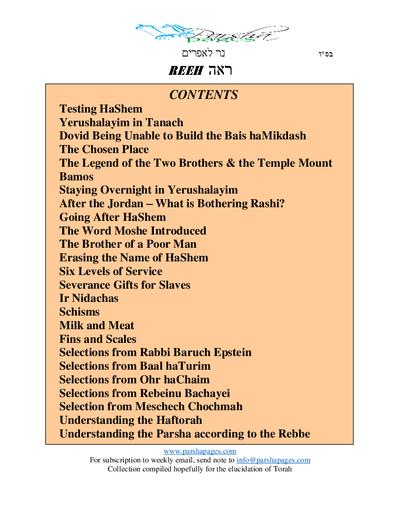
Rabeinu Bachayei

“Except in the place which the Lord your G’d will select from amongst all your tribes, etc.” (Devarim 12:5)
The place in question is Mount Moriah; it is well known among the Gentiles. They know of its spiritual advantages through tradition. There is no need to mention this location by name. The people all had a tradition that this was where their ancestor Yitzchak had lain bound on the altar.

Maimonides writes in his Moreh Nevuchim (3,45) that there were three reasons why the location of the future Temple was not spelled out at this point.

  1. If the nations of the world had known that in that location prayers are answered positively by G’d and sacrifices are welcome to Him, every nation would have made a supreme effort to take possession of that site. This would have resulted in untold slaughter among the nations and ongoing strife among them.
  2. If the Canaanites who dwelled in the land at the time Moses spoke these words had heard of them and they had realized that the Israelites would dispossess them and take over that site they would have utterly destroyed it before the Jewish people had a chance to conquer it.
  3. Even the tribes of the Israelites would have argued among themselves in whose territory this site, would be located at the time the land was distributed among the tribes. Such a division among the people would have been even worse than the rebellion of Korach when the people were not prepared to recognize the preferred hereditary status of the Priests.

For all these reasons Moses preferred not to spell out the exact location of where the Temple would be built in the future. If even the Jews did not know the location, it is clear that the Gentiles did not know it either. Although everyone knew of the significance of Mount Moriah in the past, they had no idea of what this meant in terms of its future religious significance, in terms of the place G’d would choose.

You shall not act at all as we now act here, every man as he pleases (Devarim 12,8)

This verse addresses the problem of private altars which during the transitional 14 years of conquest and distribution of the land were still permitted as sites from which to present offerings, something which had been forbidden while the people were in the desert, seeing the Tabernacle was right in their midst and there was no need to travel in order to offer sacrifices in it.

Because you have not come so far, etc. (Devarim 12,9)

This is a reference to the 14 years during which the conquest and distribution of the land of Canaan would take place:
אל המנוחה, “to the temporary rest, i.e. Shiloh,” ואל הנחלה “and to the permanent inheritance, i.e. Jerusalem.”

We are entitled to ask why the Torah made reference here at all to Shiloh as it would have sufficed to allude to Jerusalem which is the principal inheritance. The reason that the Torah writes both מנוחה and נחלה is that as long as the Israelites were in the desert prior to the erection of the Tabernacle everyone offered personal offerings on private altars, not subject to any rules and regulations. As soon as the Tabernacle was erected all private altars were banned (Zevachim 112) seeing the Torah writes in Leviticus 17,4 “if he did not bring it to the entrance of the Tabernacle he will be subject to the kares penalty.”

Once the people entered the land of Israel and they arrived at Gilgal where the Tabernacle was put up private altars were once again permitted, seeing the Torah had linked the ban on private altars to the existence of “camps,” something which existed only in the desert. (compare Maimonides Peyrush Hamishnayos Zevachim 14,5) based on Leviticus 17,3 אשר ישחט שור או כשב או עז במחנה, “who slaughters an ox, a sheep, or a goat in the camp;” in other words the insistence of the Torah that all sacrificial offerings be brought to the Tabernacle is conditional on there being different camps which surrounded the Tabernacle. As soon as the division of the people into tribal groups and camps was dissolved, the prohibition to offer sacrifices on the private altars was rescinded.

PDF Preview