Biographical Notes on Torah Commentators
Parsha B'Iyun | January 09, 2026
Print This Article
View Original PDF

Biographical Notes on Torah Commentators

Parsha B'Iyun | January 09, 2026

Ramban - Nachmanides – R’ Moshe ben Nachman (1194-1270), Girona, Spain, Akko; A leading Torah scholar of the middle-ages who authored commentaries on Torah and the Talmud. He was a posek who wrote responsa and stand-alone works on Halachic topics, as well as works on mysticism, science and philosophy. Immigrated to Israel at age 72 and settled in Akko.

Behag - The Halakhot Gedolot, also referred to as the Behag, its Hebrew acronym (“Ba’al Halachot Gedolot” - “Author of the Great Laws”), is a comprehensive summary of talmudic laws written in the language and style of the Babylonian Talmud. It is one of the first enumerations of the 613 commandments. Its authorship and date of composition are subject to debate, but the predominant opinion is that Simeon Kayyara authored the book in the early 8th century in Babylon.

Netziv - Rav Naftali Zvi Yehudah Berlin (1816-1893), Lithuania. Born into a family of Jewish scholars, a descendant on his mother’s side of R’ Meir Eisenstadt. His first wife was the granddaughter of R. Chaim Volozhin, and his second the daughter of R. Yechiel Michel Epstein. In 1854 he was appointed head of the Volozhin yeshiva, where he introduced a style of Talmud study based on broad knowledge of Tannaitic and Geonic literature as well as the Rishonim.

Kli Yakar - R’ Shlomo Ephraim Luntschitz (1550-1619), Chief Rabbi of Prague following the Maharal. His primary work was written after becoming deathly ill and vowing to compose a commentary on the Torah if he survived.

Rashi - R’ Shlomo Yitzchaki (1040-1105), Troyes, France. "Rabban Shel Yisrael" - The great Rishon who wrote commentary on all areas of Torah.

Etz Yosef - R' Chanokh Zundel ben Yosef, 19th-century talmudist from Bialystok. Wrote commentaries on Ein Ya’akov and Midrash Rabbah, among other works. His writing consists of summaries of earlier commentaries, incorporating his own novel interpretations. Devoted to analysing the various midrashim in light of each other and earlier commentators and then finding creative new solutions to the apparent contradictions in the sources.

Beis HaLevi - Rav Yosef Dov Soloveitchik (1820-1892), Minsk, Brisk, Berlin; Great-grandson of Rav Chaim Volozhin.

Rashbam - R’ Shmuel ben Meir (c.1085–c.1174), France. Grandson of Rashi and older brother of the Rivam and Rabbeinu Tam. His Torah commentary is concise and strictly to the concept of the "peshat". He does not hesitate to argue with Rashi when he feels that his commentary strayed from the plain meaning of the verse.

Chatam Sofer - R’ Moshe Sofer of Pressburg (1785–1835), Germany, Austria, Czechoslovakia, Ukraine. Studied under R’ Nathan Adler and R’ Pinchas Horowitz (Hafla’ah). In 1807 was appointed as Rabbi of Pressburg (Bratislava), where he also founded a large Yeshiva that produced many noted rabbis. Had 10 children with his second wife, who was the daughter of R’ Akiva Eiger. The eldest, Avraham Shmuel Binyamin (Ketav Sofer), inherited his father’s position as rabbi of Pressburg. His second son, Shimon (Michtav Sofer), was the rabbi of Krakow.

Sefer HaChinuch - An anonymous work written in 13th-century Spain that clearly details the 613 commandments and explains the reasons behind them. For each commandment, the author cites a biblical source, addresses the philosophical underpinnings of the commandment, presents a brief overview of the details of its observance, and summarizes the commandment’s applicability.

Sefat Emet - R’ Yehudah Aryeh Leib Alter of Gur (1847-1905), Poland; Gerer Rebbe, father of the Imrei Emet. Author of a monumental Torah commentary considered one of the pillars of chasidic thought. The title of the book is based on his last discourse, which ended with a verse from Mishlei: "Sefat Emet Tikon La’ad" — The lips of truth shall be established forever.

Rav Matityahu Saloman - (1937-2024); Started out as assistant mashgiach ruchani in the Gateshead Yeshiva (England), working under R' Moshe Schwab. Later took over as the senior mashgiach at Gateshead, a position held for almost 30 years. In the fall of 1997, was invited by R' Nosson Meir Wachtfogel to come to the United States in order to assume the position of mashgiach ruchani of Beth Medrash Govoha, one of the world's largest yeshivas located in Lakewood, New Jersey. Around this time, R' Salomon began to take a leadership position in the Vaad L'Hatzolas Nidchei Yisroel, an advocacy organization seeing to the spiritual needs of Jews in Russia, Georgia and Azerbaijan.

Kli Chemda - R' Meir Dan Plotsky (1866-1928), Poland; Member of the Moetzes Gedolei HaTorah and the president of Kollel Polen. Originally a follower of R' Chanoch Henich of Alexander, but then became a follower of the Sefas Emes of Gur and then the Avnei Nezer (first Sochatchover Rebbe). In 1918, became Rav of Ostrow-Mazowiecka in eastern Poland; voted chairman of Agudas Harabbanim of Poland, a prelude to Agudath Israel. At the age of 60, left the rabbinate to head a large yeshiva in Warsaw, known simply as the Mesivta.

Rabbi Yaakov Lorberbaum of Lissa - Rabbi Yaakov Lorberbaum (1760-1832), Poland; Also known as the Ba'al HaChavas Da'as. Head of the Beit Din in Kalush, Ukraine. In 1809, agreed to become the Rav in Lissa (now Leszno, Poland), where he enlarged his yeshiva's enrollment. Hundreds of scholars came to study there in the years of his leadership, among them were Eliyahu Gutmacher, Zvi Hirsch Kalischer, and Rabbi Shraga Feivel Danziger. Widely respected as a posek and is one of three authorities on whom R' Shlomo Ganzfried based his rulings in the Kitzur Shulchan Aruch. Ma'aseh Nissim draws from the insights of the Ramban, the Zohar, Rambam, and Rabbi Eliezer Ashkenazi to enlighten the readers.
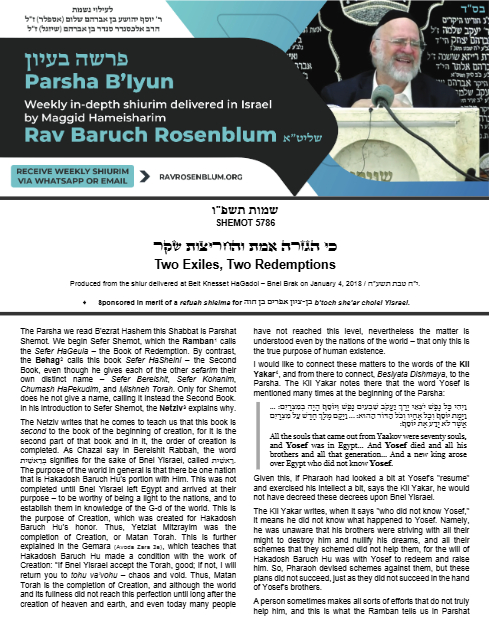
Ramban - Nachmanides – R’ Moshe ben Nachman (1194-1270), Girona, Spain, Akko; A leading Torah scholar of the middle-ages who authored commentaries on Torah and the Talmud. He was a posek who wrote responsa and stand-alone works on Halachic topics, as well as works on mysticism, science and philosophy. Immigrated to Israel at age 72 and settled in Akko.

Behag - The Halakhot Gedolot, also referred to as the Behag, its Hebrew acronym (“Ba’al Halachot Gedolot” - “Author of the Great Laws”), is a comprehensive summary of talmudic laws written in the language and style of the Babylonian Talmud. It is one of the first enumerations of the 613 commandments. Its authorship and date of composition are subject to debate, but the predominant opinion is that Simeon Kayyara authored the book in the early 8th century in Babylon.

Netziv - Rav Naftali Zvi Yehudah Berlin (1816-1893), Lithuania. Born into a family of Jewish scholars, a descendant on his mother’s side of R’ Meir Eisenstadt. His first wife was the granddaughter of R. Chaim Volozhin, and his second the daughter of R. Yechiel Michel Epstein. In 1854 he was appointed head of the Volozhin yeshiva, where he introduced a style of Talmud study based on broad knowledge of Tannaitic and Geonic literature as well as the Rishonim.

Kli Yakar - R’ Shlomo Ephraim Luntschitz (1550-1619), Chief Rabbi of Prague following the Maharal. His primary work was written after becoming deathly ill and vowing to compose a commentary on the Torah if he survived.

Rashi - R’ Shlomo Yitzchaki (1040-1105), Troyes, France. "Rabban Shel Yisrael" - The great Rishon who wrote commentary on all areas of Torah.

Etz Yosef - R' Chanokh Zundel ben Yosef, 19th-century talmudist from Bialystok. Wrote commentaries on Ein Ya’akov and Midrash Rabbah, among other works. His writing consists of summaries of earlier commentaries, incorporating his own novel interpretations. Devoted to analysing the various midrashim in light of each other and earlier commentators and then finding creative new solutions to the apparent contradictions in the sources.

Beis HaLevi - Rav Yosef Dov Soloveitchik (1820-1892), Minsk, Brisk, Berlin; Great-grandson of Rav Chaim Volozhin.

Rashbam - R’ Shmuel ben Meir (c.1085–c.1174), France. Grandson of Rashi and older brother of the Rivam and Rabbeinu Tam. His Torah commentary is concise and strictly to the concept of the "peshat". He does not hesitate to argue with Rashi when he feels that his commentary strayed from the plain meaning of the verse.

Chatam Sofer - R’ Moshe Sofer of Pressburg (1785–1835), Germany, Austria, Czechoslovakia, Ukraine. Studied under R’ Nathan Adler and R’ Pinchas Horowitz (Hafla’ah). In 1807 was appointed as Rabbi of Pressburg (Bratislava), where he also founded a large Yeshiva that produced many noted rabbis. Had 10 children with his second wife, who was the daughter of R’ Akiva Eiger. The eldest, Avraham Shmuel Binyamin (Ketav Sofer), inherited his father’s position as rabbi of Pressburg. His second son, Shimon (Michtav Sofer), was the rabbi of Krakow.

Sefer HaChinuch - An anonymous work written in 13th-century Spain that clearly details the 613 commandments and explains the reasons behind them. For each commandment, the author cites a biblical source, addresses the philosophical underpinnings of the commandment, presents a brief overview of the details of its observance, and summarizes the commandment’s applicability.

Sefat Emet - R’ Yehudah Aryeh Leib Alter of Gur (1847-1905), Poland; Gerer Rebbe, father of the Imrei Emet. Author of a monumental Torah commentary considered one of the pillars of chasidic thought. The title of the book is based on his last discourse, which ended with a verse from Mishlei: "Sefat Emet Tikon La’ad" — The lips of truth shall be established forever.

Rav Matityahu Saloman - (1937-2024); Started out as assistant mashgiach ruchani in the Gateshead Yeshiva (England), working under R' Moshe Schwab. Later took over as the senior mashgiach at Gateshead, a position held for almost 30 years. In the fall of 1997, was invited by R' Nosson Meir Wachtfogel to come to the United States in order to assume the position of mashgiach ruchani of Beth Medrash Govoha, one of the world's largest yeshivas located in Lakewood, New Jersey. Around this time, R' Salomon began to take a leadership position in the Vaad L'Hatzolas Nidchei Yisroel, an advocacy organization seeing to the spiritual needs of Jews in Russia, Georgia and Azerbaijan.

Kli Chemda - R' Meir Dan Plotsky (1866-1928), Poland; Member of the Moetzes Gedolei HaTorah and the president of Kollel Polen. Originally a follower of R' Chanoch Henich of Alexander, but then became a follower of the Sefas Emes of Gur and then the Avnei Nezer (first Sochatchover Rebbe). In 1918, became Rav of Ostrow-Mazowiecka in eastern Poland; voted chairman of Agudas Harabbanim of Poland, a prelude to Agudath Israel. At the age of 60, left the rabbinate to head a large yeshiva in Warsaw, known simply as the Mesivta.

Rabbi Yaakov Lorberbaum of Lissa - Rabbi Yaakov Lorberbaum (1760-1832), Poland; Also known as the Ba'al HaChavas Da'as. Head of the Beit Din in Kalush, Ukraine. In 1809, agreed to become the Rav in Lissa (now Leszno, Poland), where he enlarged his yeshiva's enrollment. Hundreds of scholars came to study there in the years of his leadership, among them were Eliyahu Gutmacher, Zvi Hirsch Kalischer, and Rabbi Shraga Feivel Danziger. Widely respected as a posek and is one of three authorities on whom R' Shlomo Ganzfried based his rulings in the Kitzur Shulchan Aruch. Ma'aseh Nissim draws from the insights of the Ramban, the Zohar, Rambam, and Rabbi Eliezer Ashkenazi to enlighten the readers.

PDF Preview