In the Face of Suffering
זכרון יעקב | January 16, 2025
Print This Article
View Original PDF

In the Face of Suffering

זכרון יעקב | June 27, 2025

When G‑d called upon him to accept the incredible task of leading the Jewish people from slavery to liberation, Moshe hesitated.

“Who am I that I should go to Pharaoh?” he asked.

“For I will be with you,” G‑d reassured him.

Moshe would not go alone. G‑d would be with him every step of the way.

Moshe understood that before he could even try to influence Pharaoh, he first had to influence the Jewish people. He had to impress upon them that G‑d, the G‑d of their fathers, was about to take them out of Egypt with a strong hand and an outstretched arm. And he sensed that this task—inspiring them to believe in the imminent redemption—would not be easy.

And Moshe said to G‑d (3:13), “Behold I come to the children of Israel, and I say to them, ‘The G-d of your fathers has sent me to you,’ and they say to me, ‘What is His name?' what shall I say to them?”

Moshe understood that upon hearing that the G‑d of their fathers was about to redeem them, the first question the Jewish people would ask was, “What is His name?” G‑d’s assorted names represent the various ways He expresses Himself: kindness, judgment, compassion, etc. Moshe knew that the Jews would immediately ask, how did G‑d behave in a way that caused us to suffer so terribly for so many decades? What is His name? What is the “name,” the attribute, the justification, for G‑d to be silent in the face of such terrible human suffering? He realized that before the Jews could accept G‑d’s promise for redemption, they must first understand how and why He allowed their suffering.

G‑d said to Moshe (3:14), “Ehyeh asher ehyeh (I will be what I will be),” and He said, “So shall you say to the children of Israel, ‘Ehyeh (I will be) has sent me to you.’”

What is the meaning of the name Eheyeh - “I will be what I will be”? And how does it address the question: which name would allow for so much Jewish suffering?

Rashi explains:

“Ehyeh asher ehyeh (I will be what I will be)”: “I will be” with them in this predicament “what I will be” with them in their subjugation by other kingdoms.

According to Rashi, G‑d explained to Moshe that the question of how He allows so much suffering isOne does not need to know the answer indeed the most powerful question that can be asked. Yet, to be a Moshe, to bring a message of hope to the people, to lead them to physical and spiritual liberation, one does not need to know the answer to the question. Moshe must convey to the Jewish people a far more powerful insight: that G‑d is with us in our suffering. That He has not abandoned us. That He is present even when His presence is hidden.4

Indeed, we have survived so much pain and suffering throughout our history, not because we had a philosophical explanation how G‑d allows such suffering, but because we sensed we were never alone.

Each of us is a Moshe. We will each experience a time in life when we are called upon to offer comfort and encouragement to someone who is suffering. Perhaps the lesson from G‑d’s words to Moshe is that when a child, a spouse, a stranger, or friend is suffering, we should not attempt to rationalize, explain, justify, philosophize, or blame. The most important thing we can do is simply be present and help the person feel that he or she is not alone.

Adapted from Likutei Sichot Shemot, vol. 26, sicha 3.
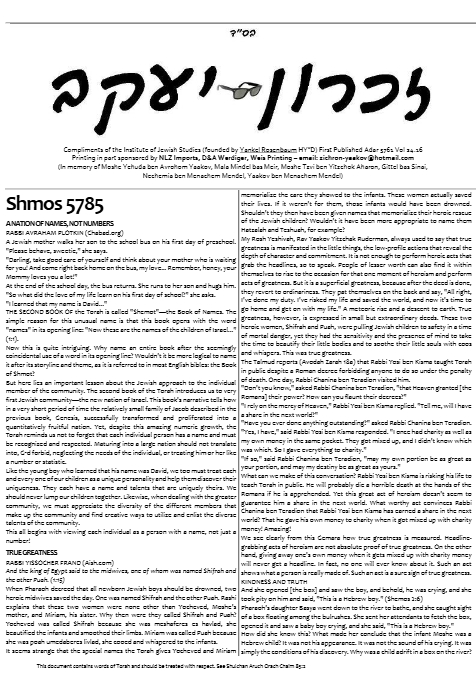
When G‑d called upon him to accept the incredible task of leading the Jewish people from slavery to liberation, Moshe hesitated.

“Who am I that I should go to Pharaoh?” he asked.

“For I will be with you,” G‑d reassured him.

Moshe would not go alone. G‑d would be with him every step of the way.

Moshe understood that before he could even try to influence Pharaoh, he first had to influence the Jewish people. He had to impress upon them that G‑d, the G‑d of their fathers, was about to take them out of Egypt with a strong hand and an outstretched arm. And he sensed that this task—inspiring them to believe in the imminent redemption—would not be easy.

And Moshe said to G‑d (3:13), “Behold I come to the children of Israel, and I say to them, ‘The G-d of your fathers has sent me to you,’ and they say to me, ‘What is His name?' what shall I say to them?”

Moshe understood that upon hearing that the G‑d of their fathers was about to redeem them, the first question the Jewish people would ask was, “What is His name?” G‑d’s assorted names represent the various ways He expresses Himself: kindness, judgment, compassion, etc. Moshe knew that the Jews would immediately ask, how did G‑d behave in a way that caused us to suffer so terribly for so many decades? What is His name? What is the “name,” the attribute, the justification, for G‑d to be silent in the face of such terrible human suffering? He realized that before the Jews could accept G‑d’s promise for redemption, they must first understand how and why He allowed their suffering.

G‑d said to Moshe (3:14), “Ehyeh asher ehyeh (I will be what I will be),” and He said, “So shall you say to the children of Israel, ‘Ehyeh (I will be) has sent me to you.’”

What is the meaning of the name Eheyeh - “I will be what I will be”? And how does it address the question: which name would allow for so much Jewish suffering?

Rashi explains:

“Ehyeh asher ehyeh (I will be what I will be)”: “I will be” with them in this predicament “what I will be” with them in their subjugation by other kingdoms.

According to Rashi, G‑d explained to Moshe that the question of how He allows so much suffering isOne does not need to know the answer indeed the most powerful question that can be asked. Yet, to be a Moshe, to bring a message of hope to the people, to lead them to physical and spiritual liberation, one does not need to know the answer to the question. Moshe must convey to the Jewish people a far more powerful insight: that G‑d is with us in our suffering. That He has not abandoned us. That He is present even when His presence is hidden.4

Indeed, we have survived so much pain and suffering throughout our history, not because we had a philosophical explanation how G‑d allows such suffering, but because we sensed we were never alone.

Each of us is a Moshe. We will each experience a time in life when we are called upon to offer comfort and encouragement to someone who is suffering. Perhaps the lesson from G‑d’s words to Moshe is that when a child, a spouse, a stranger, or friend is suffering, we should not attempt to rationalize, explain, justify, philosophize, or blame. The most important thing we can do is simply be present and help the person feel that he or she is not alone.

Adapted from Likutei Sichot Shemot, vol. 26, sicha 3.

PDF Preview