The Spies One Lesson
Parsha Pages | June 25, 2024
Print This Article
View Original PDF

The Spies One Lesson

Parsha Pages | June 27, 2025

Sicha Summary Chelek 18 | Shelach | Sicha 2

The Sages:
Rabbi Yitzchak says: This is a tradition that was passed down to us from our ancestors: The spies’ names derived from their actions, but only one interpretation is in our hands: “Setur the son of Michael” (Bamidbar 13:13). Setur — he destroyed [satar] the actions of the Holy One, blessed is He. Michael — he made Him, G-d, appear weak [mach] (by saying that there was not enough food in the land for everyone).

Rabbi Yochanan says: We can also offer an interpretation of the name “Nachbi the son of Vophsi” (Bamidbar 13:14): Nachbi — he concealed [hechbi] the statement of the Holy One, blessed is He [that the land is good]. Vophsi — he stomped [passah] on the attributes of the Holy One, blessed is He. (Sotah 34b)

The Questions:

  1. Midrash Tanchuma provides a homiletic interpretation for all of the spies’ names. (Ha’azinu, sec. 7) What does Rabbi Yitzchak mean when he says, “only one interpretation is in our hands?”
  2. Why does Rabbi Yochanan introduce his additional interpretation with the phrase, “We can also say an interpretation”? Why not use a simpler phrase, such as “We have two interpretations”?

The Groundwork for the Explanation:

Rabbi Yitzchak is not speaking about our ability to interpret the names. He is presenting the one interpretation that is applicable to the post-wilderness generations. “Only one interpretation is in our hands” means that there is one lesson from all the interpretations that can be passed down to us. The lessons derived from the other interpretations were relevant to the generation of the spies, but not to ours.

Rabbi Yochanan adds that there is another interpretation of a name that can be repurposed for our use. Meaning, in its original formulation as it applied to the spies, “our ancestors,” it is not relevant to us. But “we can also say an interpretation” — we can take one of those interpretations and derive a different morale, tailor-made for our generation.

The Spies’ Error:

Chassidut teaches that the error of the spies was their desire to remain in a “world of thought,” a spiritual oasis in the desert, to spurn the “world of action” of physical mitzvot, which Eretz Yisrael represented. (Likkutei Torah, Shelach)

But this explanation is more nuanced. The spies understood the necessity of physical action. However, they saw action as secondary to thought. Action serves thought in two ways:

  1. It is the barometer for thought. The implementation of an idea in action is evidence for the validity of the underlying thought.
  2. The necessity of arriving at a practical conclusion elicits deeper levels of concentration and thought.

The spies were content with mitzvot serving these purposes. But they rejected the third, ideal relationship between thought and action:

  1. Thought, spiritual longing and emotion are not separate from action. Rather, they should permeate the entirety of a person. Contemplation courses through even the simplest act. In the words of Rambam: “Just as the wise man is recognized through his wisdom..., so, too, he should be recognized through his actions — in his eating, his drinking, and his intimate relations....” (Hilchot Deot, 5:1)

Thus, the spies fell short in realizing the fullest potential of thought. They understood the utility of action, but they did not understand how thought could be fully expressed and integrated with action. For this reason, they avoided entering Eretz Yisrael.

We Have Obtained One:

The generation of the spies had to address their deficiency — the unfulfilled potential of thought. Our generation is of a lower spiritual caliber; our focus is not in thought, but in action. Therefore, all the lessons of the spies’ names are not relevant for us. There is just one overarching “interpretation” that we can incorporate in our lives, expressed in the name “Setur the son of Michael”

“Setur — he destroyed [satar] the actions of the Holy One, blessed is He.”

Our mission is to take the “actions” of G-d, the world He created, and build it into a dwelling place for Him through physical mitzvot. By avoiding the performance of mitzvot, we “destroy” G-d’s act of Creation.

How, though, is it possible that we have the ability to destroy G-d’s Creation?

“Son of Michael — he made Him, God, appear weak [mach].”
G-d has, so to speak, weakened Himself by giving humanity free choice whether or not to engage in His vision for Creation.

Rabbi Yochanan’s Addition:

Rabbi Yochanan adds another interpretation that we can repurpose for our generation.
Nachbi — he concealed [hechbi] the words of the Holy One, blessed is He.
For the spies, this meant that they avoided descending from G-d’s “thought” to G-d’s “speech,” i.e., to His creation. For our generation (“We can also”), “concealing the word of G-d” means to ignore the vivifying spirit of G-d within every iota of Creation. We cannot neglect the spiritual content of our actions.

Vophsi — he stomped [passah] on the attributes of the Holy One, blessed is He.
For the spies, this meant that they valued the intellectual expression of G-d rather than G-d as He appears through His emotive attributes.
For our generation, “stomping on the attributes” means neglecting love and awe, the internal life of our emotional connection to G-d.

Conclusion:

Even though our primary focus is action, our divine service is whole and complete because the previous generations, who had a deep intellectual and emotional connection to G-d, laid the groundwork for us.
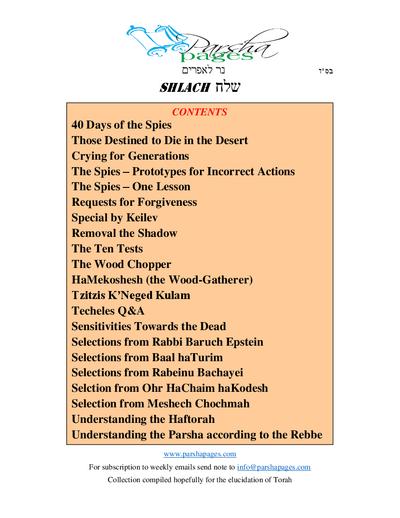
Sicha Summary Chelek 18 | Shelach | Sicha 2

The Sages:
Rabbi Yitzchak says: This is a tradition that was passed down to us from our ancestors: The spies’ names derived from their actions, but only one interpretation is in our hands: “Setur the son of Michael” (Bamidbar 13:13). Setur — he destroyed [satar] the actions of the Holy One, blessed is He. Michael — he made Him, G-d, appear weak [mach] (by saying that there was not enough food in the land for everyone).

Rabbi Yochanan says: We can also offer an interpretation of the name “Nachbi the son of Vophsi” (Bamidbar 13:14): Nachbi — he concealed [hechbi] the statement of the Holy One, blessed is He [that the land is good]. Vophsi — he stomped [passah] on the attributes of the Holy One, blessed is He. (Sotah 34b)

The Questions:

  1. Midrash Tanchuma provides a homiletic interpretation for all of the spies’ names. (Ha’azinu, sec. 7) What does Rabbi Yitzchak mean when he says, “only one interpretation is in our hands?”
  2. Why does Rabbi Yochanan introduce his additional interpretation with the phrase, “We can also say an interpretation”? Why not use a simpler phrase, such as “We have two interpretations”?

The Groundwork for the Explanation:

Rabbi Yitzchak is not speaking about our ability to interpret the names. He is presenting the one interpretation that is applicable to the post-wilderness generations. “Only one interpretation is in our hands” means that there is one lesson from all the interpretations that can be passed down to us. The lessons derived from the other interpretations were relevant to the generation of the spies, but not to ours.

Rabbi Yochanan adds that there is another interpretation of a name that can be repurposed for our use. Meaning, in its original formulation as it applied to the spies, “our ancestors,” it is not relevant to us. But “we can also say an interpretation” — we can take one of those interpretations and derive a different morale, tailor-made for our generation.

The Spies’ Error:

Chassidut teaches that the error of the spies was their desire to remain in a “world of thought,” a spiritual oasis in the desert, to spurn the “world of action” of physical mitzvot, which Eretz Yisrael represented. (Likkutei Torah, Shelach)

But this explanation is more nuanced. The spies understood the necessity of physical action. However, they saw action as secondary to thought. Action serves thought in two ways:

  1. It is the barometer for thought. The implementation of an idea in action is evidence for the validity of the underlying thought.
  2. The necessity of arriving at a practical conclusion elicits deeper levels of concentration and thought.

The spies were content with mitzvot serving these purposes. But they rejected the third, ideal relationship between thought and action:

  1. Thought, spiritual longing and emotion are not separate from action. Rather, they should permeate the entirety of a person. Contemplation courses through even the simplest act. In the words of Rambam: “Just as the wise man is recognized through his wisdom..., so, too, he should be recognized through his actions — in his eating, his drinking, and his intimate relations....” (Hilchot Deot, 5:1)

Thus, the spies fell short in realizing the fullest potential of thought. They understood the utility of action, but they did not understand how thought could be fully expressed and integrated with action. For this reason, they avoided entering Eretz Yisrael.

We Have Obtained One:

The generation of the spies had to address their deficiency — the unfulfilled potential of thought. Our generation is of a lower spiritual caliber; our focus is not in thought, but in action. Therefore, all the lessons of the spies’ names are not relevant for us. There is just one overarching “interpretation” that we can incorporate in our lives, expressed in the name “Setur the son of Michael”

“Setur — he destroyed [satar] the actions of the Holy One, blessed is He.”

Our mission is to take the “actions” of G-d, the world He created, and build it into a dwelling place for Him through physical mitzvot. By avoiding the performance of mitzvot, we “destroy” G-d’s act of Creation.

How, though, is it possible that we have the ability to destroy G-d’s Creation?

“Son of Michael — he made Him, God, appear weak [mach].”
G-d has, so to speak, weakened Himself by giving humanity free choice whether or not to engage in His vision for Creation.

Rabbi Yochanan’s Addition:

Rabbi Yochanan adds another interpretation that we can repurpose for our generation.
Nachbi — he concealed [hechbi] the words of the Holy One, blessed is He.
For the spies, this meant that they avoided descending from G-d’s “thought” to G-d’s “speech,” i.e., to His creation. For our generation (“We can also”), “concealing the word of G-d” means to ignore the vivifying spirit of G-d within every iota of Creation. We cannot neglect the spiritual content of our actions.

Vophsi — he stomped [passah] on the attributes of the Holy One, blessed is He.
For the spies, this meant that they valued the intellectual expression of G-d rather than G-d as He appears through His emotive attributes.
For our generation, “stomping on the attributes” means neglecting love and awe, the internal life of our emotional connection to G-d.

Conclusion:

Even though our primary focus is action, our divine service is whole and complete because the previous generations, who had a deep intellectual and emotional connection to G-d, laid the groundwork for us.

PDF Preview