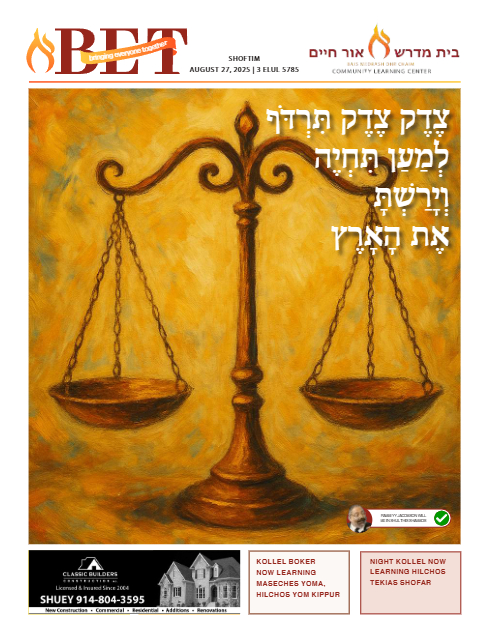
A Blessed Society
There is a beautiful Netziv in the beginning of Parshas Shoftim. Parshas Re’eh ends with brachah: אִישׁ כְּמַתְּנַת יָדוֹ, כְּבִרְ כַּת השם אֱלֹקיךָ אֲשֶׁר נָתַן-לָךְ. The beginning of Parshas Shoftim is שֹׁפְטִים וְשֹׁטְרִ ים תִּתֶּן-לְךָ. In the Haamek Davar, the Netziv says beautifully, “הברכה מצויה בזמן שמכבדין את הדיינים”. In a society where people show respect to dayanim, show respect to the rule of the land, and show respect for the integrity of financial dealings, such a society has brachah. A society in which people do what they want is the Wild West. People cheat others, they convince themselves that they are allowed to take this money without a clear psak, that it is muttar. They think that they can apply for government benefits to which they are not entitled, and they have no source for being allowed to take them. They take others’ money or cheat others, and they are melamed heter on themselves. In such a society, there is no brachah metzuya, a brachah is not found there. So therefore, שֹׁפְטִים וְשֹׁטְרִ ים תִּתֶּן-לְךָ is right next to the brachah of אִישׁ, כְּמַתְּנַת יָדוֹ, כְּבִרְ כַּת השם אֱלֹקיךָ.
The Netziv also refers back to Parshas Mishpatim. אֱלֹקים לֹא תְקַלֵּל, וְנָשִׂ יא בְעַמְּךָ לֹא תָאֹר. To show respect for a nasi, for a bais din, is right next to the passuk of מְ לֵ אָ תְ ךָ מְלֵאָתְךָ .וְדִ מְעֲךָ לֹא תְאַחֵר means your good crop, your crop that is full, financial success.
There is a third source for this concept. The Netziv quotes וַיְהִי בִּימֵי שְׁ פֹט הַשֹּׁפְטִים, וַיְהִי רָעָב בָּאָרֶץ. The Book of Rus begins by saying that in the days of the judges, there was a famine. Rashi says, Dor sheshoftim es shoftov, it was a generation that didn’t show respect for the dayanim. They second-guessed their dayanim. Such a place, וַיְ הִ י רָ עָ ב בָּ אָ רֶ ץ, there was a famine in the land. The point again being that for a society to have birchas Hashem in it, it must be a society that shows respect for the rule of bais din.
A great king of the Jews is described in Tanach: Yoshiya-hu Hamelech, who became king at the age of eight. The first thing Yoshiyahu did, even before getting Klal Yisrael to get rid of avodah zorah, was to straighten out the batei dinim, the places of judgment, so that there should be brachah in Klal Yisrael. We see from here that there must be integrity and honesty in the people’s financial dealings in order to have a blessed society.