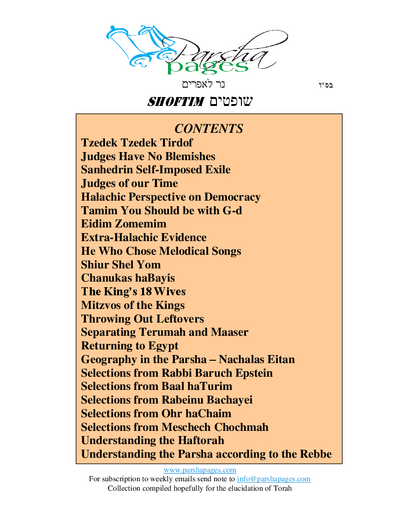
Eidim Zomemim
Parsha Pages | August 13, 2023
Print This Article
View Original PDF

Eidim Zomemim

Parsha Pages | December 31, 2025

דברים פרק יט,יח וְׁדָּרְׁ ש ו הַש ֹפְׁטִים הֵּיטֵּב וְׁהִנ ֵּה עֵּד -ש ֶּקֶּר הָּעֵּד ש ֶּקֶּר עָּנָּה בְׁאָּחִיו:

And the judges shall inquire diligently; and if the witness is a false witness, and has testified falsely against his brother. You should do to him (the false witness) as he had proposed to do to his brother; so that you should eliminate the evil from your midst.

Rule 1

In order for witnesses to be considered eidim zomemin who will receive the punishment that would have been given to the accused had he been convicted based on their testimony, the second group of witnesses must testify that they cannot be telling the truth because they were with them at the time of the alleged crime. This rule of why the second set is believed more than the first set is not explained by the Mishnah or the Gemara in Makkos; it is a gezeras ha-kasuv - a biblical decree. (The law is different if the second group of witnesses come to court and refute the testimony of the first group for other reasons: insist that the testimony of the first witnesses cannot be true because the accused was with them at that time, or because they saw the incident and it happened differently than the way it was described by the first group of witnesses. Such witnesses are called edei hakchashah - witnesses who refute testimony - and recognizing that there are different versions of the story we discount them both. Neither the accused nor the witnesses will be punished.)

Rule 2

Another unique rule in the laws of eidim zomemin is that the punishment is only applied to the false witnesses if it has not been carried out on the accused. If, however, accused was already killed based on their testimony, then they will not receive that punishment. Rambam says this same reason does not extend to case the convicted receives lashes and then they are proved to be eidim zomemin, then they still are punished with lashes. The Raavad disagrees and maintains there is no distinction in this law if the accused has already received the punishment of death or of lashes.

However, in the case of monetary punishment we find three main views:

  • Tosfos (Baba Kama 4b): Since the money that was removed from the accused can be returned, then, the punishment of eidim zomemin does not apply.
  • Tosfos (same): The punishment does apply since in monetary matters we do derive punishment from an exposition.
  • Ritva: The exception of “as intended but not as done” applies and the eidim zomemin are exempt also in monetary punishments.

A further question involving the punishment given to eidim zomemin involves testimony in monetary matters. Is the punishment of compensation (“mammon”) or is it a penalty (“kenas “)? The principal practical difference would be in a case that the false witness admits to the false testimony. The false witness would be still obligated to pay if the punishment is compensation. However, if the punishment is a penalty, then the false witness would be exempt.

Rule 3

In many places, it is not possible to administer the actual punishment like the false witnesses planned to the other. In these types of cases, the punishment applied is lashes (39), according to the biblical command. Examples of false testimony about one that testifies about others that this punishment can not apply to the one testifying include: is not fit to be proper Cohanim; a bas Cohen committed adultery (and is subject to a different type of death penalty); a woman should lose her Kesuvah; to kill a damaging animal; to place property into a status of forbidden benefit.

Source for the law - punished only if the sentence is not carried out:

  • Rashi (Gemara): לאחיו “To one’s brother” implies he must still be alive.
  • Rashi (Chumash): "as he conspired to do”, but not as he conspired and was done.
  • Ramban: Not from a specific exemption, but a general rule that punishment is not enacted based on an exposition. The Chumash specifies only “to do”, and punishment cannot be extended to the case were the intent actually led to the accused being killed.
דברים פרק יט,יח וְׁדָּרְׁ ש ו הַש ֹפְׁטִים הֵּיטֵּב וְׁהִנ ֵּה עֵּד -ש ֶּקֶּר הָּעֵּד ש ֶּקֶּר עָּנָּה בְׁאָּחִיו:

And the judges shall inquire diligently; and if the witness is a false witness, and has testified falsely against his brother. You should do to him (the false witness) as he had proposed to do to his brother; so that you should eliminate the evil from your midst.

Rule 1

In order for witnesses to be considered eidim zomemin who will receive the punishment that would have been given to the accused had he been convicted based on their testimony, the second group of witnesses must testify that they cannot be telling the truth because they were with them at the time of the alleged crime. This rule of why the second set is believed more than the first set is not explained by the Mishnah or the Gemara in Makkos; it is a gezeras ha-kasuv - a biblical decree. (The law is different if the second group of witnesses come to court and refute the testimony of the first group for other reasons: insist that the testimony of the first witnesses cannot be true because the accused was with them at that time, or because they saw the incident and it happened differently than the way it was described by the first group of witnesses. Such witnesses are called edei hakchashah - witnesses who refute testimony - and recognizing that there are different versions of the story we discount them both. Neither the accused nor the witnesses will be punished.)

Rule 2

Another unique rule in the laws of eidim zomemin is that the punishment is only applied to the false witnesses if it has not been carried out on the accused. If, however, accused was already killed based on their testimony, then they will not receive that punishment. Rambam says this same reason does not extend to case the convicted receives lashes and then they are proved to be eidim zomemin, then they still are punished with lashes. The Raavad disagrees and maintains there is no distinction in this law if the accused has already received the punishment of death or of lashes.

However, in the case of monetary punishment we find three main views:

  • Tosfos (Baba Kama 4b): Since the money that was removed from the accused can be returned, then, the punishment of eidim zomemin does not apply.
  • Tosfos (same): The punishment does apply since in monetary matters we do derive punishment from an exposition.
  • Ritva: The exception of “as intended but not as done” applies and the eidim zomemin are exempt also in monetary punishments.

A further question involving the punishment given to eidim zomemin involves testimony in monetary matters. Is the punishment of compensation (“mammon”) or is it a penalty (“kenas “)? The principal practical difference would be in a case that the false witness admits to the false testimony. The false witness would be still obligated to pay if the punishment is compensation. However, if the punishment is a penalty, then the false witness would be exempt.

Rule 3

In many places, it is not possible to administer the actual punishment like the false witnesses planned to the other. In these types of cases, the punishment applied is lashes (39), according to the biblical command. Examples of false testimony about one that testifies about others that this punishment can not apply to the one testifying include: is not fit to be proper Cohanim; a bas Cohen committed adultery (and is subject to a different type of death penalty); a woman should lose her Kesuvah; to kill a damaging animal; to place property into a status of forbidden benefit.

Source for the law - punished only if the sentence is not carried out:

  • Rashi (Gemara): לאחיו “To one’s brother” implies he must still be alive.
  • Rashi (Chumash): "as he conspired to do”, but not as he conspired and was done.
  • Ramban: Not from a specific exemption, but a general rule that punishment is not enacted based on an exposition. The Chumash specifies only “to do”, and punishment cannot be extended to the case were the intent actually led to the accused being killed.
PDF Preview