Elul Sicha 2
The Allusions:
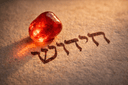
The Tzemach Tzedek writes that the word for the month of Elul can be divided into two words. “No, (lamed alef),” and “Him, (lamed vav).” “No” alludes to the Divine attribute of keser, the “crown” which transcends the structure of creation, and “Him” alludes to the Divine “man,” the structured flow of Divine energy into creation.
Elul is a time when the Divine light that transcends creation “no/keser,” flows into, and is assimilated within, the structure of creation, “Him.”
The Rebbe’s father suggests another reading of Elul. It is the word “Or” spelled with “alef, vav,” but after each letter there appears a lamed. The word “or” alludes to the Divine attribute of malchus, kingship. [We say the word, “or” when we want to negate, partially retract or qualify, what was previously said previously. The attribute of kingship is the last of G-d’s ten creative attributes and it is the one which introduces the new reality of creation which is in opposition to the reality of G-d that came before it]. Specifically, the letter alef alludes to the first level of malchus, the crown/keser. And the letter vav alludes to the attribute of daas of malchus. The lamed, whose numerical equivalent is 30, alludes to the “thirty qualities” through which kingship is acquired. (Avos 6:5) Therefore there is a lamed after each letter, to allude to the Divine flow of “thirty qualities” which illuminates both aspects of G-d’s kingship.
The Link:
The connection between these two commentaries: The “crown” of malchus is the Divine desire and passion for creation. The daas, the applied intellect, of malchus is the application of this desire, it is the actual governance of G-d within creation. In the realm of G-d’s desire, this world is insignificant, its reality has not emerged. Therefore it is alluded to with the word “no,” as in “in all their sufferings, He does not suffer,” meaning the realities of this world are inconsequential. But in the realm of G-d’s applied kingship this world does hold significance, and so this is alluded to in the word “him,” as in an alternate reading of the verse, “in all their sufferings, he suffers.”
Two Elements of Elul:
The work of Elul is twofold: to prepare for next year’s Divine service, and to rectify the past year’s mistakes. The work of preparing for the coming year is the work of arousing G-d’s desire for kingship, which touches the realm of G-d that transcends creation, the “no,” the “crown of malchus.”
And the work of rectifying the past touches on the realm of G-d which is active within creation and is sensitive to human action, the “him,” the “daas of malchus.”
Both agendas are included in the same word, for the purpose of arousing G-d’s desire is to bring that desire into actuality within the world. And the method of rectifying the past is by touching the dimension of G-d that transcends creation and is not defined by human action and so can issue a new beginning for every person.

Related Articles