Rabbi Duvid'l of Lelov: Childbirth Aid and Spoiled Cholent
Wonders | August 17, 2023
Print This Article
View Original PDF

Rabbi Duvid'l of Lelov: Childbirth Aid and Spoiled Cholent

Wonders | December 31, 2025

Story

Rabbi Dovid Tzvi Shlomo Biderman of Lelov (Lelów) also known as Rebbe Duvid’l, was the fourth Rebbe of the Lelov dynasty. He was born to his father Rabbi Elazar Mendel Biderman and his mother, Matel Faigeh, who was the granddaughter of the Seer of Lublin. From his father’s side, he was also a grandson of the Holy Yid. He made aliyah to the Land of Israel at the age of 6. He married Miriam, who was the great-granddaughter of Rebbe Pinchas Halevi Horowitz, author of the Hafla’ah. Influenced by the Karlin chasidim in Jerusalem, Rebbe Duvid’l journeyed to the “Beis Aharon” of Karlin. When he returned to the Land of Israel, he opened a synagogue for Karlin chasidim. After his father’s passing, Rebbe Duvid’l refused to become a Rebbe, and it was only after his uncle also passed away that he agreed to lead the chasidim. Rebbe Duvid’l was responsible for the money distributed by the Kollel-Poland for the Jews living in the Land of Israel and was even jailed because of the Kollel’s debt. He was the head of the yeshivah Chayei Olam in Jerusalem and was admired by all the residents of the city – both Jews and non-Jews. He passed away on the 5th of Elul, 1918 and was laid to rest on the Mount of Olives. His son, Rebbe Shimon Nosson Nuta, succeeded him.

Once a chasid whose wife was having a difficult childbirth (first birth) came to Rebbe Duvid’l of Lelov to ask for a blessing for a successful delivery. Rebbe Duvid’l told him that he should say the Ana Beko’ach prayer seven times—but not too fast and not too slow. The chasid entered the room where his wife was giving birth and did exactly as the holy rebbe had instructed him. When he reached the last two words of the prayer, “He Who knows concealed things,” he already heard the cries of his newborn daughter.

The Ana Beko’ach Spiritual Remedy

The initials of the Ana Beko’ach prayer spell a Kabbalistic holy Name, known as the Name of 42 Letters. 42 is the value of the word “mother.” It is a segulah (a spiritual remedy) for bringing about a state of, “the mother of children is joyous.”

When the Israelites encircled Jericho seven times to conquer it, they blew the shofars and recited the Ana Beko’ach prayer. (Until this very day, chasidim and devout people have a custom to encircle places that need to be “conquered” while reciting the Ana Beko’ach prayer—particularly with a melody that repeats each word of the prayer seven times). Just as the Name of 42 Letters has the power to open Jericho, which is considered the lock of the land of Israel, so it has the power to open the womb (the womb is described in the Song of Songs as, “a locked garden... a locked spring, a sealed fountain”) when the time has come for the baby to be born.

Rebbe Duvid’l instructed his chasid not to recite the prayer too quickly or too slowly. This is the middle path, which is accepted and finds favor in the eyes of God and man. (The Alter Rebbe of Chabad also instructed his followers to do the same when leading communal prayers—not too quickly, not too slowly). This was also the prayer of Channah, when she asked for, “offspring of men,” the sages explain that she meant that they should be neither too tall nor too short; neither too small nor too fat; neither too white nor too red; neither too smart nor too stupid.

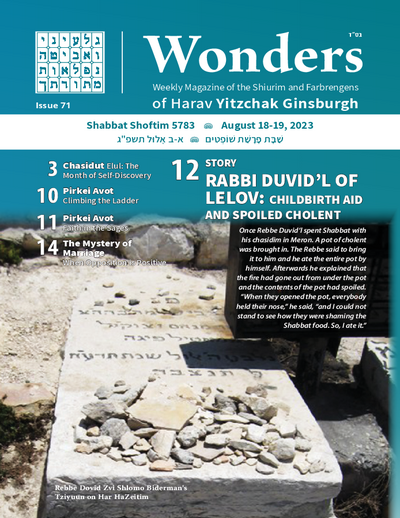
Once Rebbe Duvid’l spent Shabbat with his chasidim in Meron. A pot of cholent was brought in. The Rebbe said to bring it to him and he ate the entire pot by himself. Afterwards he explained that the fire had gone out from under the pot and the contents of the pot had spoiled. “When they opened the pot, everybody held their nose,” he said, “and I could not stand to see how they were shaming the Shabbat food. So, I ate it.”

Honoring Shabbat Food

Shabbat is the day that Divinity dwells openly even in the physical world and is present in the food prepared for the holy day. Rebbe Duvid’l’s sensitivity toward the Shabbat food is the attribute of the Academy of Hillel, who were careful to honor brides. In a discussion in the Talmud, the Academy of Hillel maintains that even if the bride is crippled or blind, she should still be praised as being, “attractive and righteous.” Rebbe Duvid’l was willing to go to great lengths (and if the reader has ever smelled a pot of spoiled cholent, he understands what resolve it takes to eat a pot of it) to maintain the honor of the bride, the holy Shabbat.

1. Psalms 113:9.
2. Song of Songs 4;13.
3. 1 Samuel 1:11.
4. Berachot 31b.
5. Kesuvot 17a.
Story

Rabbi Dovid Tzvi Shlomo Biderman of Lelov (Lelów) also known as Rebbe Duvid’l, was the fourth Rebbe of the Lelov dynasty. He was born to his father Rabbi Elazar Mendel Biderman and his mother, Matel Faigeh, who was the granddaughter of the Seer of Lublin. From his father’s side, he was also a grandson of the Holy Yid. He made aliyah to the Land of Israel at the age of 6. He married Miriam, who was the great-granddaughter of Rebbe Pinchas Halevi Horowitz, author of the Hafla’ah. Influenced by the Karlin chasidim in Jerusalem, Rebbe Duvid’l journeyed to the “Beis Aharon” of Karlin. When he returned to the Land of Israel, he opened a synagogue for Karlin chasidim. After his father’s passing, Rebbe Duvid’l refused to become a Rebbe, and it was only after his uncle also passed away that he agreed to lead the chasidim. Rebbe Duvid’l was responsible for the money distributed by the Kollel-Poland for the Jews living in the Land of Israel and was even jailed because of the Kollel’s debt. He was the head of the yeshivah Chayei Olam in Jerusalem and was admired by all the residents of the city – both Jews and non-Jews. He passed away on the 5th of Elul, 1918 and was laid to rest on the Mount of Olives. His son, Rebbe Shimon Nosson Nuta, succeeded him.

Once a chasid whose wife was having a difficult childbirth (first birth) came to Rebbe Duvid’l of Lelov to ask for a blessing for a successful delivery. Rebbe Duvid’l told him that he should say the Ana Beko’ach prayer seven times—but not too fast and not too slow. The chasid entered the room where his wife was giving birth and did exactly as the holy rebbe had instructed him. When he reached the last two words of the prayer, “He Who knows concealed things,” he already heard the cries of his newborn daughter.

The Ana Beko’ach Spiritual Remedy

The initials of the Ana Beko’ach prayer spell a Kabbalistic holy Name, known as the Name of 42 Letters. 42 is the value of the word “mother.” It is a segulah (a spiritual remedy) for bringing about a state of, “the mother of children is joyous.”

When the Israelites encircled Jericho seven times to conquer it, they blew the shofars and recited the Ana Beko’ach prayer. (Until this very day, chasidim and devout people have a custom to encircle places that need to be “conquered” while reciting the Ana Beko’ach prayer—particularly with a melody that repeats each word of the prayer seven times). Just as the Name of 42 Letters has the power to open Jericho, which is considered the lock of the land of Israel, so it has the power to open the womb (the womb is described in the Song of Songs as, “a locked garden... a locked spring, a sealed fountain”) when the time has come for the baby to be born.

Rebbe Duvid’l instructed his chasid not to recite the prayer too quickly or too slowly. This is the middle path, which is accepted and finds favor in the eyes of God and man. (The Alter Rebbe of Chabad also instructed his followers to do the same when leading communal prayers—not too quickly, not too slowly). This was also the prayer of Channah, when she asked for, “offspring of men,” the sages explain that she meant that they should be neither too tall nor too short; neither too small nor too fat; neither too white nor too red; neither too smart nor too stupid.

Once Rebbe Duvid’l spent Shabbat with his chasidim in Meron. A pot of cholent was brought in. The Rebbe said to bring it to him and he ate the entire pot by himself. Afterwards he explained that the fire had gone out from under the pot and the contents of the pot had spoiled. “When they opened the pot, everybody held their nose,” he said, “and I could not stand to see how they were shaming the Shabbat food. So, I ate it.”

Honoring Shabbat Food

Shabbat is the day that Divinity dwells openly even in the physical world and is present in the food prepared for the holy day. Rebbe Duvid’l’s sensitivity toward the Shabbat food is the attribute of the Academy of Hillel, who were careful to honor brides. In a discussion in the Talmud, the Academy of Hillel maintains that even if the bride is crippled or blind, she should still be praised as being, “attractive and righteous.” Rebbe Duvid’l was willing to go to great lengths (and if the reader has ever smelled a pot of spoiled cholent, he understands what resolve it takes to eat a pot of it) to maintain the honor of the bride, the holy Shabbat.

1. Psalms 113:9.
2. Song of Songs 4;13.
3. 1 Samuel 1:11.
4. Berachot 31b.
5. Kesuvot 17a.

PDF Preview