The Divine Supreme Court
Print This Article
View Original PDF

The Divine Supreme Court

Chayus | June 27, 2025

You shall appoint for yourselves judges and law enforcement officials, in all your towns... (Devarim, 16:18)

Introduction:

The Jewish Supreme Court, known as the Sanhedrin, had 71 judges. In Tehillim it states, “in the midst of the judges He (G-d) will judge.” Meaning, G-d joins the judges of the Sanhedrin, thus making the total 72.

Driving Questions:

What is the significance of the number 72 in the Sanhedrin?
Why does the verse use the name Elokim?

There is a verse in Shir Hashirim which states: “Every part of you is beautiful, my beloved and there is no blemish in you”. In the metaphor of Shir HaShirim, the groom is Hashem and the bride, the Jewish people. The obvious question is, isn’t the second statement redundant? (Obviously, if you’re all beautiful, there is no blemish!)

The Zohar comments on this:
“The first part of the verse, “You are all fair...” is referring to the Jewish People. The second phrase, “And there is no blemish...”, refers to the Sanhedrin (which totalled 71 judges plus G-d making it 72 in total. This) corresponds to the 72 names of G-d. It also corresponds to the 70 souls that descended to Egypt with Ya’akov, making it a total of 71 including him. In addition G-d (tells him, “I (the Shechina) will go down with you to Egypt”)—a total of 72.

This is meaning of the Mishnaic teaching that “one need not investigate beyond the Sanhedrin”.”

Rabbi Levi Yitzchak Schneerson זצ“ל
By Rabbis Dovid Dubov & Yaakov K. Chaiton
In honor of Yaakov Ben Zina & Leah Bas Shlima

To elaborate further :

The purpose of the Sanhedrin was to adjudicate real life questions and disputes that arose amongst the people. They were embroiled in physical and complex situations such as impurities, immorality, non-Kosher, punishments, including an occasional capital punishment. All this very much follows the nature of the world. A reality that may seem devoid of G-dliness lacking divinity and revelation. It may seem that the Sanhedrin is expressed through the attribute of Gevurah which can allow things to drift away from absolute purity and pristine judgement.

This is what the number 72 teaches us. The word Chesed, has the numerical value of 72. This reminds us that with G-d as a ‘member’ of the Sanhedrin it will always remain pure and not be dragged into the physicality and nature of the matters in question.

How does this knowledge and idea ensure that there is no blemish (Mum) amidst the Sanhedrin?

It is paramount that we constantly remind ourselves that even within, what appears to be a self working world (הטבע), there is Elokim—a higher power, namely G-d, who is in control constantly. This is how we prevent a ‘blemish’ from entering and guiding us off track. This is reminded to us constantly when we see the number of judges of the court—72. Ultimately everything stems from G-d’s Chesed—kindness and this is the underlying principle to every ruling issued.

(Likkutei Levi Yitzchak, Ha’aros L’Zohar, Shemos-Devarim, page 220 and on.)
(Yalkut Levi Yitzchak Al HaTorah, Vol. 3, chapter 110.)
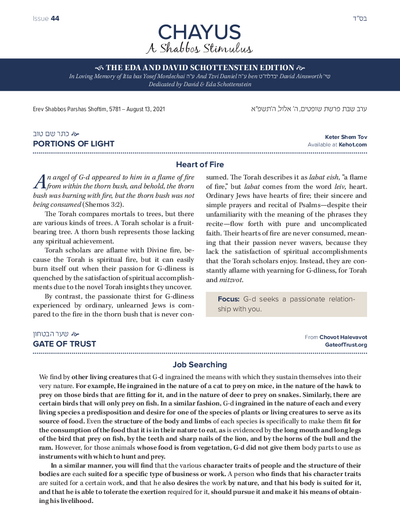

You shall appoint for yourselves judges and law enforcement officials, in all your towns... (Devarim, 16:18)

Introduction:

The Jewish Supreme Court, known as the Sanhedrin, had 71 judges. In Tehillim it states, “in the midst of the judges He (G-d) will judge.” Meaning, G-d joins the judges of the Sanhedrin, thus making the total 72.

Driving Questions:

What is the significance of the number 72 in the Sanhedrin?
Why does the verse use the name Elokim?

There is a verse in Shir Hashirim which states: “Every part of you is beautiful, my beloved and there is no blemish in you”. In the metaphor of Shir HaShirim, the groom is Hashem and the bride, the Jewish people. The obvious question is, isn’t the second statement redundant? (Obviously, if you’re all beautiful, there is no blemish!)

The Zohar comments on this:
“The first part of the verse, “You are all fair...” is referring to the Jewish People. The second phrase, “And there is no blemish...”, refers to the Sanhedrin (which totalled 71 judges plus G-d making it 72 in total. This) corresponds to the 72 names of G-d. It also corresponds to the 70 souls that descended to Egypt with Ya’akov, making it a total of 71 including him. In addition G-d (tells him, “I (the Shechina) will go down with you to Egypt”)—a total of 72.

This is meaning of the Mishnaic teaching that “one need not investigate beyond the Sanhedrin”.”

Rabbi Levi Yitzchak Schneerson זצ“ל
By Rabbis Dovid Dubov & Yaakov K. Chaiton
In honor of Yaakov Ben Zina & Leah Bas Shlima

To elaborate further :

The purpose of the Sanhedrin was to adjudicate real life questions and disputes that arose amongst the people. They were embroiled in physical and complex situations such as impurities, immorality, non-Kosher, punishments, including an occasional capital punishment. All this very much follows the nature of the world. A reality that may seem devoid of G-dliness lacking divinity and revelation. It may seem that the Sanhedrin is expressed through the attribute of Gevurah which can allow things to drift away from absolute purity and pristine judgement.

This is what the number 72 teaches us. The word Chesed, has the numerical value of 72. This reminds us that with G-d as a ‘member’ of the Sanhedrin it will always remain pure and not be dragged into the physicality and nature of the matters in question.

How does this knowledge and idea ensure that there is no blemish (Mum) amidst the Sanhedrin?

It is paramount that we constantly remind ourselves that even within, what appears to be a self working world (הטבע), there is Elokim—a higher power, namely G-d, who is in control constantly. This is how we prevent a ‘blemish’ from entering and guiding us off track. This is reminded to us constantly when we see the number of judges of the court—72. Ultimately everything stems from G-d’s Chesed—kindness and this is the underlying principle to every ruling issued.

(Likkutei Levi Yitzchak, Ha’aros L’Zohar, Shemos-Devarim, page 220 and on.)
(Yalkut Levi Yitzchak Al HaTorah, Vol. 3, chapter 110.)

PDF Preview